At a glance
What awaits you
Visit duration
Not yet provided
Difficulty
Not yet provided
Route length
Not yet provided
Who is it for
Popular visiting hours
Verified busyness data is not available yet
Best time to visit
JanFebMarAprMayJunJulAugSepOctNovDec
BestGoodHot
5-day forecast
Forecast loads when this section is viewed
About this place
Hai-Bar Carmel Nature Reserve
An animal at Hai-Bar Carmel may be well away from the path: a Persian fallow deer among the trees, a griffon vulture in a spacious aviary, a roe deer that only becomes visible after a patient search. That distance suits the purpose of the place. On the wooded slopes beside the University of Haifa, rare species are bred and some animals are prepared for life in the wild. A visit reveals stages in that work and explains why restoring a locally extinct species takes far more than opening an enclosure gate.
A wooded slope beside Haifa
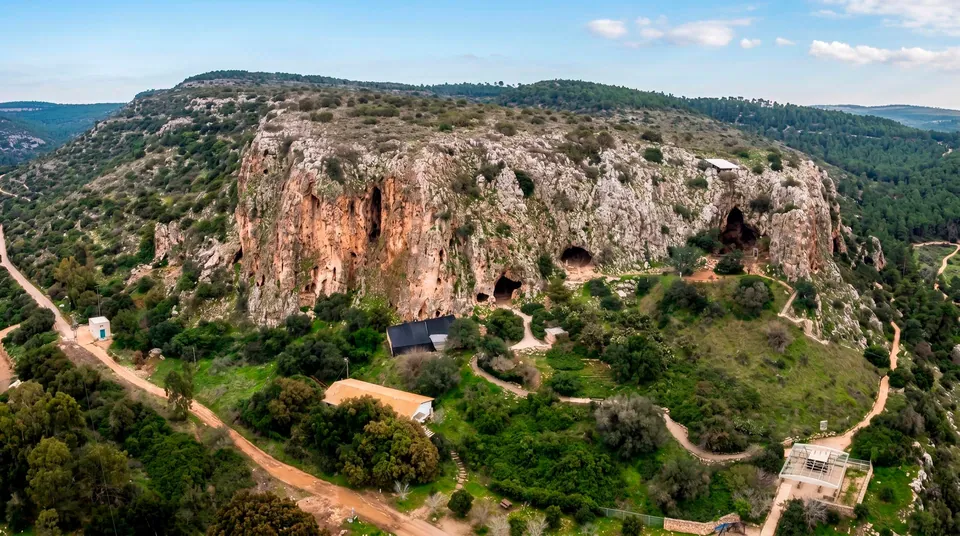
Hai-Bar Carmel Nature Reserve lies in the Carmel range beside the University of Haifa, within a much larger protected landscape. Mediterranean woodland and scrub cover slopes divided by branching valleys. The centre occupies part of the Galim stream catchment. Its setting matters to its work: animals are prepared for woodland habitats in northern Israel. The better-known Hai-Bar Yotvata operates in desert conditions; Carmel applies the same broad idea of wildlife restoration to a different environment. Sharing a name does not mean that the two centres keep the same species or offer the same kind of visit. At Carmel, visitors walk between observation points while animals move within their own areas. The entrance terrace helps place the enclosures in the surrounding landscape. The nearby university makes the city’s proximity clear, but attention soon shifts towards the hillside, trees and movement at the far edge of an enclosure.
From a breeding group to life in the wild
- 1
Establish a breeding population
Specialists first need a stable group of a rare species under their care. Producing young and maintaining the animals’ health are essential. A birth begins another stage of work, since a future in the forest will involve different conditions and demands.
- 2
Prepare animals for a particular release site
Acclimatisation connects an animal with its future surroundings. Persian fallow deer have been moved to special pens near release sites so that the transition can happen gradually. The visitor route does not provide access to every working area involved in this process.
- 3
Release, then keep monitoring
After release, staff assess movements and survival, including through tags and transmitters. What matters is the longer-term outcome: animals must establish themselves and contribute to a population. An open gate cannot, on its own, demonstrate that the programme has succeeded.
Different species, different conservation stories
1
Persian fallow deer
One of the central species in the restoration programme, this deer uses grassy patches as well as trees and shrubs for food. Appearance varies by sex and season. The distinctive antlers of an adult male should not be expected on every animal.
2
European roe deer
This small deer has a reintroduction history associated with the southern Carmel, Ramat Hanadiv and Mount Horshan. It offers a chance to distinguish hoofed animals that can look similar at a distance, and to compare their separate release programmes.
3
Griffon vulture
A large scavenging bird, the griffon vulture is part of efforts to support a declining population. Successful breeding, preparation for flight and reducing threats after release all matter. The story you encounter beside an aviary extends well beyond its mesh.
4
White-tailed eagle
This is another large bird of prey represented in the centre’s conservation work. Its feeding habits and way of life differ from those of the vulture. Compare the birds’ heads, posture and body shape to appreciate the differences between them.
Persian fallow deer return to the woodland
At Carmel, Persian fallow deer illustrate the restoration of a species that had disappeared from the local wild. Establishing a breeding population made it possible to move from protected care to releases. The programme’s first releases began in 1996 in the Nahal Kziv area. Deer were transferred to acclimatisation pens before release, with tracking equipment allowing their subsequent movements to be followed. Later projects reached other areas, including Nahal Sorek in the Judean Hills. These place names convey the scale of the work. An animal raised on Carmel may become part of a population in another suitable woodland. During a visit, watch the deer’s behaviour without expecting constant movement along the fence. Resting in shade, browsing and retreating deeper into the enclosure all reveal something about the species. Maintaining normal behaviour is part of preparing animals for a different future, so human attention should not dictate their daily rhythm.
Why vultures need incubators, tags and room to fly
The griffon vultures at Hai-Bar Carmel reveal the technical side of conservation breeding. Accounts of the programme describe controlled incubation: an egg is placed in an incubator, a dummy is left in the nest, and the hatched chick is returned to its parents. This combines specialist care with rearing by adult birds of the same species. Young birds later need to develop their flight skills and go through acclimatisation. Rings, coloured tags and sometimes transmitters identify individuals. Markings on a bird are therefore part of research and monitoring. Beyond the centre, poisoning and electrocution on power lines remain threats. Even a successfully reared bird depends on safer conditions after release. While watching the aviaries, look occasionally at the sky as well. Free-flying vultures may appear nearby, though their arrival cannot be scheduled as part of every visit. The relationship between captive breeding and the wider population is what gives the aviaries their larger significance.
An animal’s presence does not imply a future release
From a restoration idea to releases
- The 1960s
Uri Tzon and Avraham Yoffe developed the Hai-Bar initiative to restore wild animals that had disappeared or declined. Israel’s different climatic regions called for different facilities and settings for that work.
- 1973
Fencing began at Hai-Bar Carmel in the Galim catchment. The woodland centre gained space for breeding and preparing animals associated with the Mediterranean natural environment.
- 1989
A major Carmel wildfire affected the centre and its surroundings. The history of breeding rare animals became inseparable from the vulnerability of the woodland habitat itself.
- 1996
Persian fallow deer releases began in the Nahal Kziv area. Roe deer were also being released in the southern Carmel in this period. Programmes moved from building breeding groups to assessing survival outside their enclosures.
- 2010
Another major Carmel fire threatened the centre’s animals and facilities. Staff efforts to protect and rescue wildlife became part of its history, illustrating the risks faced by a conservation facility within a fire-prone landscape.
What returning deer change in a forest
Fallow deer and roe deer enter an ecosystem as herbivores. By eating leaves, shoots and grasses, they influence the structure of vegetation and connect different parts of the woodland food web. This helps explain why the value of a return extends beyond the number of animals released. It does not mean that any number of deer will automatically benefit a habitat. Outcomes depend on conditions, population density and other ecological processes. On Carmel, woodland is visibly a patchwork of denser and more open areas. Tree canopies, shrubs and clearings provide different opportunities for feeding and shelter. An animal that moves away from the path into the trees is using that variety. At an observation point, look at the space itself: where the shade falls, where vegetation opens up and where an animal has a view. A large enclosure then makes sense as an element of animal care, even when its occupant is only visible from a distance.
A small pool with a role in salamander conservation
Among the conspicuous hoofed animals and large birds, a small pool associated with salamander conservation is easy to miss. Water is essential during part of an amphibian’s life cycle, although adults also depend on shelters on land. This modest feature widens the picture of conservation beyond antlers and large wingspans. Carmel lies at the southern edge of the local salamanders’ distribution, making suitable damp places particularly important. Study the pool and its edges without touching animals or searching beneath stones. Shelter is part of the habitat; turning it over to reveal an animal disturbs the conditions the centre is trying to protect. Even if you do not see a salamander, the pool communicates a useful point. A small feature in a landscape may be essential to a species, with an ecological role that is much greater than its visual prominence suggests.
Different ways to observe
- Children who enjoy a story
- Follow one deer’s path
- Follow a single chain: breeding at the centre, becoming accustomed to a release site, life in the woodland and monitoring by specialists. One clear story can be more useful than rapidly collecting every name on the enclosure signs.
- Birdwatchers
- Behaviour and identification marks
- Binoculars help reveal posture, a bill, a ring or a tag without leaving the path. Compare the vulture with the eagle. A bird in an aviary and a free-flying bird offer different kinds of observation.
- Photographers
- Work with the distance
- Animals may remain deep inside their enclosures. A long lens can help but cannot guarantee a photograph. Wait for a useful position rather than calling an animal or tempting it towards the fence with food.
- Visitors with access requirements
- Check the individual paths
- The route follows a slope. Ask about gradients and access to your chosen viewpoints if you have limited mobility or are bringing a wheelchair or pushchair. General information about the centre is not a substitute for checking the complete route you need.
Why a quiet pause reveals more
Come to Hai-Bar Carmel prepared to wait. In wooded enclosures, animals can blend into the background even when they are relatively close. Scan the boundary between sun and shade, then the ground beside the trees, and finally the more distant slope. Binoculars often reveal more than moving right up to the fence. Give children a specific observation task: distinguish a roe deer from a fallow deer, or watch how a bird balances on a perch. Shouting, tapping barriers and feeding interfere with observation and affect animal behaviour. Keep food for your own break in an authorised area. Dress for a walk on a natural slope, with suitable shoes, drinking water and sun protection. Cooler weather makes it easier to linger; exposed stretches in summer call for a slower pace. Visiting days and access to working areas are determined by the administration. An old, general park timetable is particularly unreliable for a site where animal-care work shapes the visit.
The project’s most important stage happens beyond the fence
The real test of reintroduction takes place beyond the visitor path. In Nahal Kziv or the southern Carmel, an individual released animal must find food, survive a difficult season and encounter others of its species. Specialists need evidence gathered over months and years, beyond the brief ceremony of a release. Seen this way, a rare animal in an enclosure becomes the beginning of a story about an entire landscape. The nearby University of Haifa and other Carmel walking areas offer possibilities for a separate museum visit or nature walk. Plan those independently: admission to Hai-Bar does not imply an organised hike through the surrounding forest. One useful thing to take away is the distinction between a roe deer, a fallow deer and a gazelle. Recognising those differences can enrich later wildlife encounters, even when all you see is a distant silhouette between the trees.
Questions about Hai-Bar Carmel
- Where is the reserve? In the Carmel range beside the University of Haifa, surrounded by protected woodland. Select Hai-Bar Carmel for navigation. Hai-Bar Yotvata lies in the desert region and represents a different environmental branch of the wildlife restoration programme.
- Is this a petting zoo? Visits focus on observing animals and understanding conservation programmes. Animals may remain far from the path. Feeding them, calling them towards the fence and seeking close contact are outside the purpose of the visit and can interfere with their behaviour.
- Which animals might I see? Persian fallow deer, roe deer, griffon vultures, white-tailed eagles and other species are associated with the centre. Sightings depend on where the animals are kept and how they behave. A list of programmes cannot promise that every animal will be visible.
- Are all the animals being prepared for release? No. The purposes of keeping them differ. Wild goats and sheep described in the centre’s published material, for example, are not intended for release into the local wild. Each species requires its own conservation assessment and decision.
- Where have Persian fallow deer been released? The programme’s first releases began in 1996 in the Nahal Kziv area, following acclimatisation. Work later extended to other regions, including Nahal Sorek. This history is not a promise that deer will be encountered on any particular woodland walk.
- Why do birds have rings and transmitters? They allow individuals to be identified and their lives after release to be followed. Researchers use the data to assess movements and survival. Monitoring continues beyond the centre’s boundaries and helps establish the actual outcomes of the programme.
- Should I bring binoculars? They are useful because woodland and spacious enclosures allow animals to remain at a distance. Binoculars make birds and deer easier to study while you stay on the path. Even good optics cannot guarantee an encounter with a particular species.
Sources
History
Uri Tzon and Avraham Yoffe developed the Hai-Bar initiative to restore wild animals that had disappeared or declined. Israel’s different climatic regions called for different facilities and settings for that work.
Fencing began at Hai-Bar Carmel in the Galim catchment. The woodland centre gained space for breeding and preparing animals associated with the Mediterranean natural environment.
A major Carmel wildfire affected the centre and its surroundings. The history of breeding rare animals became inseparable from the vulnerability of the woodland habitat itself.
Persian fallow deer releases began in the Nahal Kziv area. Roe deer were also being released in the southern Carmel in this period. Programmes moved from building breeding groups to assessing survival outside their enclosures.
Another major Carmel fire threatened the centre’s animals and facilities. Staff efforts to protect and rescue wildlife became part of its history, illustrating the risks faced by a conservation facility within a fire-prone landscape.