At a glance
What awaits you
Visit duration
Not yet provided
Difficulty
Not yet provided
Route length
Not yet provided
Who is it for
Popular visiting hours
Verified busyness data is not available yet
Best time to visit
JanFebMarAprMayJunJulAugSepOctNovDec
BestGoodHot
5-day forecast
Forecast loads when this section is viewed
About this place
En Gedi Antiquities National Park
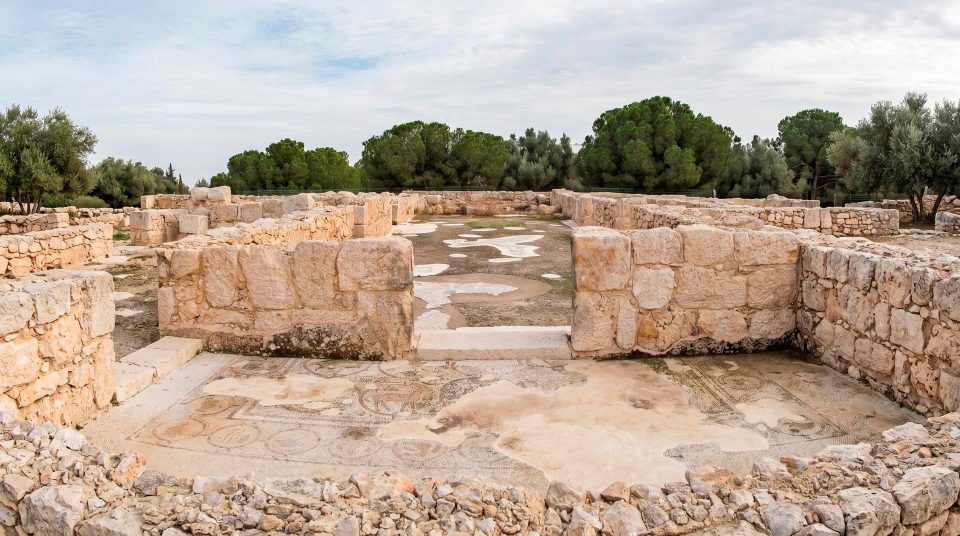
A mosaic floor lies beneath a shelter among stone walls, with the dry slopes of the Judean Desert rising behind it. At ancient Ein Gedi, spring water sustained an entire settlement: people cultivated dates, produced fragrant balsam and gathered in the synagogue. The archaeological park brings that life into focus, from the arrangement of houses to an inscription warning against revealing the ‘town’s secret’. The waterfalls in the neighbouring nature reserve belong to another part of the oasis.
A settlement between the desert and the Dead Sea
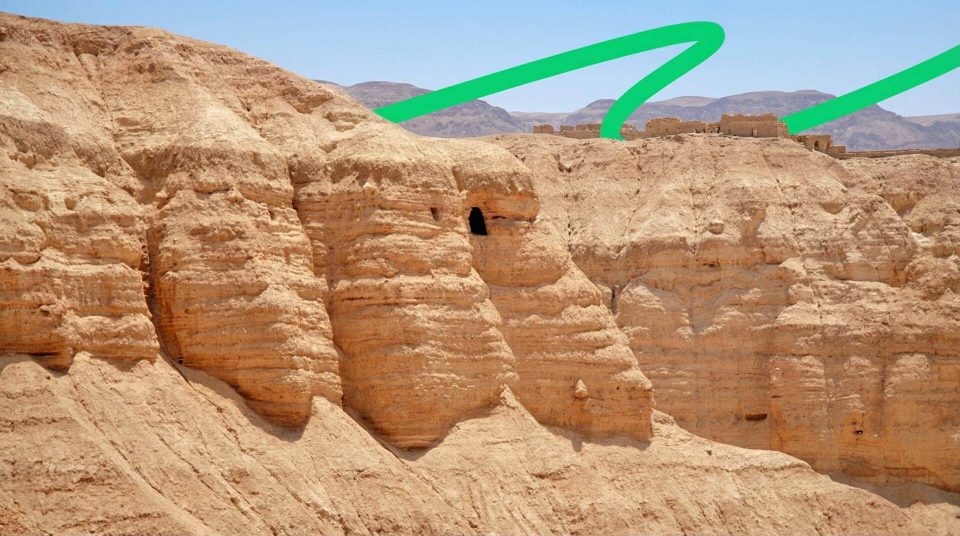
En Gedi Antiquities National Park lies near the western shore of the Dead Sea, below the cliffs of the Judean Highlands. The approach is from Route 90. The archaeological area is north of Kibbutz Ein Gedi and south of Nahal David. Those distinctions matter: maps use the name Ein Gedi for the modern kibbutz, the nature trails and the antiquities. For the synagogue, choose the destination labelled Antiquities or Atikot Ein Gedi.
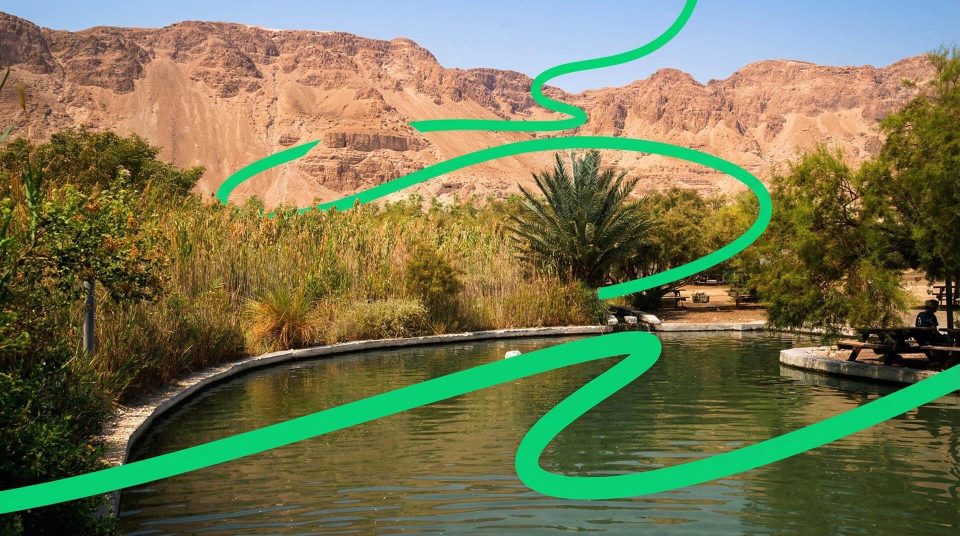
The setting makes more sense if you first look at the surrounding terrain. Beyond the oasis, the slopes carry little greenery; where freshwater reaches the ground, gardens and permanent homes become possible. Springs and irrigation determined the settlement’s survival. The Dead Sea formed part of its geography and economic connections, but freshwater sustained its agriculture. Keep that sharp contrast between cultivated land and desert in view as you examine the ruins. The stone plan records a community built around a limited, productive area.
Details that reward a slower look
1
The prayer hall
The building’s plan reveals the organisation of a communal space. Its northern side faced Jerusalem and held the Torah scrolls. Surviving foundations help you imagine where worshippers gathered and how the different parts of the hall were divided.
2
Birds and mosaic ornament
Patterned borders, geometric shapes and birds give the design several levels of detail. From a distance the floor reads like a carpet; close up, you can see its small pieces of stone. Work from the overall composition towards individual motifs.
3
The community’s inscriptions
Mosaic texts preserve donors’ names, biblical figures, months and the names of zodiac signs. Their contents are known through scholarly study. They offer an unusual chance to encounter aspects of the settlement’s social and economic history in the community’s own words.
4
The houses around the synagogue
Stone walls in the neighbouring rooms put the monument back into a settlement. The communal building stood among closely spaced houses. Compare domestic rooms with the synagogue to see the space the community devoted to shared life.
A synagogue built and rebuilt
The ancient Ein Gedi synagogue developed in stages. Its early phases are dated to the third century CE, with later enlargement and alteration. Dates in visitor accounts ranging from the third to the fifth or sixth century may therefore refer to different building phases. The official park description highlights a sixth-century synagogue, while the archaeological account traces an earlier history. The surviving complex cannot be understood as the product of a single building campaign.
As you look around, distinguish the plan from its decoration. Walls and foundations show how the hall was organised; the mosaic reveals how the community wanted the interior to look. The place for the scrolls, the platform before it, the side spaces and the decorative programme worked together. Sacred texts were read here, and people who supported the community through donations gathered in the same building. That combination explains why religious references share the floor with the names of particular residents.
How to read the mosaic floor
The main feature of Ein Gedi’s archaeological park asks for a different pace from a walk through a gorge. First take in the whole composition, then look for recurring elements. Geometric borders divide the surface, birds and plant motifs animate the design, and inscriptions introduce sequences of human names and concepts. Even without reading the ancient languages, you can see how carefully the floor was planned.
The names of zodiac signs and months are especially interesting: knowledge of the calendar forms part of the synagogue’s written programme. Do not turn this into a description of a large illustrated zodiac wheel by borrowing the appearance of another ancient synagogue. Ein Gedi has its own distinctive inscriptions and ornament. Individual areas differ in preservation, and original finds and explanatory displays may be housed in different places. Follow the label for the particular object in front of you rather than assuming that every published photograph represents the display on site.
What was the ‘town’s secret’?
The best-known inscription threatens punishment for anyone who harms the community or reveals the settlement’s secret to outsiders. It is often linked to balsam production, a valuable industry that was indeed important to Ein Gedi’s economy. The text itself, however, gives neither a perfume recipe nor an explanation of the process. That distinction separates the words scholars can read from the interpretation they propose.
Another reading understands the warning more broadly as a prohibition on betraying the community’s interests. The inscription is therefore more interesting than an advertising story about a formula supposedly recoverable from the mosaic. It records internal rules in a small society that depended on trust, shared work and the protection of knowledge. Religious life, economic interests and relationships with outsiders could be closely connected here. The uncertainty belongs in the account: the surviving text gives evidence of what the community sought to protect without settling every question about its meaning.
Balsam and dates in the oasis economy
Ancient writers associated Ein Gedi with date palms and aromatic balsam. The fragrant material was used in perfumes, incense and medicinal preparations. Its value helps explain why the oasis attracted interest far beyond its own settlement. In this context, the Hebrew term afarsemon refers to the balsam plant. It should not be understood as an ordinary modern persimmon, although that is what the word commonly means in Hebrew today.
Agriculture required sustained work on a limited area of land, directing water towards the plots where it could produce a crop. Excavation has also revealed more everyday evidence of diet and craft activity, including date remains, pomegranate, cereals and pulses. These finds widen the picture beyond expensive perfume. People cooked food, stored provisions, grew several crops and maintained households. The oasis’s prosperity depended on a functioning settlement, part of which can still be followed in the arrangement of its stone walls. Balsam was important, but the homes around the synagogue belonged to a more varied daily economy.
Reference points in a long history
- The fourth millennium BCE
A Chalcolithic temple stood on the slope above the oasis. It is a separate archaeological monument, considerably older than the synagogue, with its own location and history.
- The seventh century BCE
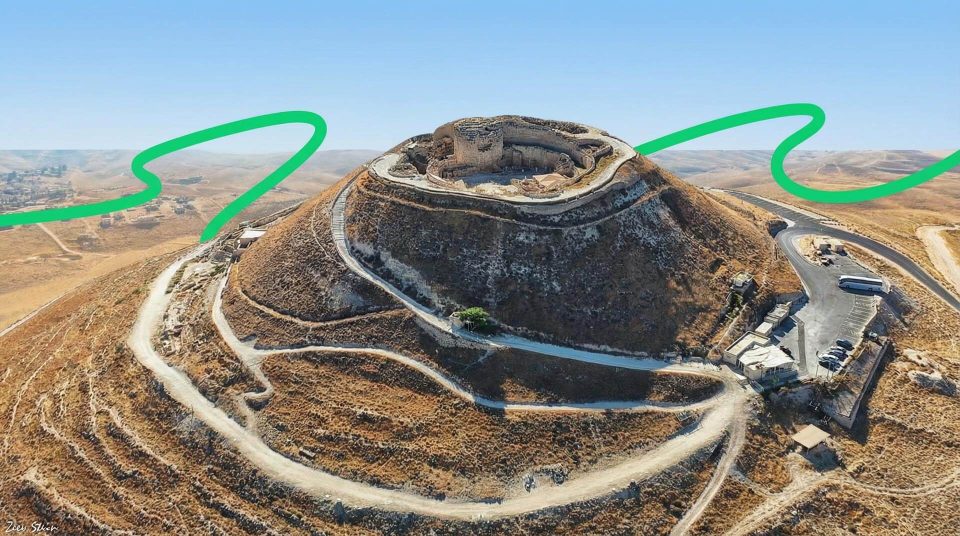
A settlement of the Kingdom of Judah developed at Tel Goren. The oasis’s early settlement history is associated with this mound; later buildings spread beyond it.
- The Roman and Byzantine periods
The settlement expanded, with date and balsam cultivation supporting its economy. The synagogue was rebuilt and decorated on several occasions rather than remaining unchanged.
- 1970–1972
Excavations revealed the synagogue’s layout and mosaics. A charred scroll found there became the subject of a separate research project extending over many years.
Reading a scroll without unrolling it
In 1970, a charred scroll was discovered in the burnt remains of the synagogue’s Torah ark, the place where its scrolls had been kept. Its layers crumbled when disturbed, making physical unrolling impossible. Much later, X-ray microtomography and computer processing made it possible to reconstruct images of the inner surfaces. The readable portion contained text from the beginning of the Book of Leviticus.
That discovery changes how you look at the low walls. This was a site important to the study of biblical texts and to the development of methods for conserving ancient manuscripts. Do not, however, expect the scroll itself to be a guaranteed exhibit among the ruins. The archaeological place of discovery and the collection in which an object is kept are different things. Scholars also debate the precise date of the fire and the circumstances of the settlement’s destruction. A burnt object alone cannot identify who was responsible for it.
The antiquities and their neighbours
- The synagogue and ancient residential quarter
- The archaeological site
- These are the focus of the archaeological park: the settlement plan, mosaic and history of its community are the main subjects of a visit.
- Nahal David
- A nature trail
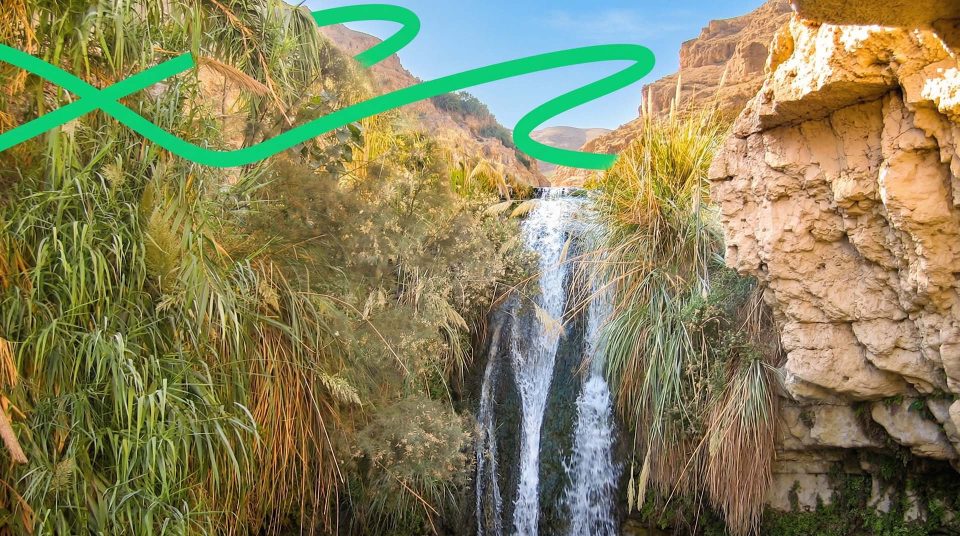
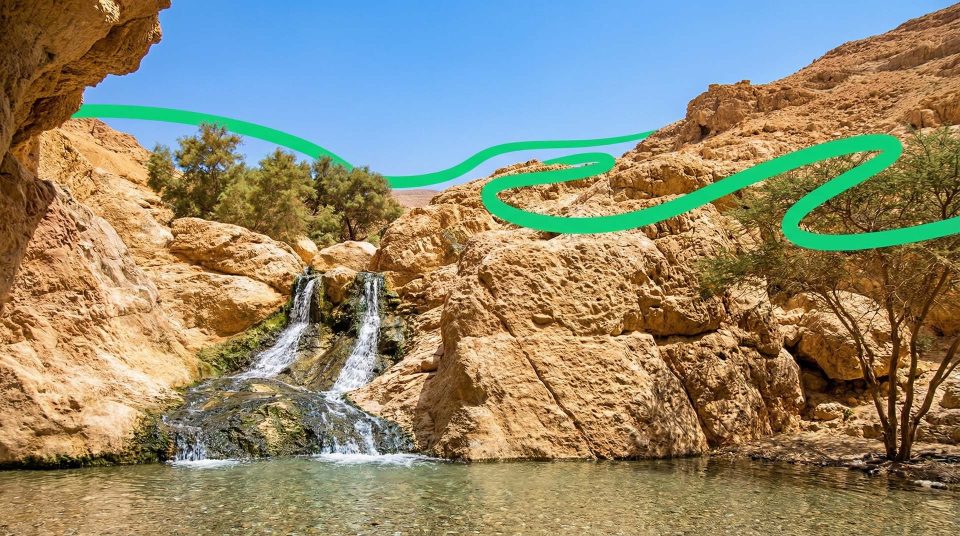
- This is the natural part of the oasis, with its own entrance and routes. The waterfalls are not inside the synagogue complex.
- Nahal Arugot
- A separate gorge
- A different gorge within the nature reserve. Its trails and water sections need their own plan, taking account of walking demands and conditions.
- Tel Goren and the Chalcolithic temple
- Other archaeological monuments
- These monuments belong to other phases of the oasis’s history. Do not automatically include them in an easy synagogue visit: their locations and approaches differ.
Among the houses: everyday settlement life
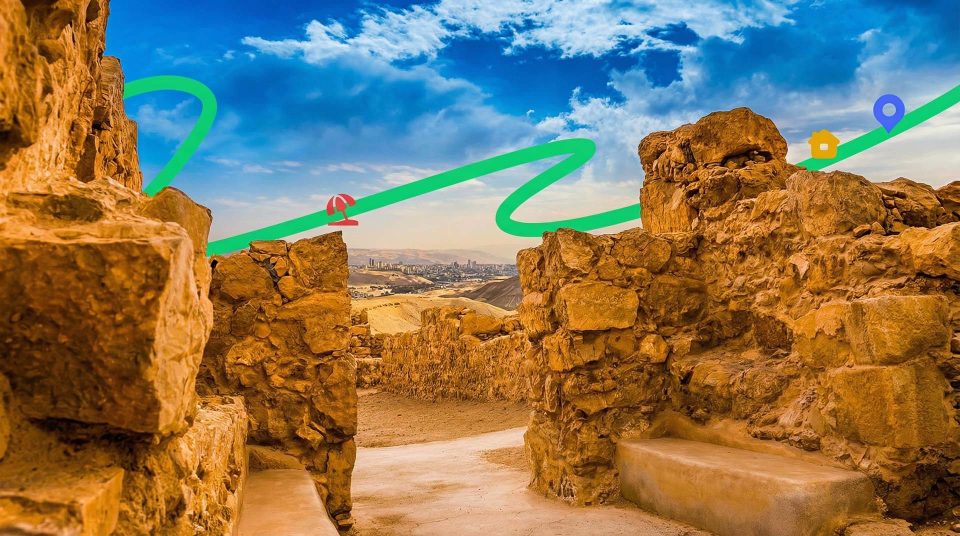
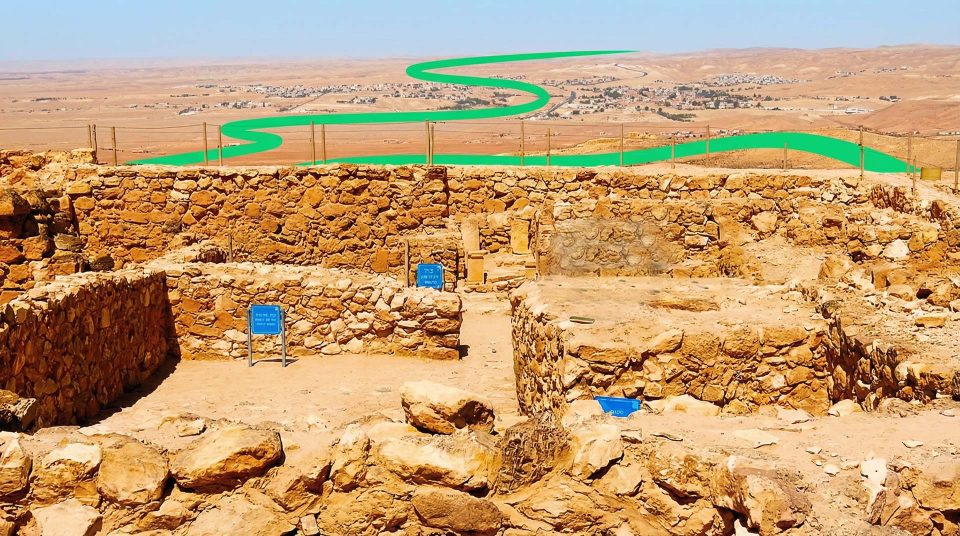
After looking at the mosaic, turn back towards the houses. Low dividing walls, adjoining rooms and narrow passages show how closely the settlement was built. Follow connections between rooms rather than guessing a specific function for every surviving wall. An archaeological label is more reliable than an imagined perfumer’s shop or the house of a wealthy merchant.
A mikveh, or ritual immersion bath, and working structures were also found in the excavated settlement. They add to the picture of a community whose religious observance existed alongside daily labour. Much of the ancient village remains beyond the excavated area, so the visible ruins provide only part of the story. Compare the general plan on the information panel with the remains before you. It helps distinguish established connections from areas about which less is known. A modest wall can be informative, provided its interpretation stays close to the evidence.
A useful sequence for exploring the site
Begin with the overall settlement plan to locate the synagogue and residential quarters. Then move to the hall and its mosaics. After reading about balsam and the ‘town’s secret’, the surrounding houses take on a clearer place in the oasis economy. Moving from the broad view to the inscriptions and back again keeps individual discoveries connected with the settlement as a whole.
For a family, a useful task is to find repeated patterns, distinguish a bird from a geometric motif and notice where ornament gives way to letters. Visitors interested in history can compare the building phases with evidence of farming and trade. The time you spend will depend on how closely you want to study the displays. A careful look at a small number of features can reveal more than hurrying past every wall.
Desert sun and the actual paths on the ground
A shelter over the central monument does not turn the whole archaeological site into a cool indoor space. Bring drinking water and sun protection for exposed areas. In hot weather, organise the visit around short walks and pauses in shade. Cooler seasons make it easier to study the outer settlement plan. Rain in the desert also calls for attention to flash-flood warnings, especially if your day includes a gorge.
The authority describes an equipped approach from the entrance to the synagogue and adaptations within parts of the complex. Passages between the ancient houses may present different accessibility conditions. For a wheelchair, pushchair or visitor with limited mobility, the layout of the particular section matters. An oasis walking path links the antiquities area with the nature entrances, but use the official route map when combining them. Plan admission and ticket arrangements for the different parts of Ein Gedi separately rather than assuming a single route or entry covers everything.
Seeing the oasis after the archaeology
After visiting the synagogue, the greenery below the cliffs becomes easier to see as the result of a long history of managing water. Palms, field boundaries, houses and paths help explain why people repeatedly returned to this demanding landscape. The biblical account of David and Saul adds a literary and religious context. It does not date the late-antique synagogue walls or establish an exact cave for the event.
If a nature walk follows, keep the difference in scale in mind. In a gorge, you will be looking chiefly at water working on rock. Among the ancient buildings, the evidence shows how people turned freshwater into crops and a sustainable household economy. On a journey along the western shore of the Dead Sea, that comparison offers a more coherent understanding than trying to gather every local sight into a hurried list. The settlement and the gorges illuminate different aspects of the same oasis.
Questions about the Ein Gedi antiquities
- Are the antiquities and the waterfalls part of the same visit? They are neighbouring but distinct areas. The archaeological park focuses on the settlement and synagogue; the nature routes follow the gorges. Consider entrances, admission and preparation for each separately, even if you plan to combine them in one day.
- When was the synagogue built? Its early phases are dated to the third century CE, with later rebuilding in the late Roman and Byzantine periods. The official description highlights a sixth-century monument. No single date adequately describes every surviving phase of the building.
- Does the mosaic really contain a secret perfume recipe? The inscription warns against revealing the ‘town’s secret’, but contains no recipe. An association with balsam production is a well-known scholarly interpretation. Other explanations concern the broader protection of the community and its interests.
- What was ancient afarsemon? In Ein Gedi’s history, the name refers to the aromatic balsam plant and its valuable fragrant material. The modern Hebrew meaning, persimmon, does not explain the ancient industry producing perfumes and other aromatic preparations.
- Can I see the scroll found here? Its discovery site is within the synagogue complex, but the charred scroll is not a guaranteed exhibit among the ruins. Its study involved scanning and virtual unwrapping to read part of the Book of Leviticus without physically opening it.
- Do I need hiking preparation for the synagogue? Visiting the antiquities along equipped paths differs from climbing towards a spring or the temple on the slope. Heat, sun and comfortable footwear matter for the park itself. Check the accessibility of the particular paths you intend to use.
- Can I come for the history without a water hike? Yes. The settlement makes a worthwhile visit in its own right. Mosaics, inscriptions, houses and evidence of balsam production provide a detailed introduction to the oasis without adding a walk through one of the gorges.
Sources
History
A Chalcolithic temple stood on the slope above the oasis. It is a separate archaeological monument, considerably older than the synagogue, with its own location and history.
A settlement of the Kingdom of Judah developed at Tel Goren. The oasis’s early settlement history is associated with this mound; later buildings spread beyond it.
The settlement expanded, with date and balsam cultivation supporting its economy. The synagogue was rebuilt and decorated on several occasions rather than remaining unchanged.
Excavations revealed the synagogue’s layout and mosaics. A charred scroll found there became the subject of a separate research project extending over many years.