At a glance
What awaits you
Visit duration
Not yet provided
Difficulty
Not yet provided
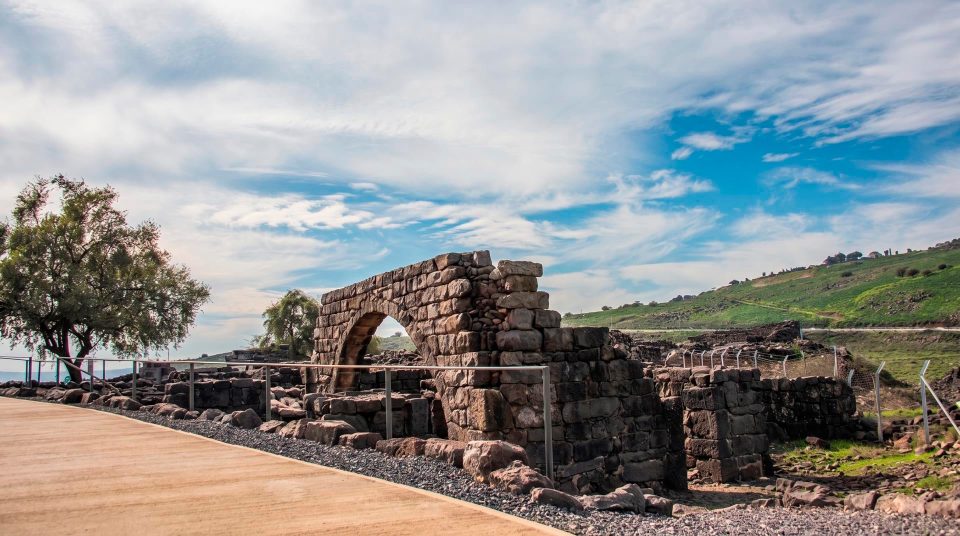
The concrete path is accessible up to the antiquities entrance; access throughout the ruins is not established.
Route length
Not yet provided
Who is it for
Popular visiting hours
Verified busyness data is not available yet
Best time to visit
JanFebMarAprMayJunJulAugSepOctNovDec
BestGoodHot
5-day forecast
Forecast loads when this section is viewed
About this place
Kursi (Gerassa) National Park
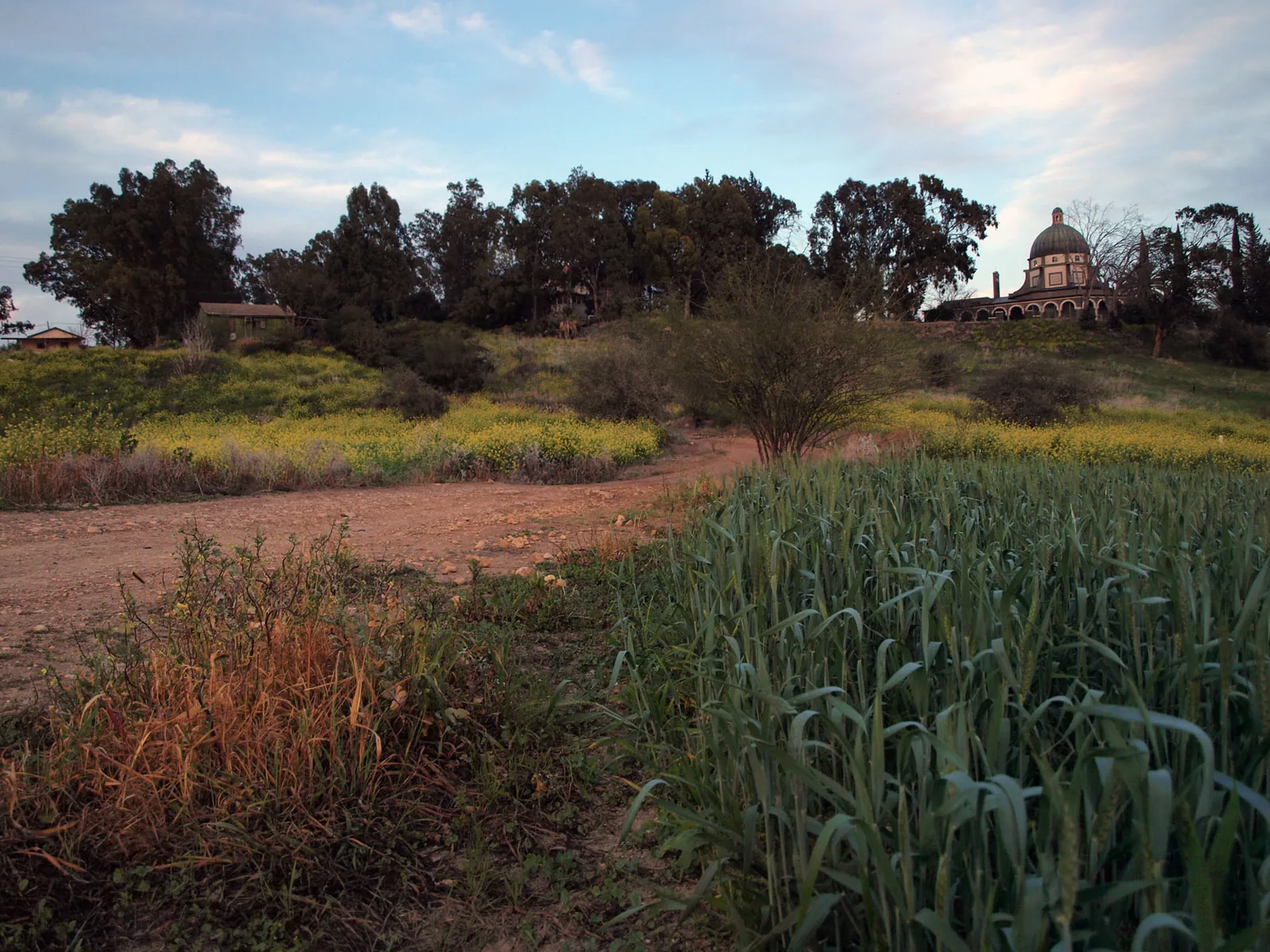
At Kursi, the path from the monastery gate leads towards the columns of a basilica, but the hillside behind the church keeps drawing the eye. A small chapel survives there beside a cave and a projecting rock. Here on the eastern shore of the Sea of Galilee, a Gospel tradition took physical shape as a pilgrimage centre, with a large church, mosaic floors, living quarters and the working facilities that sustained a monastic community.
Between the lake and the hillside
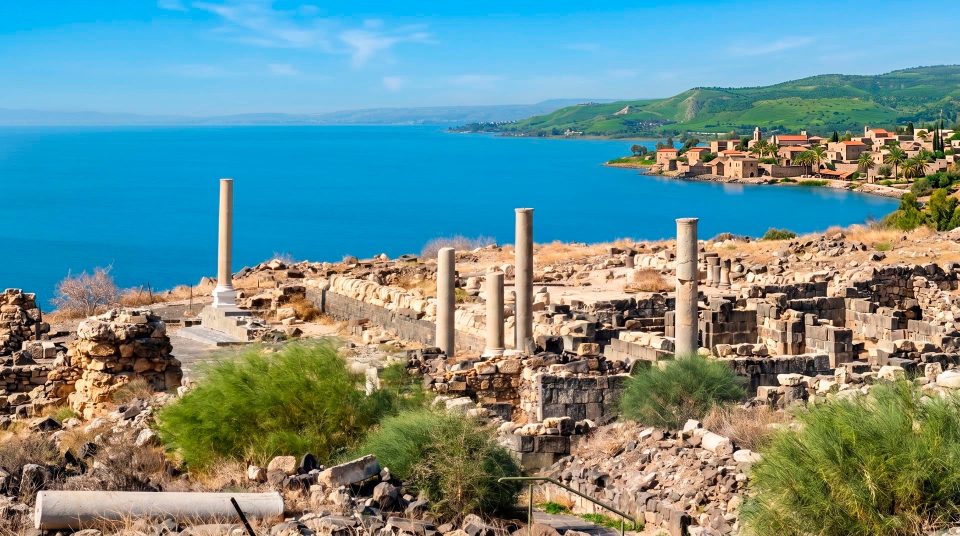
Kursi National Park lies near the eastern shore of the Sea of Galilee, or Lake Kinneret, north of Ein Gev and close to the junction of Roads 92 and 789. The lakeside plain meets the foot of the Golan Heights here. That meeting of landscapes helps explain the site: the monastery occupied a convenient area of lower ground, while a smaller place of worship stood on the hillside. Keep the archaeological park distinct from a beach or a path directly along the water. Its main story unfolds inside the monastery enclosure. The relationship between the buildings and the slope becomes especially clear towards the end of a visit. From the permitted path to the chapel, look back at the basilica and the extent of the complex. Exploring the lower ruins and climbing towards the rock involve different gradients and call for different walking paces.
The Gospel account and the Kursi tradition
Christian tradition associates Kursi with the Gospel account of an exorcism. Jesus encounters a man possessed by demons; the demons enter a herd of pigs, which rush into the lake. The place names and some details differ between the Gospels and their manuscript traditions. Identifying an ancient name with one exact location should therefore not be presented as a settled archaeological fact. Excavations do establish that a substantial Byzantine monastery stood here, connected with the veneration of the site. The remains show how people in late antiquity remembered the Gospel story and marked a place associated with it. Keeping those two kinds of evidence distinct allows the religious significance of Kursi to be treated respectfully while giving close attention to what actually survives in stone.
What to look for in the monastery
1
Gate, courtyard and church axis
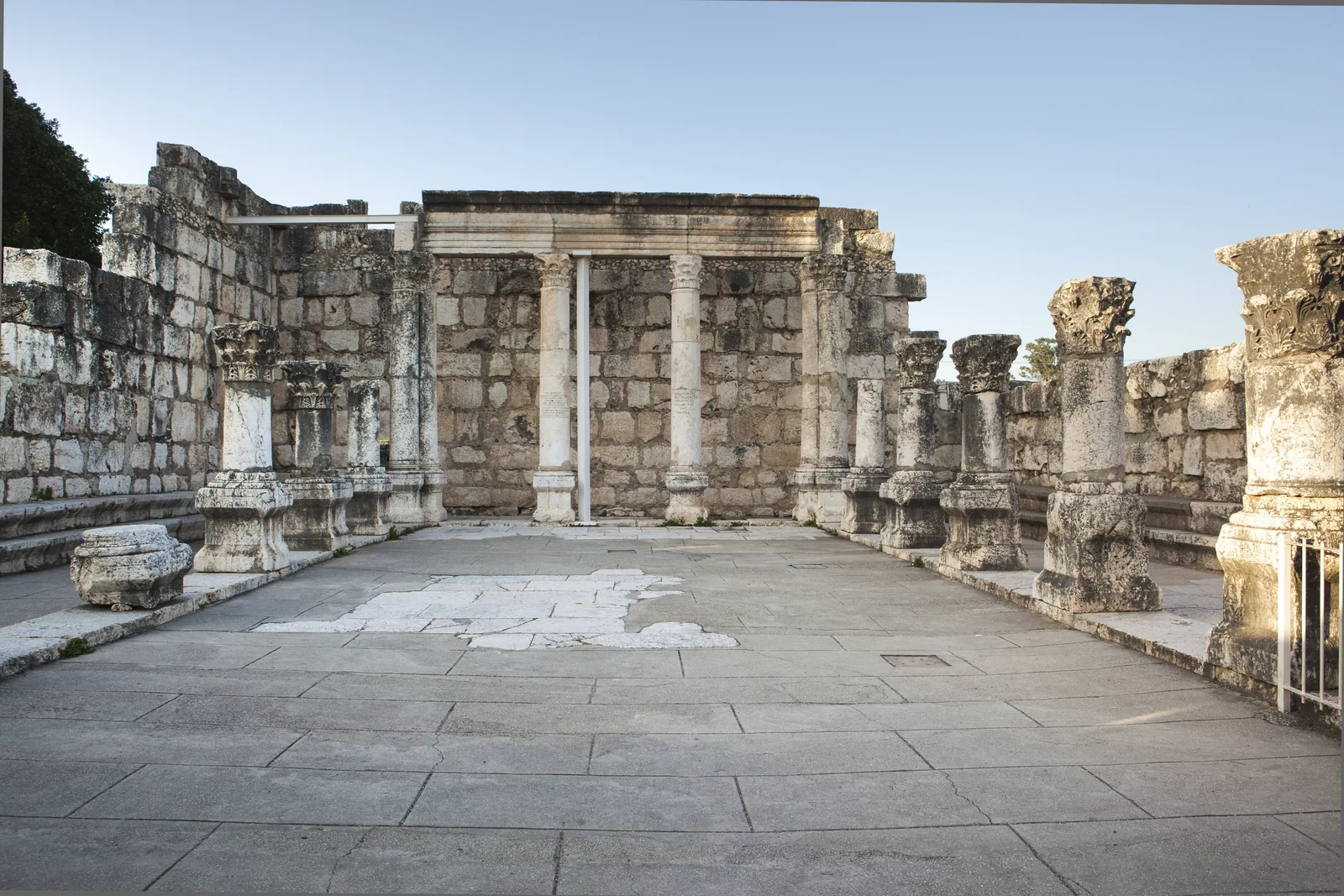
Begin with the overall plan. The approach from the entrance through a spacious courtyard to the basilica shows how pilgrims were led towards the main church. The amount of open space helps you imagine a substantial monastery rather than an isolated village church.
2
Columns and capitals
Colonnades separated the central nave from the side aisles. Look for carved crosses and the treatment of the stone among the architectural details. Compare surviving and reconstructed sections with the building plan, rather than assuming that every standing column remains untouched from antiquity.
3
Mosaic floors
The side aisles preserve animal and plant motifs. Study fruit, leaves, birds and ornamental borders in small sections. This makes the rhythm of the design easier to follow and reveals differences in how well individual areas survive.
4
The working monastery
An olive press and bathhouse reveal the monastery’s everyday needs. Producing oil, receiving guests and managing water belonged to the same institution as worship and pilgrimage.
Reading the plan of the basilica
The Byzantine monastery at Kursi developed in the fifth century CE. Its large church follows a basilican plan: columns separate the central nave from the aisles, and an apse occupies the eastern end. Trace the building’s length with your eye, from the courtyard towards the sanctuary. The side rooms and the different uses of individual areas become easier to understand once that axis is clear. A small stone reliquary, a chest intended to hold sacred relics, was found beneath the altar position. It provides evidence of relic veneration, but does not justify inventing the name of a saint or the history of its contents. The monastery enclosure measured 145 by 123 metres, an indication of the space occupied by the community. The church was its spiritual centre, while much of the institution’s daily life took place beyond the worship hall.
Looking closely at the Kursi mosaics
Birds, fish, grapes, figs, pomegranates and other plant motifs decorate the church floor. Some animal figures have been damaged, while plant designs often remain easier to read. Notice the contrast without assuming that a single explanation accounts for every loss. The complex had a long history of occupation, damage and changing use. Nor should every surviving fragment be treated as an illustration of the story of the pigs. No such scene appears among the mosaics described here. The floor deserves attention as Byzantine decorative art in its own right. Follow the way a bunch of grapes fits its frame, the turn of a bird’s head or the pattern of foliage filling a corner. These small decisions make the mosaic workshop’s craft more tangible than a sweeping claim about the floor’s splendour.
An inscription with a precise date
A mosaic inscription at the southern room of the church gives the year 585 CE, during the reign of Emperor Maurice. It is one of the clearest chronological clues at the site. The date records the laying of a particular mosaic floor; it cannot automatically be applied to every wall in the monastery. The complex had already been established and developed in stages. The southern room is associated with baptism, which helps explain the church as a place of several religious activities, rather than one undifferentiated hall. Even if you cannot read the inscription without a translation, knowing where it lies and what it dates adds something concrete to the visit. In archaeology, small pieces of evidence like this can be more informative than the height of a column. They connect a specific piece of work with a known historical moment.
Key stages in Kursi’s history
- Fifth century CE
A monastery and large church are built near the eastern shore of the Sea of Galilee. Veneration of the place takes architectural form in a complex serving a community and its pilgrims.
- 585 CE
An inscription dates the mosaic floor beside the southern room. It records work carried out within a monastery that was already in existence.
- Late antiquity and the early medieval period
The complex undergoes damage, repairs and changes of use. Eventually, the large monastic institution ceases to function here.
- 1970
Byzantine finds are noticed during road construction. A fresh investigation begins at a monument that had long remained buried.
- 1980
Excavation on the hillside uncovers a chapel beside the projecting rock and cave. It adds another element to the history of local veneration.
- 2011–2013
A Byzantine bath complex north of the church is excavated, revealing more of the monastery’s provision for everyday needs.
Oil, water and the monastery’s guests
A large monastery had to feed its inhabitants and accommodate visitors. The olive press found here reveals one part of its economy. Olive oil had domestic, dietary and religious uses. A pilgrims’ guesthouse and bathing facilities add to the picture of an institution that regularly received people from elsewhere. The ancient connection between the monastery, shore and harbour helps you imagine pilgrims arriving by lake. A visit today, however, is a land-based exploration of the archaeological park. It does not imply a boat crossing or a functioning monastery quay. Look instead at the way different activities were arranged around the church. A workroom, courtyard and guest accommodation reveal the material support behind a pilgrimage centre. Leaving them out would reduce Kursi to a single church and miss much of what made the monastery work.
The hillside chapel and the venerated rock
East of the basilica, farther up the slope, a small chapel has an apse incorporated into a cave. A large rock projects nearby, with a distinct enclosed space around it. Tradition associates this spot with Jesus’s encounter with the possessed man. The chapel is evidence that the place was venerated, rather than archaeological proof of a particular Gospel event. Its scale contrasts with the basilica below: a small shrine beside natural rock overlooks a large communal church. The climb makes that difference clear and gives you a view back over the monastery as a whole. Wear secure footwear on the steps, keep to the permitted path and leave the rock itself unclimbed. If the ascent is unsuitable for your health or mobility, the lower complex still offers plenty of Byzantine architecture to explore in detail.
The lower complex and the hillside compared
- The basilica
- The space of a large church
- Concentrate on the plan, colonnades, apse and side rooms. They explain how the monastery’s principal church was organised before you move on to individual details of its floor.
- Mosaics and inscription
- Art and dating evidence
- Slow down to examine small sections. Plant motifs, areas of loss and the dated text each reveal a different part of the building’s history.
- Bathhouse and olive press
- Everyday monastic life
- These remains show how the community provided for residents and guests. They place the church within the practical setting of a working monastery.
- The rock chapel
- A venerated place on the slope
- A stepped path offers another view of the entire complex. The focus here is the relationship between a natural feature, a modest shrine and a local religious tradition.
A useful order for exploring
Start at the gates by taking in the complex and locating the church’s long axis. Move on to the columns, apse and side rooms. The mosaics are easier to understand after the general plan: you know which part of the floor you are looking at and how that space was used. Give the inscription beside the baptismal room its own pause. After the church, turn to the olive press and bathhouse remains. Leave the chapel climb until the end, when the view from above brings together features you have already explored. For families, one simple task is to identify fruit in the mosaics and compare it with familiar Mediterranean plants. That encourages children to notice original details and gives them more to do than posing for a quick photograph of the whole church.
Planning a day on the eastern shore
The low-lying lakeside area can be very hot in summer, and some of the ruins are exposed to the sun. Cooler weather makes it easier to linger over mosaics and then climb the hillside. A sunhat and drinking water are useful even for a relatively compact archaeological park. Kursi fits naturally into a drive along the eastern side of the Sea of Galilee, but there is no need to make every bend in the shore another compulsory stop. This one monastery has enough substance to reward an unhurried visit. When setting your navigation, distinguish the entrance to the park from the road climbing onto the Golan plateau. If step-free access matters, ask separately about the lower complex and the chapel path. Paths beside the church do not mean that every part of the park has the same gradient or surface.
Give the mosaic floors room to survive
Questions about Kursi National Park
- Is Kursi right on the beach? The park is near the eastern shore of the Sea of Galilee, but a visit focuses on monastery ruins and a hillside chapel. Plan beach time separately. Entry to the archaeological complex is not admission to a swimming area.
- Have excavations proved the Miracle of the Swine? No. The miracle belongs to the Gospel narrative and the Christian tradition associating it with Kursi. Excavations establish the presence of a Byzantine monastery and the physical history of devotion at the site.
- When was Kursi monastery built? The large complex was built in the fifth century CE and altered later. A mosaic inscription beside the southern room dates to 585 CE. That date should not be assigned automatically to all the park’s structures.
- What do the mosaics depict? Their motifs include birds, fish, grapes, figs and pomegranates. Some animal figures are damaged. The surviving mosaics do not directly illustrate the Gospel story of the herd of pigs.
- Do I have to climb to the chapel? The chapel is a separate part of the visit, associated with the venerated rock and a view over the monastery. Its path includes steps. If the ascent does not suit you, focus on the basilica, mosaics and working areas below.
- What survives besides the church? Excavations have revealed an olive press, accommodation for the community and guests, and a bathhouse. Together they show how the monastery supported daily life and received pilgrims coming to the holy place.
- Can I visit Kursi with a pushchair or wheelchair? Check the conditions for the particular areas you want to see. The lower complex and the chapel slope have different terrain, so uniform access throughout the park cannot be assumed. Decide in advance which features matter most to your group.
Sources
History
A monastery and large church are built near the eastern shore of the Sea of Galilee. Veneration of the place takes architectural form in a complex serving a community and its pilgrims.
An inscription dates the mosaic floor beside the southern room. It records work carried out within a monastery that was already in existence.
The complex undergoes damage, repairs and changes of use. Eventually, the large monastic institution ceases to function here.
Byzantine finds are noticed during road construction. A fresh investigation begins at a monument that had long remained buried.
Excavation on the hillside uncovers a chapel beside the projecting rock and cave. It adds another element to the history of local veneration.
A Byzantine bath complex north of the church is excavated, revealing more of the monastery’s provision for everyday needs.