At a glance
What awaits you
Visit duration
Not yet provided
Difficulty
Not yet provided
Leashed, muzzled dogs are allowed except inside the synagogue. The site explicitly lists accessible paths to all main points of interest, toilets and pools.
Accessible
Route length
Not yet provided
Who is it for
Popular visiting hours
Verified busyness data is not available yet
Best time to visit
JanFebMarAprMayJunJulAugSepOctNovDec
BestGoodHot
5-day forecast
Forecast loads when this section is viewed
About this place
Hammat Tiberias National Park
At Hammat Tiberias, the main reason to pause is underfoot. On the ancient synagogue’s mosaic floor, zodiac signs surround Helios, while nearby panels depict menorahs and a Torah shrine. Beyond the hall, the story continues at hot springs, water channels and an Ottoman hammam. Within a small area on the western shore of the Sea of Galilee, the remains reveal how different communities lived beside thermal water and put it to use.
Hammat at the southern edge of Tiberias
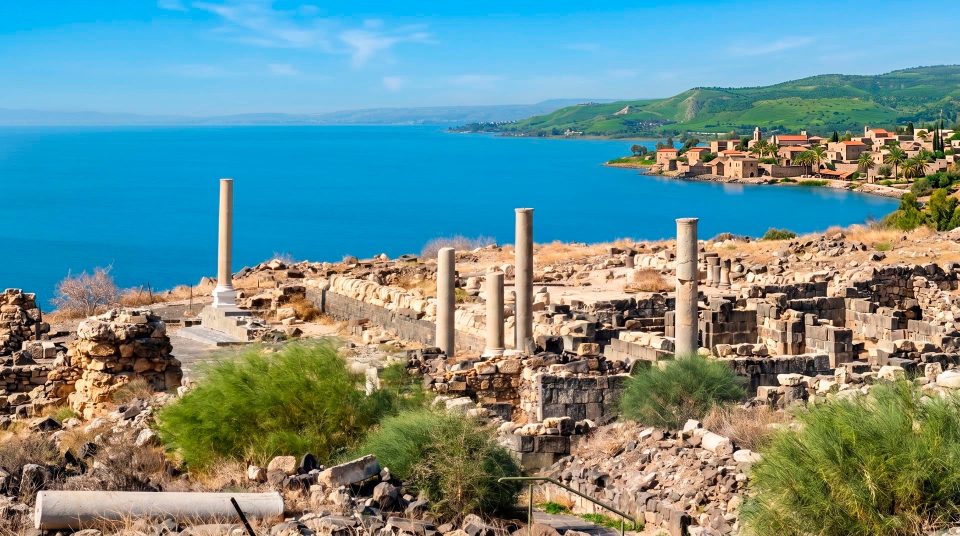
Hammat Tiberias National Park lies beside the western shore of the Sea of Galilee, south of central Tiberias, with its entrance approached from Road 90. The name Hammat refers to hot water; adding Tiberias distinguishes this site from other settlements and springs with similar names. Hamat Gader is a separate place, an important distinction when setting your navigation. Here, you will not be walking street after street through an extensive ancient city. The visit centres on the synagogue, thermal installations and hammam. The compact layout leaves room for close attention to individual objects and images. Particularly revealing is the proximity of different periods. An ancient pool, a mosaic pavement and a much later bathhouse represent different communities whose lives were shaped by the same natural resource.
Hammat Tiberias at a glance
17 Thermal mineral springs
3 Main mosaic panels
1780 CESuleiman Hammam built
Hot springs and the management of water
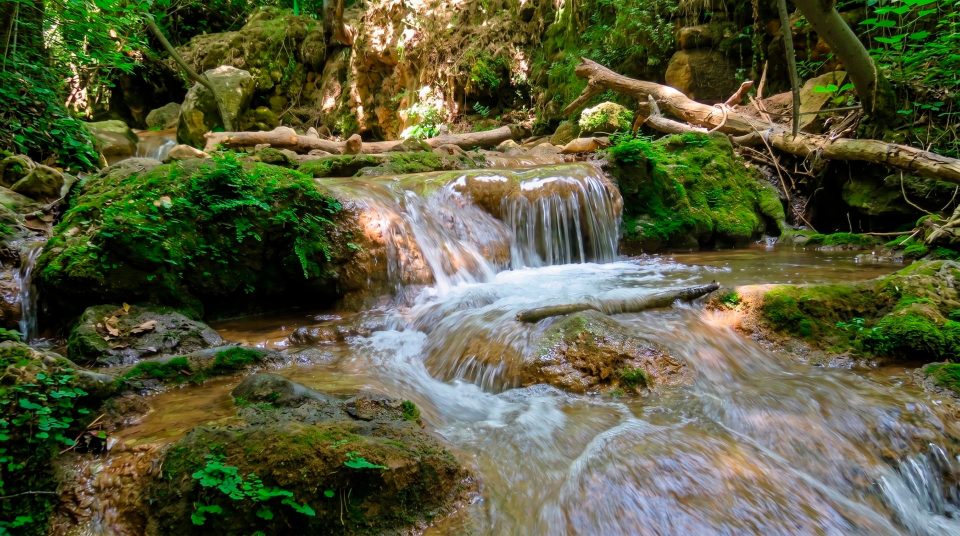
Thermal water shaped life at Hammat long before the national park existed. The complex is described as having 17 thermal mineral springs, linked to a system of underground channels supplying bathing facilities. Steam outlets and engineering details are reminders that a hot spring needs careful management. Water has to be directed, surplus flow carried away and conditions made safe for use. Looking at the system helps explain why public buildings developed beside the springs. Archaeological interest, however, provides no basis for a promise of medical treatment. The historical reputation of the water for healing and evidence of medical effectiveness are separate questions. During a visit, respect the barriers around the installations. Do not test the temperature by putting your hand into channels that are not intended for visitor contact.
What to see beyond the springs
1
The synagogue’s mosaic hall
The park’s main artistic attraction deserves a view of the whole floor before close-ups. Move from the overall composition to the inscriptions, central circle and religious symbols. The images then become parts of a considered design, rather than a series of disconnected photographs.
2
Suleiman Hammam
The surviving Ottoman building represents a later phase of bathing culture. Its walls and enclosed space help you imagine a public bath as somewhere people met, rested and attended to their bodies as part of everyday life.
3
The ancient baths
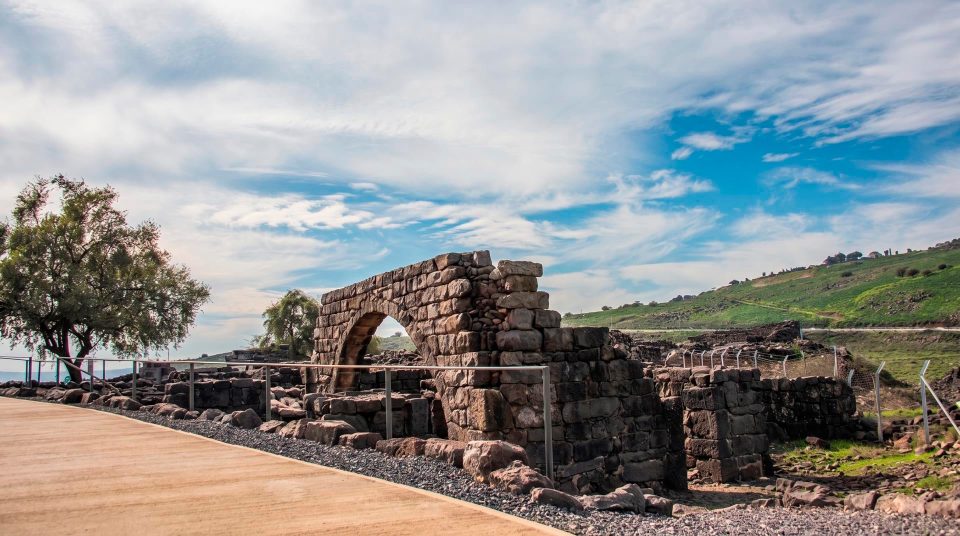
A plastered pool and stone arches survive in the southern part of the site. They provide physical evidence of how water was used, although they do not form a fully reconstructed bath complex.
4
Channels and thermal installations
Outside the mosaic hall, look at the connection between water and architecture: where the flow is directed and how it is carried away. Even a modest engineering feature hints at the practical demands of operating hot springs.
The Severus Synagogue and the man in its inscription
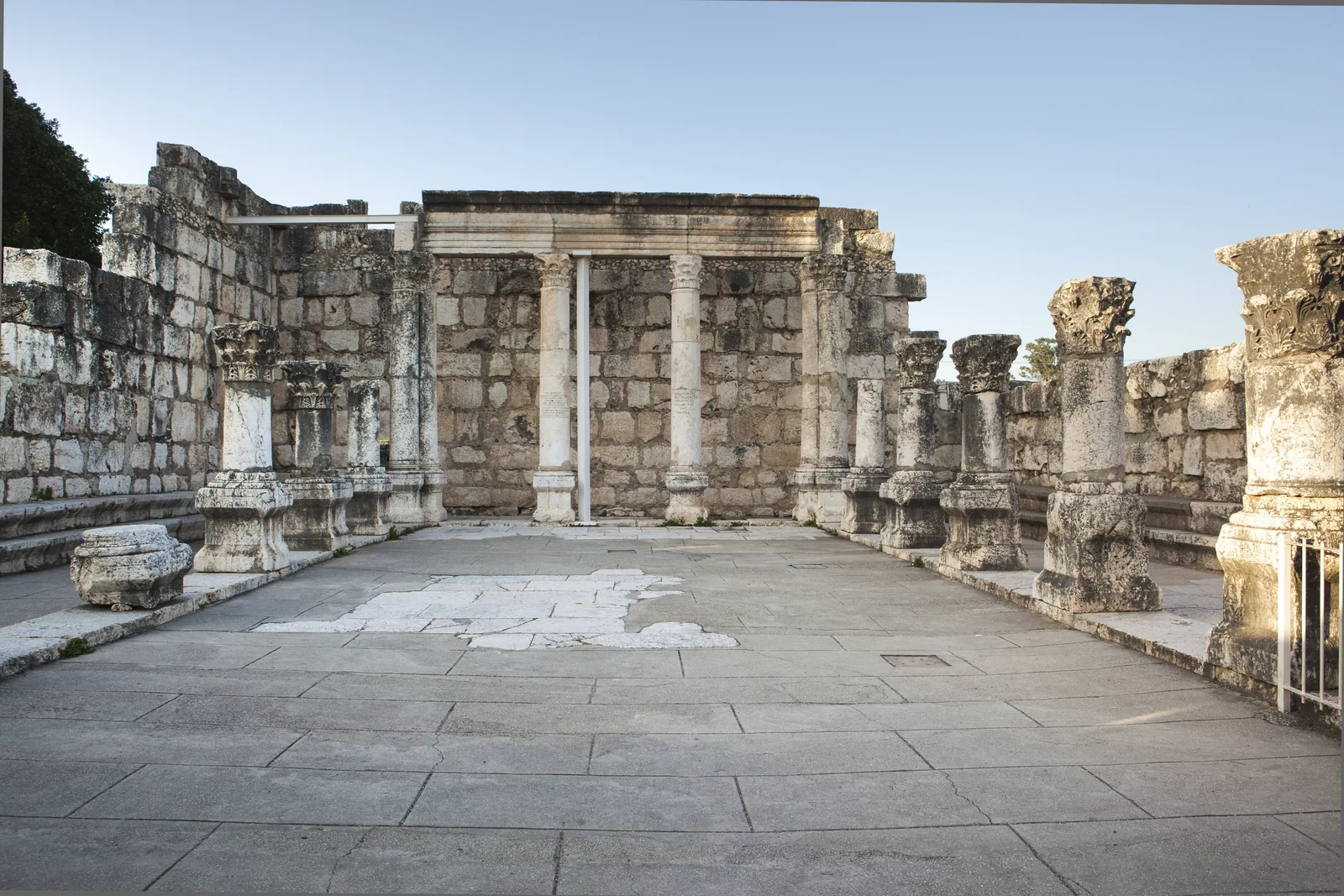
The synagogue with the famous floor is known as the Severus Synagogue after a person named in an inscription. The name does not mean that the building was dedicated to a Roman emperor or erected on his orders. The text associates Severus with the household of the Patriarchs, leaders of the Jewish community. Such inscriptions bring people back into an archaeological site: donors, craftspeople and those who sustained the building’s life stood behind its stone walls. Several successive synagogues occupied the same location. The celebrated mosaic belongs to a late Roman phase within the third- to fourth-century sequence; it does not give every visible wall the same date. Later alterations changed the building’s dimensions and plan. Follow the floor levels and the boundaries of the structures to see Hammat as a site with several layers, rather than a single unchanging monument.
The three parts of the mosaic floor
The Hammat Tiberias mosaic has three principal panels. Lions and Greek donor inscriptions occupy the northern section. In the middle, a zodiac wheel surrounds Helios. The southern panel depicts a Torah shrine and Jewish ritual objects. Examine them in sequence while keeping the whole composition in mind. Names and expressions of gratitude show the social life of the synagogue. The central circle concerns the order of the heavens and the passage of time. The shrine and menorahs emphasise the building’s role as a Jewish place of prayer and communal gathering. Focusing exclusively on Helios misses much of the design. Small pieces of stone combine into a broader visual programme in which texts and images complement one another. The juxtaposition matters as much as any one figure.
Helios at the centre of the zodiac
The image of a sun god on a synagogue floor naturally attracts attention. It demonstrates the use of imagery familiar in the art of the Greco-Roman world. Its presence alone does not establish that the community worshipped Helios or abandoned its own religious tradition. Scholars discuss the meaning of this iconography in relation to late antique culture, calendars and ideas about the cosmos. At the site, careful observation is more useful than choosing a single dramatic explanation. Female personifications of the seasons occupy the corners of the central composition. Their clothing and attributes develop its theme of time. The annual cycle, celestial signs and earthly seasons can be considered together in one image. Comparable motifs appear in other ancient synagogues in the region, including Beit Alfa.
Menorahs, a shofar and the names of donors
In the southern panel, the Torah shrine is accompanied by seven-branched menorahs, a shofar and a lulav. The shofar is a ritual horn; the lulav is a palm branch used in Jewish festival observance. These objects establish the religious context without requiring a definitive interpretation of every central image. The use of Greek for donor inscriptions is also significant. It reveals something of the community’s cultural and linguistic environment, but cannot by itself define every resident’s language or beliefs. Think of an inscription as a form of public remembrance: a person’s name endured in a place used by many people. Compare the disciplined shapes of the letters with the freer lines of figurative or plant designs. Even without reading Greek, you can see their different functions. Words record people’s contributions, while images organise the space and offer subjects for interpretation.
Changing life beside the springs
- The Roman period
Hot water is channelled into bathing facilities. Hammat develops in close connection with neighbouring Tiberias, and its thermal springs become an important resource in local life.
- Third–fourth centuries CE
During one phase of the synagogue’s history, the celebrated mosaic floor is laid. Inscriptions preserve donors’ names, while the design combines a zodiac composition with Jewish symbols.
- Late antiquity
The synagogue is rebuilt, changing its plan and dimensions. Surviving elements from successive phases show the sustained use of this one site.
- 1780
Suleiman Hammam is constructed in the Ottoman period. A new architectural form continues the area’s long bathing tradition.
- 1944
By this date, the old hammam’s use as a working public bath comes to an end. The preserved building becomes a historical record of that culture.
Suleiman Hammam and the public bath
Suleiman Hammam was built in 1780, during the period of Jezzar Pasha. Despite its name, it should not be assigned to the reign of Sultan Suleiman the Magnificent. Considerably younger than the ancient structures, the building represents a separate historical layer. A public bath had its own routines, spaces for bathing and rest, and customs followed by regular users. Local residents and visitors used this hammam until 1944. Compare the surviving volume of the enclosed building with the open remains of the ancient pool. One lets you appreciate an interior; the other chiefly reveals foundations and engineering arrangements. Keeping the two distinct makes the bathing history much clearer than grouping everything together under the label “Roman baths”. Continuity in the use of thermal water did not mean that the buildings or the communities using them stayed the same.
Where to spend time in a small park
- The mosaic as a whole
- Plan and meaning
- First identify the separate panels and their positions. That overview reveals the relationship between the donor inscriptions, central wheel and ritual objects.
- Individual images
- The mosaic maker’s craft
- After taking in the full design, examine seasonal figures, zodiac signs and the details of the menorahs. Camera magnification is more useful than stepping beyond the protective boundary.
- The hammam
- Public bathing culture
- Treat the Ottoman building as a historical stop in its own right. Compare its architecture with the exposed ancient remains while keeping their different dates in mind.
- Springs and channels
- A natural resource and its engineering
- Watch the water only from permitted places. The thermal system helps explain the settlement’s origins, but its presence is not an invitation to bathe wherever you choose.
What the arches beside the ancient pool reveal
In the southern part of the site, excavators found a pool with plastered walls and stone arches that once supported an upper structure, now lost. These are fragments of ancient baths, rather than a restored complex in which every room can be followed in sequence. Some imagination is useful, provided it stays within the evidence. Plaster explains the need to retain water; arches show how builders spanned a space and transferred the load. Beside the thermal system, those details make a coherent engineering story. Avoid confidently identifying every recess as a steam room or every broken object as part of a particular mechanism without an explanatory label. Excavated buildings often survive only in part. Being able to see the limits of what is known is itself one of the rewards of looking closely.
An archaeological visit without medical promises
Questions about Hammat Tiberias and its mosaic
- Are Hammat Tiberias and Hamat Gader the same place? No. Hammat Tiberias is on the western shore of the Sea of Galilee beside Tiberias. Hamat Gader is a different thermal complex. Both names refer to hot water, so specify the correct park when planning your journey.
- What is the main thing to see at Hammat Tiberias? The synagogue mosaic, with its zodiac signs, Helios and Jewish symbols. Suleiman Hammam, thermal installations and the remains of ancient baths add further layers to the visit. These features belong to different historical phases.
- Why is Helios depicted in a synagogue? The image belongs to the visual vocabulary of late antiquity, and scholars debate its meaning here. A representation of the sun god does not, on its own, prove that the Jewish congregation practised a pagan cult.
- Who was Severus, after whom the synagogue is named? He is a person mentioned in a donor inscription and associated with the household of the Patriarchs. The synagogue’s name comes from that floor inscription. It does not imply a dedication to a Roman emperor.
- Was the hammam built by Sultan Suleiman? The surviving building dates to 1780, in the period of Jezzar Pasha. Its name should not move it back into the reign of Suleiman the Magnificent. The old bathhouse remained in use until 1944.
- Does park admission guarantee bathing? No. The park primarily protects natural and archaeological features. Ask separately about access to water and the conditions for using it. An exposed spring or channel must not be assumed to be an authorised bathing place.
- Does the water really cure illnesses? People attributed healing properties to the springs in different periods, but that is historical evidence, rather than a medical guarantee. Discuss the benefits and safety of hot mineral water for your own circumstances with a doctor.
Sources
History
Hot water is channelled into bathing facilities. Hammat develops in close connection with neighbouring Tiberias, and its thermal springs become an important resource in local life.
During one phase of the synagogue’s history, the celebrated mosaic floor is laid. Inscriptions preserve donors’ names, while the design combines a zodiac composition with Jewish symbols.
The synagogue is rebuilt, changing its plan and dimensions. Surviving elements from successive phases show the sustained use of this one site.
Suleiman Hammam is constructed in the Ottoman period. A new architectural form continues the area’s long bathing tradition.
By this date, the old hammam’s use as a working public bath comes to an end. The preserved building becomes a historical record of that culture.