At a glance
What awaits you
Visit duration
Not yet provided
Difficulty
Not yet provided
Route length
Not yet provided
Who is it for
Popular visiting hours
Verified busyness data is not available yet
Best time to visit
JanFebMarAprMayJunJulAugSepOctNovDec
BestGoodHot
7-day forecast
Forecast loads when this section is viewed
About this place
Monastery of Euthymius
Among the industrial buildings of Mishor Adumim survives a monastic site with a church, a burial crypt and substantial underground water storage. The Monastery of Euthymius grew from a fifth-century community of desert hermits into a monastery organised around communal life. Its remains reveal how religious solitude depended on practical arrangements: collecting water, providing rooms and maintaining connections to a major road.
A desert monastery within modern Mishor Adumim
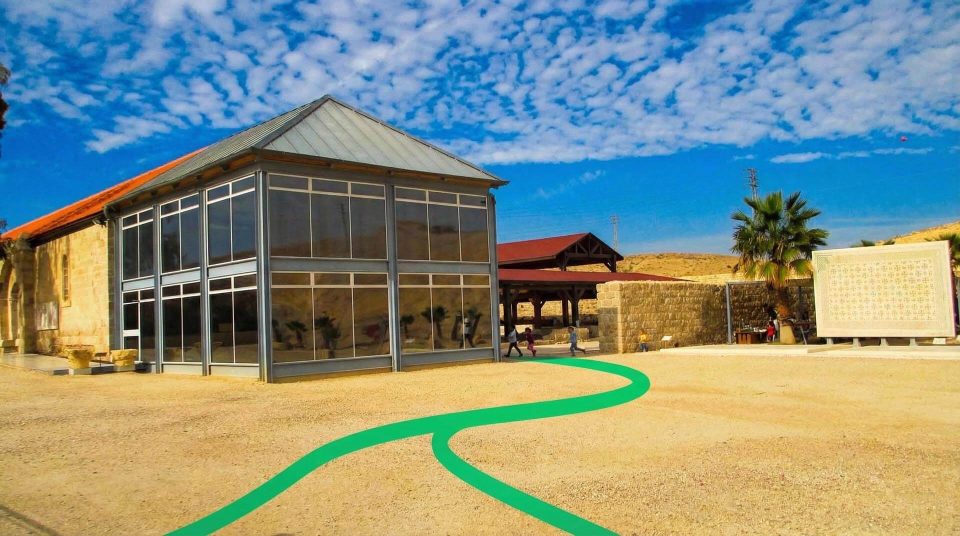
The Monastery of Euthymius lies in the Mishor Adumim industrial area, east of Ma’ale Adumim in the West Bank. This is the northern Judean Desert, close to the historic route from Jerusalem towards the Jordan Valley. Know what to expect from the setting: the destination is an archaeological site among modern buildings, rather than a working monastery clinging to a sheer cliff. It is distinct from both St George’s Monastery in Wadi Qelt and Mar Saba. The first impression comes from the contrast between the industrial surroundings and the ancient monastic plan. To understand why a community settled here, mentally remove the modern buildings and consider two enduring factors: proximity to the road and the need to store water. Together they help explain how a community could sustain itself in this dry landscape.
Euthymius and the beginnings of a monastic centre
Euthymius the Great was an important figure in the early monastic life of the Judean Desert. During the fifth century, a community of hermits gathered around him and gave rise to the monastery here. Its early form was a lavra: small, separate cells allowed monks to live in solitude while remaining connected to a shared religious community. The site later became a place of remembrance for its founder, and his disciples helped spread monastic life through the region. His significance therefore reaches well beyond a single excavation. The remains offer a starting point for understanding a network linked by teachers, pupils and pilgrims. The surviving walls, however, belong to different building phases; it would be misleading to associate every room directly with Euthymius himself. Distinguishing the early way of life from the later, more substantial monastery is a better guide to what you see.
Useful reference points for a visit
5th centuryMonastic settlement established
482 Conversion to a communal monastery
4 Water reservoirs in the complex
From lavra to cenobium: a different way of living
After Euthymius died, the settlement was rebuilt as a communal monastery, or cenobium. The transition is dated to 482. In a lavra, the separate cell was central to a monk’s personal life; a cenobitic arrangement brought accommodation, work and daily routine into a more closely shared order. That distinction helps when reading the excavation plan. A substantial walled complex answered the needs of an established community that had to house people, store provisions and organise worship. Visitors mainly see the results of that development, rather than an intact survival of the original group of hermits’ dwellings. The terminology also helps with other desert monasteries. Lavra describes a particular historical form of monastic organisation, and should not simply be used as another word for any large monastery building.
The main features of the archaeological site
1
The church area
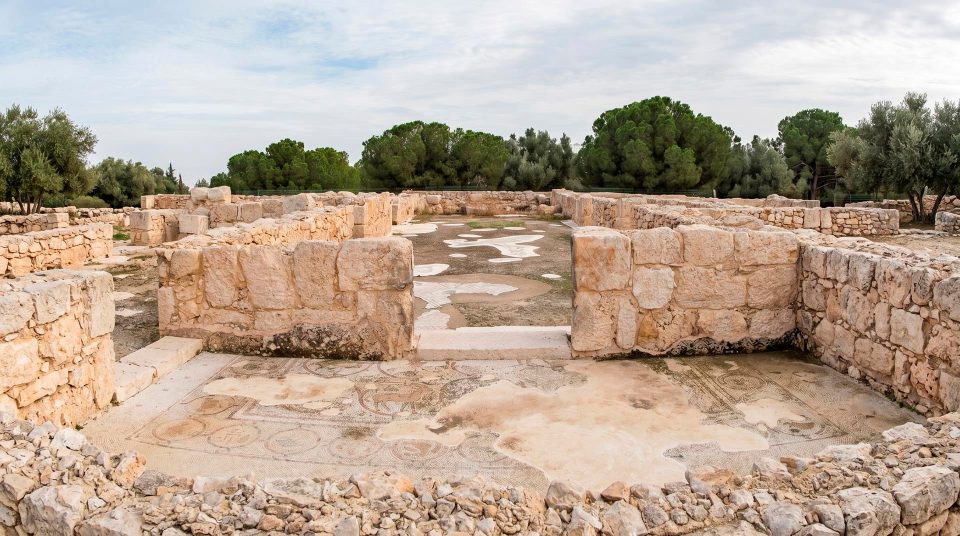
The church remains mark the religious centre of the complex. Look at the room’s boundaries and the surviving floor elements. They record successive stages of use and need not all date to the same century.
2
The burial crypt
This underground funerary space is associated with the memory of Euthymius. It shows how the monastery became a place of veneration after the founder’s death. Distinguish locating the crypt on a plan from having permission to enter it.
3
The large eastern cistern
The largest reservoir lies east of the monastery walls. It helps convey the scale of water storage needed by the community and its daily work. Even without exact measurements, the underground structure is one of the site’s most striking features.
4
Water collection and the site’s boundaries
Compare the reservoirs’ positions with the monastic precinct. Stored water belonged to a working system, rather than an isolated underground hall. Follow the permitted route through the ruins and keep clear of unprotected openings.
Mosaic and opus sectile: different ways of making a floor
The church area includes mosaic paving and a floor made using opus sectile. The difference is one of technique. A mosaic builds a design from small pieces, whereas opus sectile uses cut stone shapes whose outlines become part of the composition. Descriptions of this monastery associate the decorative opus sectile floor with the Crusader period. A colourful surviving fragment should therefore not automatically be described as flooring from Euthymius’s lifetime. The site continued to be used and altered for centuries after its foundation. During a visit, keep two questions separate: how was the pattern made, and to which phase do archaeologists assign it? The first can often be explored through close observation; the second requires archaeological context. If a surface is protected or screened off, respect the barrier rather than seeking a closer photograph.
The crypt and the founder’s memory
After Euthymius’s death, his burial became one of the monastery’s main places of significance. The crypt connected the working community to the memory of its teacher and drew veneration. Its purpose was quite different from that of the underground service spaces. Being below ground does not make a cistern and a burial chamber equivalent features. The crypt held religious memory; a reservoir stored an essential supply of water. Comparing the two helps clarify a site where upper walls survive only in fragments and some of the most important spaces are hidden beneath them. Do not expect an undisturbed burial with all its original contents. The archaeological space and its history of veneration should be understood through the surviving evidence, without promises that visitors will see relics or take part in a religious rite.
Collecting water for life in the desert
The cisterns at the Monastery of Euthymius are central to understanding the complex. Accounts describe four large reservoirs supplying the monks, pilgrims and planted areas. The largest lies beyond the eastern line of the monastery walls. Its position is a reminder that the working infrastructure extended outside the residential and church buildings. In a dry climate, a stored supply was essential: water had to be channelled into reservoirs and retained for later use. Look for the relationship between the slope, the point where water entered and the underground storage space. A huge reservoir can seem like a monument in its own right, but its purpose becomes clearer when considered alongside the monastery. Drinking, cooking and everyday work all required water. The community’s religious seclusion relied on a carefully organised system of collection and storage.
What different parts of the ruins explain
- The church
- Shared religious life
- Its plan helps locate the monastery’s religious centre. Floor surfaces record the church’s continuing use, but they do not all belong to the foundation period.
- The crypt
- Remembering Euthymius
- The burial space helps explain the monastery’s appeal to people venerating its founder. Its role is distinct from the practical function of the water-storage chambers.
- The reservoirs
- Water infrastructure
- The underground chambers show how settled life in the desert depended on collecting and storing water. They provided the practical basis for maintaining a large community.
- The later khan
- Serving the road
- After its monastic period, the place was used as a travellers’ inn. Proximity to the road continued to shape its purpose even though the kind of community occupying it had changed.
Euthymius’s disciples and a regional monastic network
Martyrius and Elias are among the best-known disciples of Euthymius. Martyrius founded the monastery bearing his name in the area of present-day Ma’ale Adumim; Elias is associated with a monastic centre in Jericho. These connections show that the desert communities were never entirely isolated points on a map. Personal and spiritual ties linked them, and their members held significant positions in the Church during the Byzantine period. The Monastery of Euthymius and the Monastery of Martyrius are nevertheless separate archaeological sites, each with its own layout and visiting arrangements. If you want to compare them, choose a theme in advance, such as water supply, church space or the organisation of communal life. The connection becomes meaningful through the people who carried experience from one community to another, rather than simply through adding a second name to an itinerary.
How the site’s purpose changed
- Fifth century
Euthymius establishes a lavra-type monastic community. Individual cells support a life of solitude within a shared religious framework.
- 482
After the founder’s death, the settlement becomes a communal monastery. A developed, enclosed complex supports this more closely shared way of living.
- Crusader period
Use and rebuilding continue. The decorative church floor in opus sectile is assigned to this period, centuries after the monastery’s foundation.
- A later roadside khan
The site takes on the role of a travellers’ inn known as Khan al-Ahmar. Its history of serving the road continues after the monastic phase.
Khan al-Ahmar and other sites along the road
Khan al-Ahmar appears in historical descriptions of the monastery site, but the name alone is not precise enough for modern navigation. It can be confused with other places in the area. For a visit, identify the archaeological Monastery of Euthymius at Mishor Adumim specifically. The Good Samaritan Museum also stands along the broader Jerusalem–Jericho route, but it is a different destination. Their shared connection to the pilgrimage road does not make them a single monument or establish that admission is combined. Euthymius is best understood through its own crypt, church floor and reservoirs. The museum focuses on mosaics from several places of worship, while this site explains the workings of one monastery and its water infrastructure. Comparing them reveals different uses of the same road corridor: accommodation for travellers and a centre of monastic life.
Access arrangements determine what you can explore
Questions about the Monastery of Euthymius
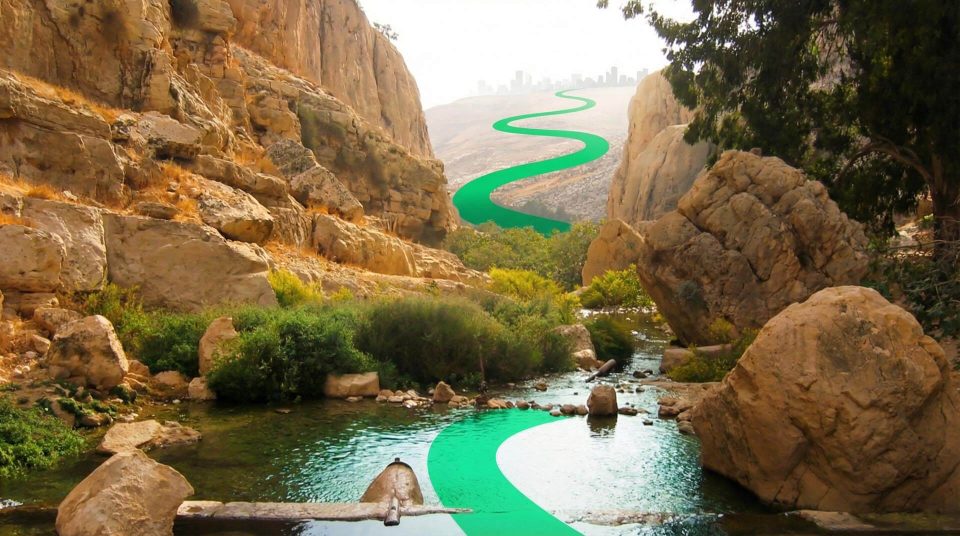
- Is this a working monastery in a desert gorge? No. This guide describes an archaeological site in the Mishor Adumim industrial area. It should not be confused with the working monasteries of St George or Mar Saba, whose dramatic cliff settings are familiar from photographs of the Judean Desert.
- What does lavra mean in the monastery’s early history? It describes a monastic community with separate cells, allowing a life of solitude within a shared religious framework. The settlement later became a cenobium, a communal monastery with a more closely shared organisation of accommodation, work and daily routine.
- Do all the visible ruins date from the fifth century? No. The complex has several phases of construction and use. For example, the decorative opus sectile floor is assigned to the Crusader period. A monastery’s foundation date should never automatically be applied to every surviving stone or surface.
- How is the crypt different from a cistern? The crypt is associated with Euthymius’s burial and remembrance. The cisterns were built to collect and store water for the community. Both are underground spaces, but their purposes and the histories they reveal are quite different.
- Can I go down into the large reservoir independently? That depends on the authorised visiting arrangements. Confirm admission to the site and permission to enter underground areas in advance. Photographs taken by other travellers do not provide permission to enter a cistern yourself or leave the designated route.
- Are the monasteries of Euthymius and Martyrius the same site? No. They are separate monuments in the Ma’ale Adumim area. Their connection lies in early monastic history and Martyrius’s relationship with Euthymius. Each needs its own visit plan and confirmation of access rather than being treated as one attraction.
- Which name should I use for navigation? Search specifically for the Monastery of Euthymius in Mishor Adumim; Euthymius Monastery is another common English form. The historical name Khan al-Ahmar is ambiguous on its own and may direct you towards a different place in the surrounding area.