At a glance
What awaits you
Visit duration
Not yet provided
Difficulty
Not yet provided
Route length
Not yet provided
Who is it for
Popular visiting hours
Verified busyness data is not available yet
Best time to visit
JanFebMarAprMayJunJulAugSepOctNovDec
BestGoodHot
5-day forecast
Forecast loads when this section is viewed
About this place
Hay Bar Yotvata Nature Reserve
A white antelope stands on the pale ground of the Arava, its straight horns almost merging with the dry branches behind it. At Hai-Bar Yotvata, scenes like this are part of a substantial conservation project: desert animals are bred here, and selected species are prepared for a return to the wild. Driving through the open range lets you watch herds in a landscape resembling their natural habitat. Learning to tell the animals apart also reveals why each species is here.
On the plains of the southern Arava
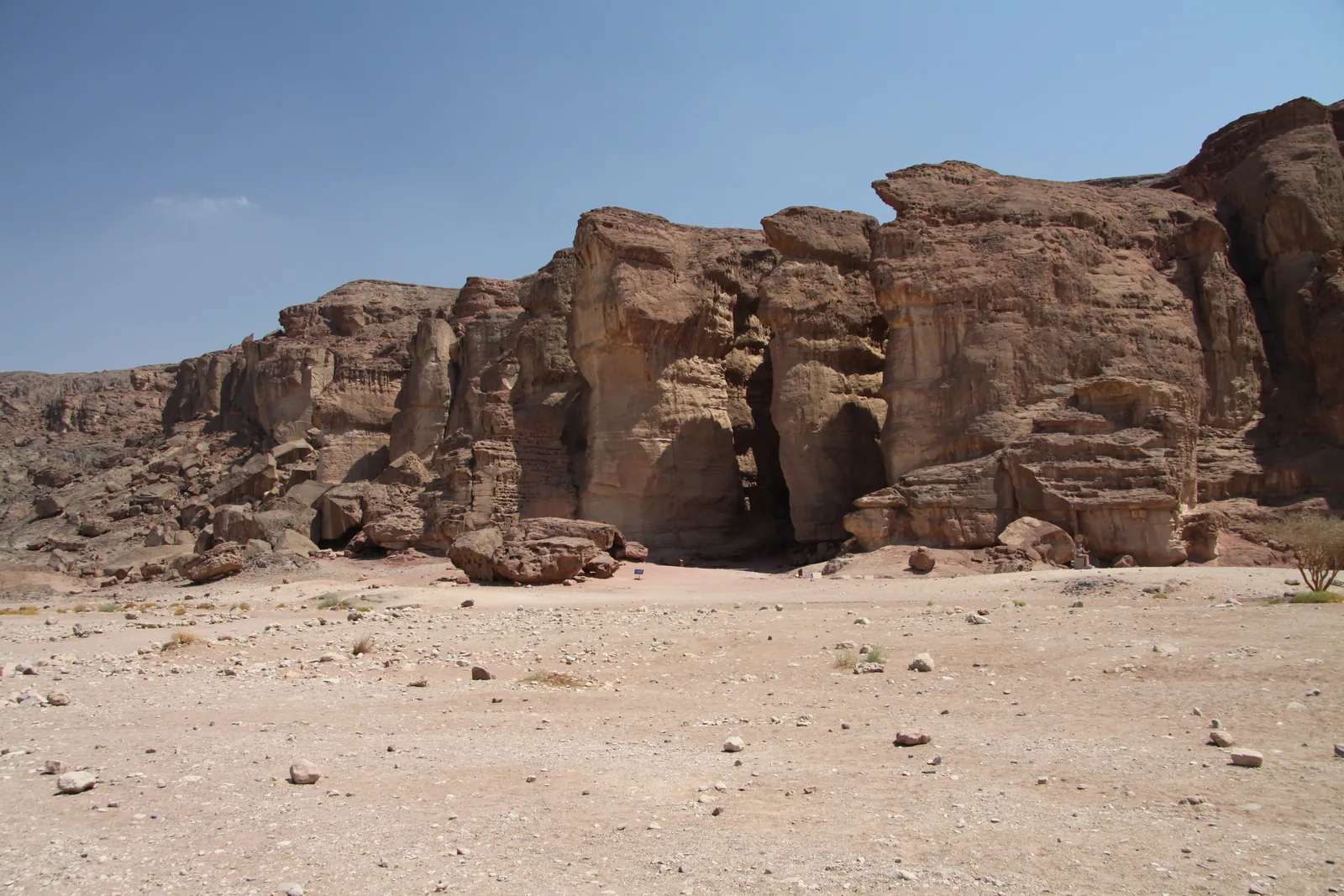
Hai-Bar Yotvata Nature Reserve lies north of Eilat, near Yotvata and Route 90. This is the southern Arava: a broad, dry valley with sparse vegetation, pale ground and distant slopes. Its open spaces lend themselves to watching large herbivores. You see animals in relation to their surroundings, beside patches of shade and feeding areas, with the desert extending behind them.
The reserve occupies part of the Yotvata salt flats. The word ‘desert’ may suggest continuous dunes, but this landscape is different: broad level surfaces and widely spaced vegetation. Against that background, the shapes of horns, the movement of a herd and the ways animals use shade become easier to notice. A visit gives substance to the Arava’s natural history, which travellers on the main highway often see only in passing through a car window. The flat ground itself is part of the setting, rather than simply an empty space between the animals.
Why Hai-Bar was established
The name Hai-Bar is associated with a programme to conserve wild animals. The initiative developed during the 1960s, and a centre for breeding and acclimatising desert species was established near Yotvata. Its aims included restoring animals lost from the local wild and maintaining rare species threatened elsewhere. That explains why Middle Eastern and North African animals share the reserve.
Not every animal kept at Hai-Bar is intended for release in Israel. Work with the Asian wild ass and Arabian oryx led to reintroductions in the Negev and Arava. For other species, maintaining a viable managed population and contributing to international conservation programmes are important goals in themselves. Understanding that difference helps explain the reserve’s organisation. The open range provides a place to observe animals while also forming part of a managed conservation project. The purpose of a herd here depends on the species and its history, rather than on one release plan applying to every animal.
Learning to identify the animals
1
Arabian oryx
A pale antelope with dark facial markings and long, almost straight horns. It is a central species in the reintroduction programme. Against the dry plain, look at the contrast between its face and body, the angle of its horns and the way it moves quietly within a group.
2
Addax
A Saharan antelope with twisted horns. Their shape is a useful way to distinguish it from the oryx species. Its coat changes with the seasons, becoming darker in winter and paler in summer. Keeping addax at Hai-Bar serves the wider conservation of rare desert wildlife.
3
Scimitar-horned oryx
Also called the scimitar oryx, this North African species has horns that curve backwards. The Arabian oryx’s horns look much straighter. A similar pale coat does not mean that the two species share the same origins or the same role in the local programme.
4
Asian wild ass
This species is part of a successful reintroduction programme in the Negev. Watch it on its own terms rather than treating it as a domestic donkey: notice distances between individuals, the movement of the group and its behaviour on open ground.
5
Ostrich
A large bird brings a very different shape and gait to a landscape of hoofed mammals. Reserve accounts identify the North African ostrich. Its inclusion in the programme does not guarantee a sighting on every drive or beside a particular stopping point.
The Arabian oryx’s return from extinction in the wild
The Arabian oryx has a particularly revealing conservation history. By the early 1970s, it had disappeared from the wild but survived through breeding under managed conditions. Animals were later returned to suitable landscapes. Hai-Bar Yotvata became part of that wider effort. Releases in the northern Arava began in 1996, linking the centre’s work with the recovery of wildlife beyond its fences.
The oryx is adapted to arid conditions through both behaviour and physiology. During the hottest part of the day, it rests in shade and reduces activity; food and the moisture it contains are important to survival. A herd standing still beneath a tree is therefore a useful observation of desert life. Expecting constant running or spectacular clashes can distract from a more important strategy: conserving energy and water. Watch how the animals occupy the available shade and how little movement they need to make while resting.
How wild asses returned to the Negev
Asian wild asses were first released back into the wild around Makhtesh Ramon in 1982. Their story shows why the centre’s results must also be assessed outside it. The question is whether released animals can survive and reproduce in a natural landscape. Visiting Hai-Bar lets you see a species whose return became a significant conservation story in the desert south.
Breeding and release address different challenges. Conditions can be controlled and animals observed within the centre, while wild populations depend on food resources, roads and connections between suitable areas. Release is consequently one stage in the work, rather than its conclusion. For visitors, it is helpful to compare the two scales: a herd in Yotvata’s enclosed range and self-sustaining populations across the much larger Negev. The animals you watch beside the visitor road belong to a story that reaches well beyond that particular stretch of ground.
Milestones in the conservation programme
- The 1960s
The Hai-Bar initiative developed around restoring locally extinct wildlife and supporting rare animal species. This founding period set the direction for later breeding and reintroduction work.
- The early 1970s
An area of the Yotvata salt flats was fenced for large desert herbivores. The centre became a base for breeding and acclimatisation.
- 1982
Asian wild asses began to be returned to the wild in the Makhtesh Ramon area. The programme linked the breeding centre with populations in the Negev.
- 1996
Reintroduction of Arabian oryx began in the northern Arava. That work had a different aim from keeping North African species at the centre for wider conservation.
Why Saharan animals live in the Arava
Addax and scimitar-horned oryx broaden the story beyond local fauna. Their presence belongs to the international conservation of rare species. It does not make every reserve animal an ancient inhabitant of Yotvata. Maintaining viable groups matters when natural populations are threatened. The biblical theme behind Hai-Bar’s foundation should be considered alongside the actual geographical range of each species.
The addax shows how varied desert adaptations can be. Its broad hooves help it move across soft sand, and its coat changes colour through the year. Oryx have different horn shapes and facial markings. Looking for those features is more useful than grouping every pale antelope into one species. Even a brief comparison turns the drive into an exercise in observation. Once you have identified a few distinguishing features, a distant herd becomes much easier to read without needing to approach it closely.
Similar-looking animals with different histories
- Arabian oryx
- Reintroduction to the Arava
- Look for almost straight horns and dark markings on the head. The species is associated with reintroduction to the Arava.
- Scimitar-horned oryx
- Conserving a North African species
- Long horns sweep backwards. This North African species is kept as part of the conservation of rare animals.
- Addax
- Spiralling horns
- Its horns twist in a spiral, and its coat colour varies by season. It belongs to a separate antelope genus, rather than being a variety of white oryx.
- Asian wild ass
- Reintroduction to the Negev
- A hoofed mammal from a different group, with a noticeably different outline. Its reintroduction story is connected with Makhtesh Ramon and the Negev.
What the drive-through format offers
The Hai-Bar Yotvata safari passes through an open range where herbivores move within a large fenced area. Travelling by car allows you to watch without a long approach on foot in the sun. Being close to the road does not mean being close to every animal. Herds gather according to shade, food and their own daily rhythms. Sometimes the better choice is to stop where permitted and look into the distance rather than wait for an animal to approach your window.
At the start of the visit, obtain the route map and staff instructions for your type of vehicle. Drive calmly, leave animals space and avoid trying to direct their movements for a photograph. Plan to observe from inside the car. Get out only where the administration explicitly allows it. Keep the drive separate from any idea of hand-feeding: visitor food and attention alter animal behaviour, while horns and a large body demand a respectful distance.
A simple family observation plan
- 1
Start with the silhouette
Look at the whole group from a distance. A bird, an antelope and a wild ass can be distinguished before small details become visible. Give passengers time to find each animal for themselves.
- 2
Compare horns and coats
Among the pale antelopes, look for straight, backward-curving or spiral horns. Then examine the face and coat pattern. Remembering visible features is more useful than relying on a name alone.
- 3
Watch what the animal is doing
Notice whether it stays with the group, rests or feeds. Time spent in the shade can reveal more about desert life than a quick drive past an animal beside the road.
- 4
Connect the sighting to conservation
Discuss which animals were returned to the Negev and Arava, and which contribute to conserving North African species. The separate sightings then fit into a wider account of the centre’s work.
Sun, shade and the pace of a desert day
Cooler weather makes it easier to combine watching from the car with permitted stops outside the open-range sector. In summer, drinking water for people and a comfortable temperature inside the vehicle are particularly important. Passengers photographing through a side window also need sun protection. Arriving early does not guarantee that every species will be active or close to the road.
For photography, look for the long lines of horns and animal silhouettes against the plain. A wider view shows the surroundings, while optical magnification lets you keep your distance. Dust on glass and heat shimmer may affect photographs; driving right up to an animal is not an appropriate solution. Choose a stable viewing position along the route and let the scene develop without interference. The light and the distance are part of observing wildlife here, even when they prevent a perfect close-up.
What to include in the visit
Hai-Bar works well as a distinct stop on a drive through the Arava towards Eilat or in the opposite direction. Its focus is desert herbivores and their conservation. Do not expect the range of species found in a large city zoo. In particular, distinguish the open range from the predator centre, nocturnal exhibition and overnight options described in older guides. Those accounts do not establish which areas are available or included in a visit.
If you do not have a car, arrange how you will travel through the reserve before arriving. Reaching the Yotvata area by bus does not automatically provide transport inside the open range. Equally, a drive-through format does not establish wheelchair access to every associated building. Ask the administration specifically which areas you can visit, how the drive is organised and what your group needs. One clear enquiry about the actual route is more useful than assuming that an old general description applies to everyone.
The conservation story beyond the fence
After Hai-Bar, the desert plain is easier to imagine as habitat: a place where herds need food, shade and routes between suitable patches of ground. The most revealing connection is between the animals seen at the centre and living populations beyond it. One story is the return of the Asian wild ass to the Negev; another is the reintroduction of the Arabian oryx; a third is the conservation of a rare North African species.
Those different purposes explain the reserve’s need for space and an undisturbed way of watching. The value of a visit does not depend on collecting close-up photographs. Learning to distinguish animals, understanding the centre’s role and noticing why a herd rests in shade offer a fuller account of desert life. Even a quiet scene beside the road can show how survival depends on the way animals use their surroundings.
Questions about Hai-Bar Yotvata
- Is Hai-Bar Yotvata in Eilat itself? No. The reserve lies north of the city, in the southern Arava, near Yotvata and Route 90. Use the reserve’s own destination for navigation: arriving at the kibbutz does not mean you have reached the correct entrance.
- Do visitors walk through the open range? The main way to see the large herbivores is by vehicle. The administration determines the driving route and any places where you may get out. Do not plan an independent walk among the herds simply because the ground is open.
- Are all the animals released in Israel? No. The Asian wild ass and Arabian oryx are linked to local reintroduction programmes. Addax, scimitar-horned oryx and other animals may be kept as part of international work to conserve rare species. Their presence does not imply a planned local release.
- How can I distinguish an addax from an Arabian oryx? The addax has conspicuously twisted horns. An Arabian oryx’s horns look almost straight, and dark markings stand out against its pale face. Compare those features from a distance rather than moving closer to the herd for a better look.
- When did reintroduction begin? Asian wild asses began to be released around Makhtesh Ramon in 1982. Releases of Arabian oryx began in the northern Arava in 1996. These are separate programmes with different release areas, rather than one event applying to all the reserve’s species.
- Can I come without a car? First establish what transport is available for the open-range sector. Public transport to the surrounding area does not automatically solve travel inside the reserve. The driving route should not be treated as a circuit that you can simply walk instead.
- Am I guaranteed to see ostriches and oryx close up? The species are documented in accounts of the centre, but sightings depend on the areas you can visit and the animals’ positions. They may be far from the road or resting in shade. Neither a particular encounter nor a close view can be promised.
Sources
History
The Hai-Bar initiative developed around restoring locally extinct wildlife and supporting rare animal species. This founding period set the direction for later breeding and reintroduction work.
An area of the Yotvata salt flats was fenced for large desert herbivores. The centre became a base for breeding and acclimatisation.
Asian wild asses began to be returned to the wild in the Makhtesh Ramon area. The programme linked the breeding centre with populations in the Negev.
Reintroduction of Arabian oryx began in the northern Arava. That work had a different aim from keeping North African species at the centre for wider conservation.