At a glance
What awaits you
Visit duration
Not yet provided
Difficulty
Not yet provided
Route length
Not yet provided
Who is it for
Popular visiting hours
Verified busyness data is not available yet
Best time to visit
JanFebMarAprMayJunJulAugSepOctNovDec
BestGoodHot
5-day forecast
Forecast loads when this section is viewed
About this place
Gan HaShlosha (Sahne) National Park
The Amal Stream flows through broad pools and over cascades. An old mill stands beside the water; farther on, the tower of Tel Amal rises behind a wooden stockade. Water is Sahne’s most familiar sight, yet several histories meet here. A spring that now draws swimmers once powered millstones and helped shape the lives of settlements in the Beit She’an Valley.
A green strip in the Beit She’an Valley
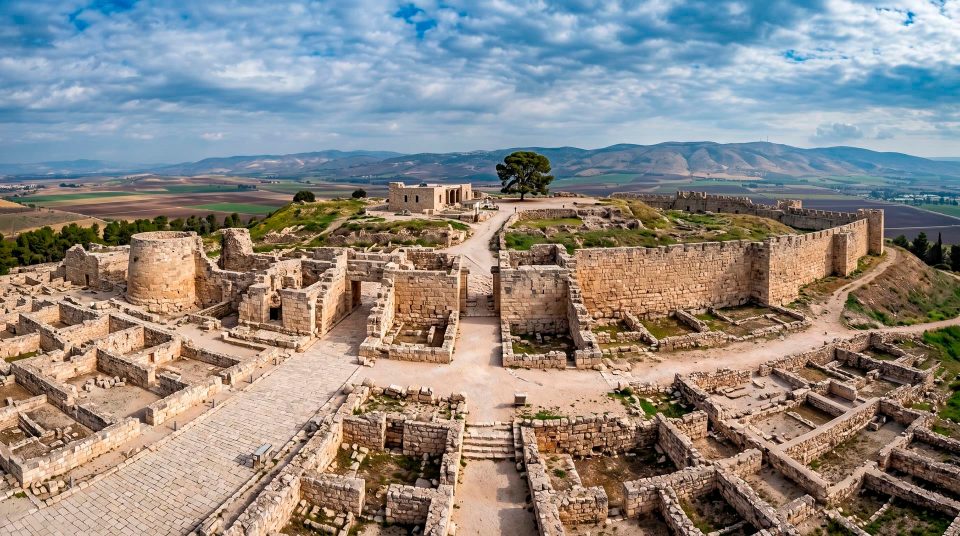
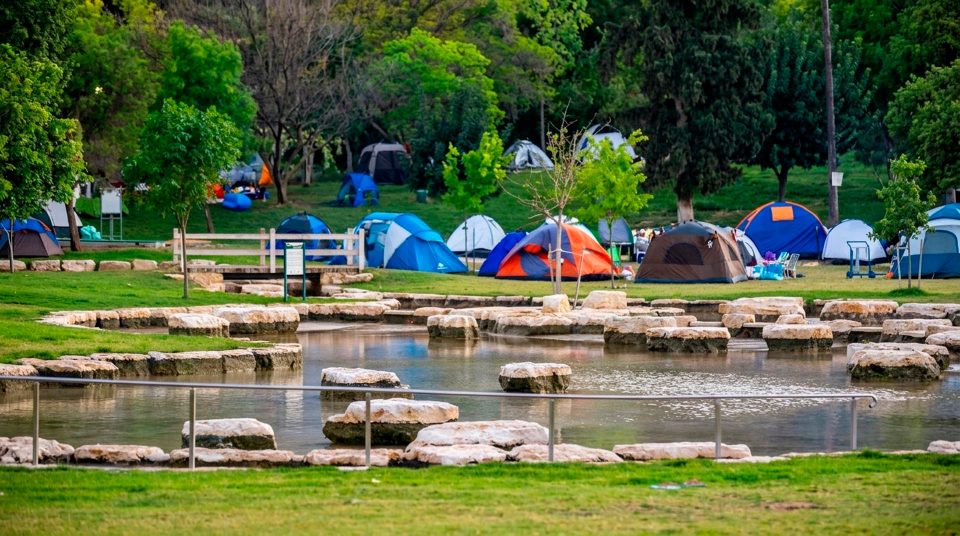
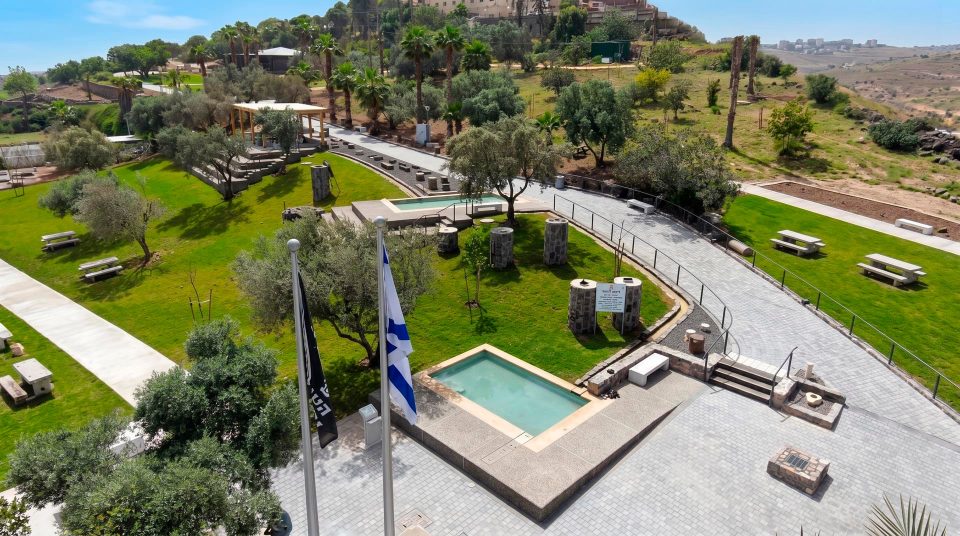
Gan HaShlosha National Park lies near Nir David and Beit Alfa, in the western Beit She’an Valley, not far from Mount Gilboa. Against the open fields, the green ribbon along the water stands out sharply. The Amal Stream forms the park’s central feature: its bed was widened and adapted for recreation to create a series of pools. The landscape combines a natural spring with deliberately designed grounds. Banks, lawns and crossings give it the character of a landscaped park rather than a remote gorge. Allow time to settle beside the water, with room in the day for its historical sites too. The small mill and wooden tower reveal aspects of the valley that a sweeping photograph of the pools cannot convey.
A few useful reference points
about 28 °CSpring-water temperature
1936 CETel Amal founded
1963 CEArchaeological museum founded
Why Sahne’s water is warm
Sahne’s warm springs gave the park its Arabic name. Emerging in its western section, they feed the Amal and maintain a temperature of about 28°C throughout the year. That steady supply makes this a different proposition from a seasonal pool wholly dependent on recent rain. The temperature at the spring does not mean every part of the park feels equally warm. Wind, the weather and time spent out of the water all affect comfort. On a cool day, getting out can feel much colder than a sunny photograph suggests. Nor should the term ‘warm springs’ be taken as a claim that this is a therapeutic spa. The pools and green banks are the reason to come; there is no need to attach medical promises to them.
Different views of the water
1
Broad pools
The widened channel creates large expanses of water that reflect the banks and trees. Depths vary between pools, so the overall appearance or colour of the water is no guide to which area suits your group.
2
Crossings and cascades
At changes in level, the stream becomes livelier and its sound more pronounced. Watch from permitted areas along the banks. A cascade in a photograph does not mean visitors may stand beneath it or cross wet rocks.
3
Lawns beside the stream
The grassy areas let you alternate between watching the water, resting and walking. Their relationship with the stream gives Sahne much of its character; there is more to appreciate than a single viewpoint.
Choosing a suitable place to swim
Sahne’s pools have been adapted for recreation, but their depths and conditions are not uniform. Before entering, examine the particular area, its access points and signs, then decide whether it suits everyone in your party. An adult’s swimming confidence says little about a child’s ability. Inflatable toys cannot replace close supervision or the appropriate safety equipment. Moving into deeper water for a photograph is a poor trade-off. On a family outing, it helps to treat swimming and the museum visit as separate parts of the day: bring dry clothes and secure footwear for the walk afterwards. Even if the scenery is familiar, follow the access rules and staff instructions in force during your visit. Plan around a suitable permitted area rather than assuming that every pool will be available.
The mill: putting the stream to work
A restored flour mill beside the pools once drew its power from the Amal Stream. It invites a closer look at water that visitors might otherwise see mainly as a place to swim. Trace the water supply, the position of the machinery and its connection to the millstones. Even without seeing the mill run, the sequence is understandable: a directed flow turns a wheel, and that rotation drives the grinding mechanism. Several mills once operated in the area, so this surviving structure belonged to a wider working landscape. Water was valuable here long before the grounds became a modern recreation site. A demonstration of the restored machinery is a separately organised activity, not an assured feature of every visit.
Inside the reconstructed Tel Amal settlement
The historical section recreates Tel Amal, a settlement founded on 10 December 1936. Its original name referred to the Amal Stream; it later became known as Nir David. The display explains Homa u-Migdal, usually called ‘Tower and Stockade’ in English, a form of Jewish settlement associated with the Arab Revolt of 1936–1939 in Mandatory Palestine. A double wooden stockade filled with gravel, together with a watchtower, illustrates the defensive arrangement. Reconstructed living quarters and communal buildings stand inside. What you see is a museum reconstruction intended to explain how the settlement worked. The wooden buildings are not an untouched complex that has survived unchanged since the day Tel Amal was founded.
Details to look for behind the stockade
1
Tower and stockade
Notice how the defensive perimeter encloses a compact interior. The name describes practical structures that provided protection and a place to watch the surrounding land.
2
Living huts
Iron bedsteads, mosquito nets, work clothes and books bring the wider history down to the scale of daily life. They suggest limited personal space and a routine that combined physical work with communal living.
3
Kitchen and dining room
These rooms explain the settlement as a shared household and working community. Give them attention after the tower: preparing food and living together occupied far more of the settlers’ day than the view from a lookout.
A museum connecting the valley with the Mediterranean
The Museum of Regional and Mediterranean Archaeology was founded in 1963. A donation from the collector Dan Lifschitz formed an important basis for its holdings. Finds from the Beit She’an Valley are displayed alongside objects from Mediterranean cultures, including Greek and Roman material. This combination encourages a view of the valley through the exchange of objects, craft skills and images. A small vessel can illuminate daily life in ways that a monumental ruin cannot. Choose a thread to follow, such as pottery shapes, the uses of particular objects or the local origins of finds. A museum stop need not become a survey of all ancient history. Read the labels closely: they help distinguish objects from local excavations from those that entered through a private collection.
Rehov: an agricultural inscription beside the pools
The museum displays a large photograph of the mosaic from the ancient synagogue at Rehov. It is a reproduction of the monument, not the original floor. Its inscription names settlements and agricultural produce, making it an important source for Jewish life and the region’s agricultural geography. After following the Amal, those references acquire a clear local setting. Water, fields and religious obligations formed part of the same daily world; questions about cultivated food were connected to the organisation of communal life. Look at the photograph as a historical document as well as a mosaic. For families, a useful comparison is between an inscription listing places and crops and a figurative mosaic that tells its story through people, animals or scenes.
What the park’s two names mean
Sahne describes a natural feature: the warm water. Gan HaShlosha means ‘Garden of the Three’ and commemorates three people killed in 1938 when their vehicle struck a land mine during a land survey. The names preserve different aspects of the place, one linked to the spring and the other to the valley’s human history. That historical context is easy to miss in a familiar photograph of the pools. Keep the two meanings distinct. The national park’s name does not refer to a count of its pools, and the wooden tower belongs to the story of Tel Amal rather than to the deaths of the three people commemorated by the park. These are neighbouring histories, each with its own explanation.
Choose the focus of your day at Sahne
- A day centred on the water
- Pools and banks
- Choose a suitable permitted area and allow time for changing and resting. Trying to fit in every exhibition as well can turn a relaxed spell beside the pools into a hurried succession of stops.
- Settlement history
- Defences and daily life
- Give the Tel Amal reconstruction its own part of the day. Compare the defensive structures with the living huts and communal working spaces.
- Ancient objects
- The regional collection
- Check access to the archaeological museum separately from access to the pools. Link local finds with the Rehov inscription and the collection’s wider Mediterranean setting.
- A mixture of interests
- Water and one historical focus
- Decide which historical display most interests you, then arrange your time beside the water around it. Different parts of the park may have different visiting arrangements.
The same spring in different seasons
Warm water does not remove the valley’s seasonal contrasts. In summer, heat on land and prolonged exposure to the sun are the main concerns. Choose a resting place according to the shade actually available, and avoid automatically putting the historical walk into the hottest part of the day. In cool weather, comfort after swimming matters more: dry clothing and protection from the wind are useful. For visitors who do not want to swim, the museum and mill offer reasons to come in their own right. Check entry arrangements and access to the displays before setting out rather than relying on an old timetable. Ready-to-eat picnic food is a practical choice; rules about lighting fires cannot be inferred from what is allowed at other sites.
Sahne and the neighbouring springs are separate places
For navigation, select Gan HaShlosha or Sahne near Nir David. The valley has many places associated with water, but proximity on a map does not make them parts of one park. Entry to Sahne does not automatically provide access to nearby springs or recreation areas. If you want a change of subject, the mosaic at Beit Alfa complements a water-based outing, while Beit She’an offers a much larger archaeological landscape. Each site has its own visiting arrangements. Within Sahne, leave yourself the freedom to linger at the mill or walk over to the wooden stockade. The connections between water, work and communal life give the place a depth that differs from a conventional swimming-pool visit.
Questions about Gan HaShlosha and Sahne
- Are Gan HaShlosha and Sahne the same park? Yes. They are two names for the same place near Nir David in the Beit She’an Valley. Sahne refers to the warm water; Gan HaShlosha commemorates three people who died. Make sure your navigation destination is the national park itself.
- Is the water really always about 28°C? That stable temperature is reported for the spring water feeding the Amal. It is not a separate measurement of every pool. Weather, wind and conditions on the bank after swimming also influence how warm or comfortable it feels.
- Are all the pools equally suitable for children? No. Depths and conditions vary. Assess the particular entry point and the rules in force when you arrive. Children need constant adult supervision even beside shallow water, and inflatable toys do not replace appropriate safety measures.
- What can I see without swimming? The park contains a restored watermill, the Tel Amal reconstruction and an archaeological museum. Together they provide the basis for a cultural visit without entering the pools. Check access arrangements for the individual displays separately.
- Has the wooden tower survived from 1936? The visitor site reconstructs a Tower and Stockade settlement to explain Tel Amal, founded in 1936. Its recreated huts, perimeter and domestic details should not be mistaken for an entirely unaltered original complex.
- Does the museum have the original Rehov mosaic? The inscription is presented through a large photograph of the mosaic from Rehov’s ancient synagogue. It introduces the text’s references to settlements and farming. Viewing this reproduction is different from seeing the ancient floor at its findspot.
- Is a working demonstration of the mill guaranteed? No. Restored machinery and an organised demonstration are different things. If seeing the mill operate is important to your plans, ask about arrangements in advance. Without a demonstration, the building still explains an important part of the valley’s water management.