At a glance
What awaits you
Visit duration
Not yet provided
Difficulty
Not yet provided
Route length
Not yet provided
Who is it for
Popular visiting hours
Verified busyness data is not available yet
Best time to visit
JanFebMarAprMayJunJulAugSepOctNovDec
BestGoodHot
7-day forecast
Forecast loads when this section is viewed
About this place
Nahal Snir Nature Reserve (Hatzbani)
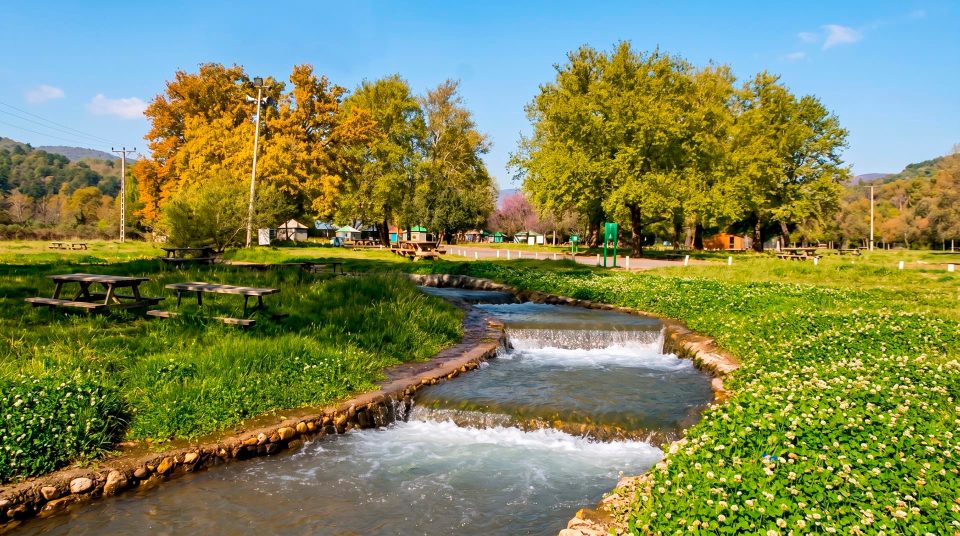
At the Snir, you hear the river before you see it through the plane trees. A narrow path follows the swift channel, little streams cross the way and small cascades spill over pale travertine ledges. Nahal Snir Nature Reserve near HaGoshrim brings one of the Jordan’s headwaters into close view. Its varied settings range from cool riverside woodland to the Tapline Reservoir, where an engineering installation has become a place to watch waterbirds.
The Snir in the northern Hula Valley
Hasbani and Snir are names for the same river; Hatzbani is another spelling you may see on local signs and maps. Its springs are in Lebanon, while the managed reserve lies near HaGoshrim, east of Kiryat Shmona, in the northern Hula Valley. Distinguish the full length of the river from the area open for organised visits. The reserve introduces a short stretch of a much longer watercourse. Downstream, the Hasbani joins the Dan and Banias in the headwaters system of the Jordan. Even a brief walk therefore has a clear geographical setting: this water will continue south through the valley. Approach via Road 99 and signs for the reserve. Finding the designated trail entrance matters more than selecting an arbitrary pin bearing the river’s name.
Woodland shaped by a flowing river
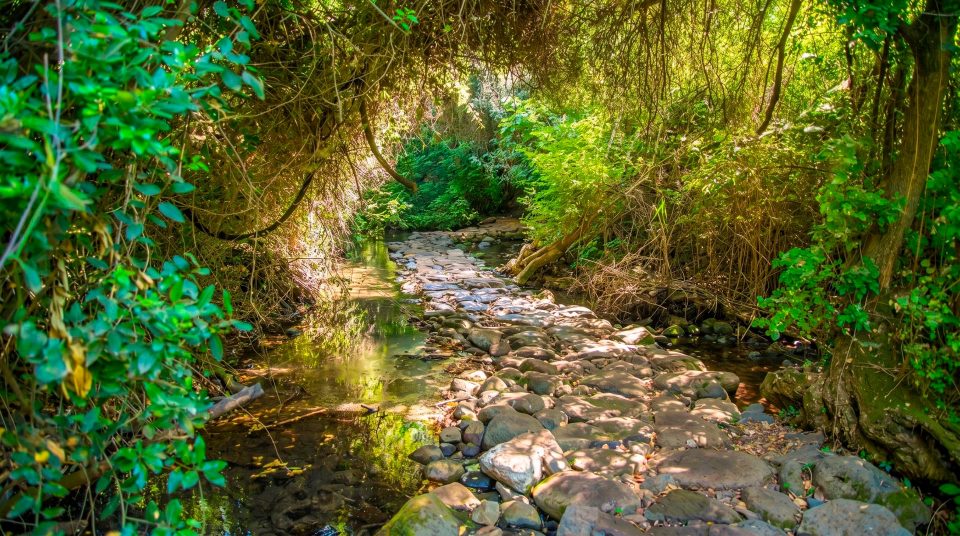
The combination of a quick current and an almost continuous canopy is one of the strongest impressions here. Plane trees form riverside woodland sustained by the reliable presence of water. The setting differs markedly from the open lawns of neighbouring parks and the marsh vegetation of Hula. Trunks, roots, rocks and small side streams create layers within the view. A broad photograph of the river captures a different Snir from a close study of a cascade beside the path. There is little reason to hurry towards an imagined main waterfall. This reserve rewards attention at a smaller scale: the way the current changes on a bend, splits around a stone or meets a plant-covered bank. The shade feels cool, but wet surfaces still require care and visitors still need drinking water.
Different parts of the reserve
1
The eastern-bank trail
Much of the riverside walk follows the active channel. Small streams cross the path and join the Snir. That closeness to moving water makes the walk absorbing, while demanding secure footwear and attention to the ground.
2
The travertine cascades
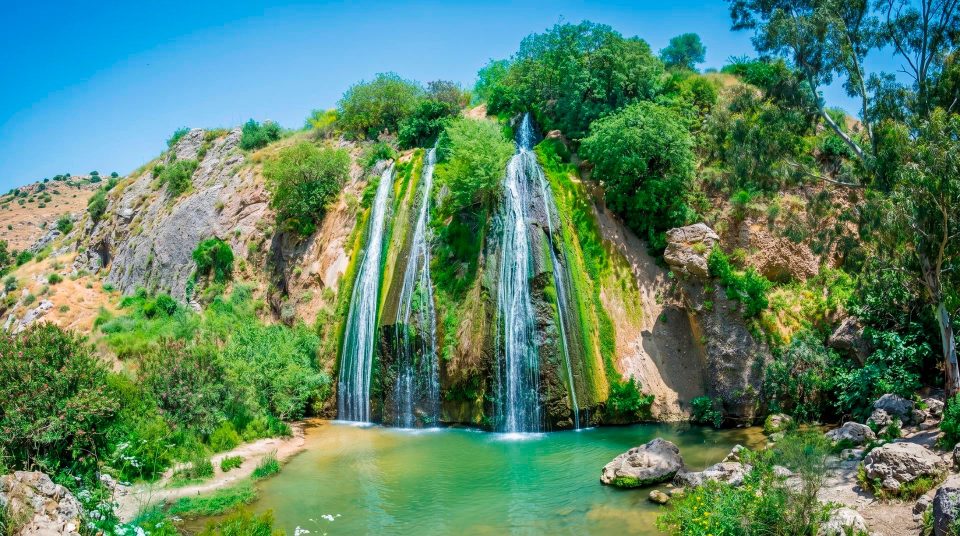
Small falls beside the trail carry colder water from the Dan into the Snir. Look at the relationship between the flowing water and pale deposited rock, then compare it with the dark basalt found farther north along the channel.
3
Two purpose-built pools
Between the entrance area and the river are two pools with distinct functions. One was designed for visitor wading; the other shelters rare plants. Similar-looking water does not imply identical rules.
4
Tapline Reservoir and the bird hide
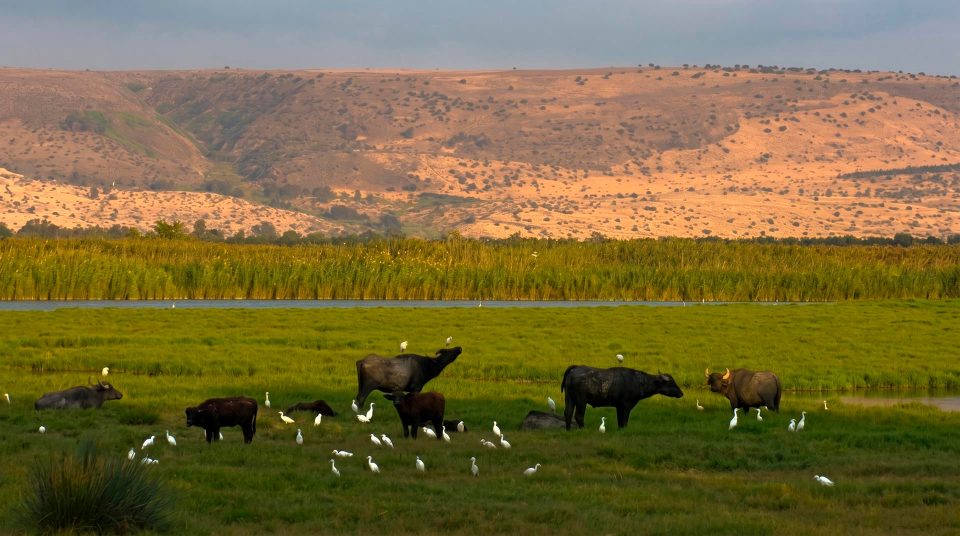
The large storage reservoir in the northern part of the reserve attracts waterbirds. A hide allows observation from a distance. Which birds appear, and how close they come, depends on the season and their own behaviour.
How the pale ledges formed
The rock itself is the most revealing feature of the Snir’s travertine cascades. Travertine forms as dissolved minerals precipitate from water. The Nature and Parks Authority compares the process with limescale building up in a kettle, but in the river it takes place naturally over a long period. On the bank, the result resembles a yellowish wall of stone cut by small threads of flowing water. A thick layer of travertine forms the eastern bank within the reserve. Its surfaces record the work of water rather than ancient masons. Begin with the shape of the whole ledge, then follow the individual lines of flow. Comparing this pale rock with the basalt section upstream shows how one river interacts with different geological materials. Leave the deposits intact rather than breaking off pieces for a collection.
A refuge for plants beside a pool for people
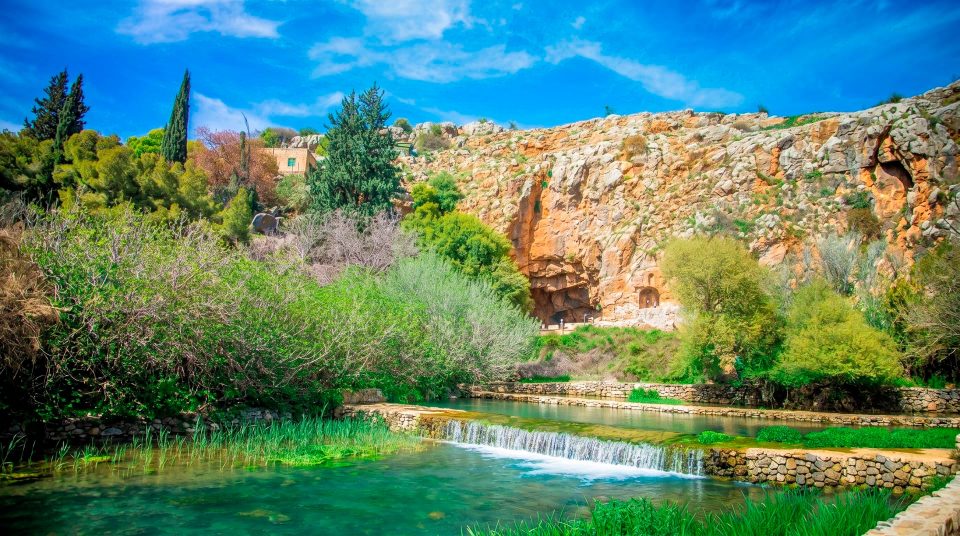
The purpose-built plant refuge conserves species that have become rare in the wild in Israel. Those named in the official description include yellow pond-lily, Nuphar lutea, and dwarf water clover, Marsilea minuta. This pool has value as a living collection and a resource for conserving threatened plant populations. It deserves a stop even if the riverside walk was your main reason for coming. Notice the shape of floating leaves and compare open-water plants with those growing at the edge. The neighbouring wading pool has a recreational purpose, but signs and the reserve’s operating instructions determine whether visitors may enter it. Neither the natural river nor the rare-plant pool should be treated as an extension of that area. Explain the distinction to children before reaching the water.
Tapline and the protection of the headwaters
Tapline Reservoir takes its name from the Trans-Arabian Pipeline, which carried oil towards the Mediterranean port of Sidon. Near the Jordan headwaters, the pipeline lay dangerously close to rivers. Damage to the pipe allowed oil to reach the Dan and then the Jordan. Protective measures included changes to water diversion and a storage reservoir by the Nohila canal. The aim was to make it possible to contain pollution before it spread through the river system. Knowing that history changes the way you look at the quiet surface. The reservoir is part of a water-protection scheme, and it has also become habitat for waterbirds. Its engineered origins do not make it ecologically empty. Water quality and the ability of animals to remain undisturbed both matter here. In the hide, wait quietly rather than trying to lure a bird towards a camera.
Viewing the northern canyon from outside it
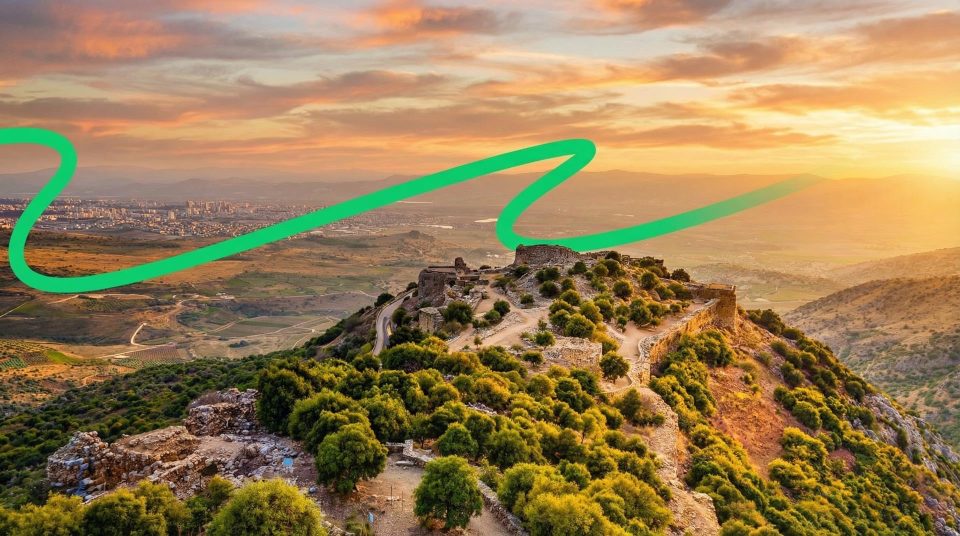
In the northern section, the Snir cuts through basalt and runs in a deep canyon. A lookout helps visitors understand this rougher stretch without descending into it. The accessible bank-side path and the canyon closed to visitor entry are separate parts of the reserve. The official description also mentions a bridge at the canyon outlet and a hydrometric station used to measure river flow; visitor access to them is not provided. The purpose of the lookout is to understand the terrain from above. Compare the direction of the river with the rock walls and the vegetation beside the water. After the shaded bank-side walk, this broader view helps place the smaller details in a continuous landscape. Stay on the permitted viewing route rather than searching for a way around restrictions.
Distances and features in context
about 1 kmEastern-bank section described by the official guide
2 Purpose-built pools with different functions
Choosing the focus of your walk
- River and plane trees
- Close views of moving water
- Choose the permitted route beside the channel if you are prepared for stones and wet ground. The stated bank-side length does not automatically include approaches, branches or the return journey.
- Plants and pools
- Observation from the edge
- Pause beside the aquatic plants and explain why their protected pool cannot be used for play. The bank offers the right place from which to observe them.
- Birds at Tapline
- An unhurried stop
- Bring binoculars and leave time to wait quietly in the hide. Distance and patience matter more here than completing a trail quickly.
- The northern lookout
- Understanding the terrain
- Treat it as a view over a separate stretch of river. Reaching the lookout does not open a route into the restricted canyon or to the bridge.
How the Snir changes through the year
The river flows year-round, but a permanent watercourse does not mean an unchanging current. High water and strong flow can make the bank-side trail unavailable in winter. During warm, dry weather, the contrast between the open valley and the greenery beside the channel becomes especially clear. Soft light can help with photographs by reducing harsh patches of sunlight on the surface. For birds, time spent quietly beside the reservoir matters more than a particular photographic effect. Choose the visit around what interests you rather than expecting one fixed scene. Before travelling, ask the reserve administration a specific question: which trails and water areas are permitted for your visit? The river’s actual condition takes precedence over an old account of someone easily following the same bank.
Planning a family walk beside the river
- 1
Prepare separately for wet ground and time by the water
Shoes should stay firmly on the feet and grip wet stone. Protect dry clothes and phones from splashes. Carry drinking water independently of anything brought for wading.
- 2
Start with a map of the available routes
Choose a clear return route before approaching the channel. If you need a pushchair-friendly or step-free walk, identify the particular equipped section rather than assuming the whole reserve is suitable.
- 3
Leave time for small discoveries
A pond-lily leaf, a pale mineral ledge and a side stream offer children different things to examine. Each water-side stopping point need not become a place to enter the river.
- 4
Keep the picnic separate from the river trail
The recreation area is near the entrance. Leave the narrow bank-side path free for walking and observation. Spreading belongings across it gets in the way of visitors and puts more pressure on the riverside habitat.
Seeing the connections along the Snir
Questions about the Snir and Hasbani
- Are the Snir and Hasbani different rivers? They are two names for the same river, also written Hatzbani. Its springs are in Lebanon; the reserve covers a stretch near HaGoshrim in the northern Hula Valley. Use the reserve’s full name when finding the visitor entrance.
- Is the whole walk only one kilometre long? About one kilometre is the length of the eastern-bank trail in the official description. Approaches, branches to the pools and your return need to be counted separately. It is not a ready-made total for every possible visit.
- Can visitors swim in any of the pools? No. The purpose-built pools have different functions, and one protects rare plants. Signs and the reserve administration determine whether the recreational wading area is open and what is permitted along the river trail.
- Where are the travertine waterfalls? Small cascades lie beside the bank-side trail, where colder Dan water flows over pale travertine ledges into the Snir. Expect several small-scale features rather than one large waterfall.
- Can I enter the northern canyon? Visitor passage into it is not provided. View that section of river from the lookout. Do not create your own approach to the bridge or the hydrometric station mentioned in descriptions of the reserve.
- Why visit Tapline Reservoir? It adds the history of protecting the Jordan headwaters from oil pollution and a chance to watch waterbirds from a hide. Binoculars are more useful than attempts to get close to the birds themselves.
- Is the reserve suitable for a pushchair? The official description identifies an equipped accessible section, but that does not describe the entire river trail. If you need step-free access, confirm the exact route and its condition before travelling.