At a glance
What awaits you
Visit duration
45min
About 45 minutes for the indoor exhibition, excluding check-in and the outdoor walk.
Source and itineraryDifficulty
Not yet provided
Route length
Not yet provided
Who is it for
Popular visiting hours
Verified busyness data is not available yet
Best time to visit
JanFebMarAprMayJunJulAugSepOctNovDec
BestGoodHot
5-day forecast
Forecast loads when this section is viewed
About this place
Khan Sha'ar Hagai National Heritage Site
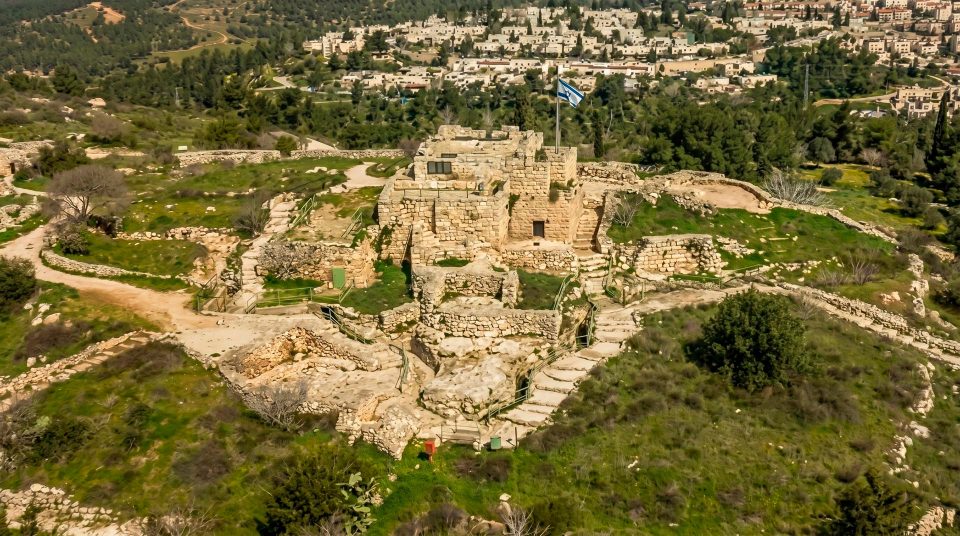
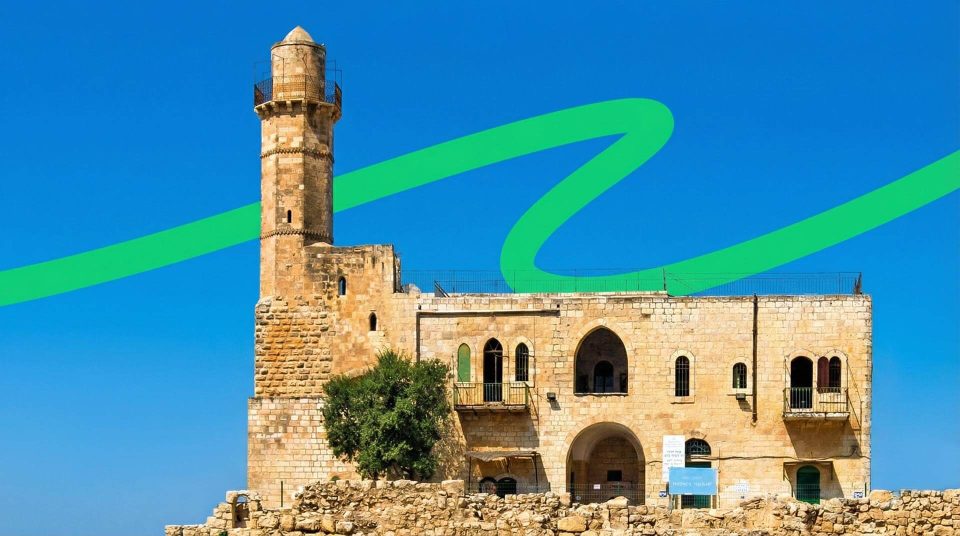
At Sha’ar HaGai, the road from the coastal plain enters a narrow valley and begins its climb towards Jerusalem. An Ottoman roadside inn survives beside the modern highway, while restored armoured vehicles recall the supply convoys of 1948. Khan Sha’ar HaGai is a national memorial and museum. Its historic buildings, audiovisual interpretation and vehicles explain how delivering an ordinary load could become a military operation.
The landscape explains the “Gate of the Valley”
Sha’ar HaGai stands on the main route between the coastal plain and Jerusalem, beside Highway 1. Here the road enters the narrow valley of Nahal Nahshon, also known as Wadi Ali, between steep slopes. The Hebrew Sha’ar HaGai and Arabic Bab al-Wad both mean “Gate of the Valley”. The name describes the place more directly than a large monument could: an open approach from the west gives way to a corridor overlooked by high ground on either side. In a modern car, the transition can pass almost unnoticed. To understand the museum, mentally remove the speed and width of today’s highway. A slow-moving convoy was far more vulnerable, with nothing like the freedom to manoeuvre that the present road might suggest.
The Jerusalem road before the convoys
The khan was a roadside inn of the Ottoman period. It answered the demands of the long ascent from Jaffa to Jerusalem: people and animals needed rest, food and somewhere to spend the night. In 1867, the Ottoman authorities made the road suitable for wheeled vehicles, but the journey remained difficult and took considerably longer than a modern drive. That duration explains the purpose of the inn. It served traffic whose progress depended on the condition of the climb and the strength of the animals. After the First World War, Todros Warshavsky and his family leased the khan, offering travellers meals and care for their animals. This everyday history deserves attention. Before the site became a memorial, it provided an ordinary roadside service. The story of supplying Jerusalem grew out of the much older story of reaching the city.
Different buildings, different roadside roles
1
The Ottoman khan
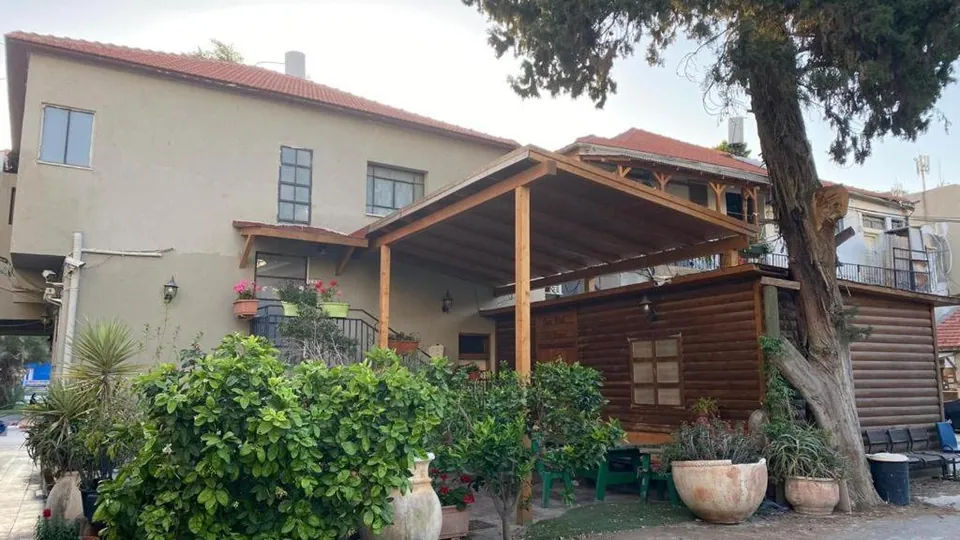
The historic core of the complex recalls an overnight stop on the journey to a mountain city. Read it in relation to the road and travellers’ needs. Its museum role came later and should not obscure the original function of the inn.
2
Qutneh House
Built in 1894 by the Qutneh family, an Arab family from Jerusalem, this building belonged to an agricultural holding. It shows that life around the pass extended beyond the khan itself. The complex’s history includes different families and occupations, as well as its later military significance.
3
The British canteen
A building east of the khan, dating from the early 1930s, was associated with British protection of the road. Its canteen served soldiers travelling to and from Jerusalem. During conservation of the complex, it was dismantled and rebuilt for safety reasons.
4
The restored vehicle display
The armoured vehicles bring the focus back to supply and convoy protection. A restored exhibit helps explain construction, but a particular detail should not be assigned to a specific battle without support from that vehicle’s own museum label.
The struggle for the road in 1947–1948
The convoy museum at Sha’ar HaGai commemorates the people who maintained communications with the blockaded Jewish western part of Jerusalem during the war of 1947–1948. Jewish and Arab forces fought for the road and the heights around it, and the conditions for passage changed as the fighting developed. This history cannot be reduced to one successful journey after which the route stayed permanently open. Some sections could be secured while others were blocked again. Latrun, west of the gorge, was particularly important. Keep two related tasks in mind: getting a load along the road, and keeping that road usable afterwards. The successful passage of an individual convoy did not in itself solve the second problem.
The cargo gave the convoy its purpose
Words such as “convoy” and “siege” can make the story sound like an uninterrupted sequence of battles. The vehicles, however, had a practical job: carrying supplies needed for life and defence into a cut-off area. Drivers depended on serviceable vehicles, organised movement and the actions of their escorts. Those escorts, in turn, had to keep the column moving where a halt or obstruction might endanger the entire line of vehicles. Civilian drivers and logistics therefore matter as much to the museum’s account as weapons do. Beside a vehicle, imagine an ordinary truck cab, a restricted field of vision and heavy protection around it. That restores a human scale to the events. Decisions were made by people facing a particular stretch of road, rather than looking at a complete map of how the war would unfold.
Understanding “sandwich” armour
Improvised armour protected ordinary vehicles by placing a wooden layer between two sheets of metal. This layered construction gave the vehicles their “sandwich” nickname. It was an attempt to improve the protection of available transport with limited resources. Calling one of these vehicles a tank is misleading: its basic design and purpose were different. At the restored exhibits, look at how the cab, enclosed surfaces and openings for observing the road work together. The protective shell helped people survive gunfire but also affected the weight and operation of the vehicle. That compromise is intelligible even without exact technical specifications. Read the label to establish what a particular vehicle was intended to do, rather than comparing the apparent thickness of a visible plate with modern military equipment.
An audiovisual story within historic buildings
The complex uses audiovisual displays to explain the fighting for the road and the movement of supply columns. At certain points, visitors are invited to take an active part in the narrative. This format can help explore choice and responsibility, but it remains a museum’s interpretation of events. A scene on a screen is not a direct recording of what happened. Nor can a visitor’s interactive response reproduce all the circumstances confronting participants in the war. Afterwards, return to the vehicles and the landscape outside: the sequence on screen gains a physical setting. With children, discussing which elements are historical objects and which are reconstructions can make the visit clearer and create room for a calm conversation about a difficult subject.
The museum and the wider roadside landscape
- The historic khan buildings
- A heritage site in its own right
- These are the core of a visit to the memorial complex. They connect the Ottoman history of travel with the museum’s account of the convoys.
- Restored armoured vehicles
- Physical objects in the exhibition
- The exhibits explain the protection and purpose of the transport. Consult each vehicle’s label for its particular history and provenance.
- Armoured vehicles beside the highway
- Separate points along the highway
- The roadside memorial vehicles belong to the same commemorative landscape, but cannot automatically be included in a safe walking circuit from the museum.
- The Burma Road
- A different route through the hills
- The historic supply bypass requires a separate itinerary. It is neither the next museum gallery nor an obligatory walking extension to the visit.
- The monument near Neve Ilan
- A separate memorial location
- The monument to those who fought for the Jerusalem road belongs to the wider memorial landscape. Its location is separate from the entrance to the khan.
Why a bypass through the hills was needed
When the main route remained blocked around Latrun, a bypass was created and called the Burma Road. The name referred to the well-known supply road in Asia during the Second World War. The local route avoided a section controlled by opposing forces, but it was itself difficult and required engineering work. Its story complements the convoy museum: keeping supplies moving depended on finding a solution in the terrain, as well as improving vehicle protection. On a map, distinguish the khan at the entrance to the gorge, Latrun to its west and the bypass through the hills. The layout explains why capturing one position did not automatically open the entire corridor. Plan any modern exploration of the surrounding area separately. A museum ticket does not authorise driving along every forest track or walking beside a high-speed highway.
A changing road and a lasting junction
- 1867
Ottoman improvements make the road suitable for wheeled vehicles. Travellers still need a place to stop along the way.
- 1894
The Qutneh family house is built. An agricultural holding adds another function to the roadside group of buildings.
- The early 1930s
The British presence leaves a canteen building associated with guarding the road and serving those who travelled along it.
- 1947–1948
Fighting for communications with western Jerusalem turns the gorge into a crucial supply corridor. The convoys and their escorts become the central subject of the future memorial.
- 1979
The historic buildings receive national-site status. Architectural conservation becomes part of preserving the memory of the road.
Why the name Bab al-Wad is still heard
The memory of this place is closely associated with the song “Bab al-Wad”, with words by Haim Gouri and music by Shmuel Fershko. It preserves the Arabic name also used by Jewish participants in the events. For visitors, this is a useful reminder of the language of the period: the present-day signs for Sha’ar HaGai and the familiar song title refer to the same pass. The song helps explain the emotional place of the road in Israeli remembrance, but its artistic imagery should be distinguished from a detailed account of military operations. Museum objects, architecture and individual stories offer another way into the subject. Allow room for both: a documentary sequence explains circumstances, while a song shows how the experience continued to resonate after the war.
Exploring through landscape and objects
- 1
Look at the hillside before the exhibition
Relate the entrance to the valley to the direction of the climb towards Jerusalem. A safe view from within the site is enough. There is no reason to approach the carriageway to understand the terrain.
- 2
Identify the buildings’ different periods
Use the site plan to locate the khan, Qutneh House and British building. This establishes the earlier roadside history before the military account and helps distinguish the functions within the complex.
- 3
Return to the vehicles after the presentation
The audiovisual story gives the cab and its protection a more tangible meaning. Compare your observations with the museum labels, particularly where restored components are concerned.
- 4
Allow time to talk afterwards
Discuss what depended on drivers, what on escorts and what on control of the heights. This is especially useful for families: a subject involving losses and difficult decisions benefits from an unhurried conversation at the end.
Plan a museum visit rather than a woodland walk
Questions about the khan, convoys and Jerusalem road
- Is this a nature-focused national park? The khan is primarily a national memorial and a museum of the road’s history. Historic buildings and an audiovisual exhibition form the core of the visit. Hiking in the surrounding hills is a separate activity requiring its own plan.
- Are Bab al-Wad and Sha’ar HaGai different places? Both names refer to the entrance to the valley on the ascent to Jerusalem, and both mean “Gate of the Valley”. The Arabic name survives, among other places, in the well-known song associated with the convoys.
- What does “sandwich” armour mean? It describes the layered protection of improvised armoured vehicles: metal sheets separated by a layer of wood. Ordinary transport was adapted for a dangerous road. This did not turn a truck into a tank.
- Was the khan built during the 1948 war? No. It had served as a roadside inn since the Ottoman period. Neighbouring buildings have other functions and dates, including Qutneh House and the British canteen. The museum occupies this historic group of buildings.
- Did capturing the gorge immediately open the whole road? No. Control of individual sections changed, and Latrun remained a separate obstacle. The Burma Road was developed to bypass the blocked stretch. The history of supply cannot be reduced to a single breakthrough.
- Can I walk from the museum to all the armoured vehicles beside the highway? Do not treat such a walk as part of the visit. Roadside memorials and museum exhibits have different approaches, and the high-speed highway requires compliance with road restrictions. Stay within the official visitor grounds.
- What language is the presentation in? Confirm the language and sequence of the exhibition when arranging your visit. Understanding the interactive narrative matters. Do not assume that an English-language presentation or audio guide is always available without checking.
Sources
History
Ottoman improvements make the road suitable for wheeled vehicles. Travellers still need a place to stop along the way.
The Qutneh family house is built. An agricultural holding adds another function to the roadside group of buildings.
The British presence leaves a canteen building associated with guarding the road and serving those who travelled along it.
Fighting for communications with western Jerusalem turns the gorge into a crucial supply corridor. The convoys and their escorts become the central subject of the future memorial.
The historic buildings receive national-site status. Architectural conservation becomes part of preserving the memory of the road.