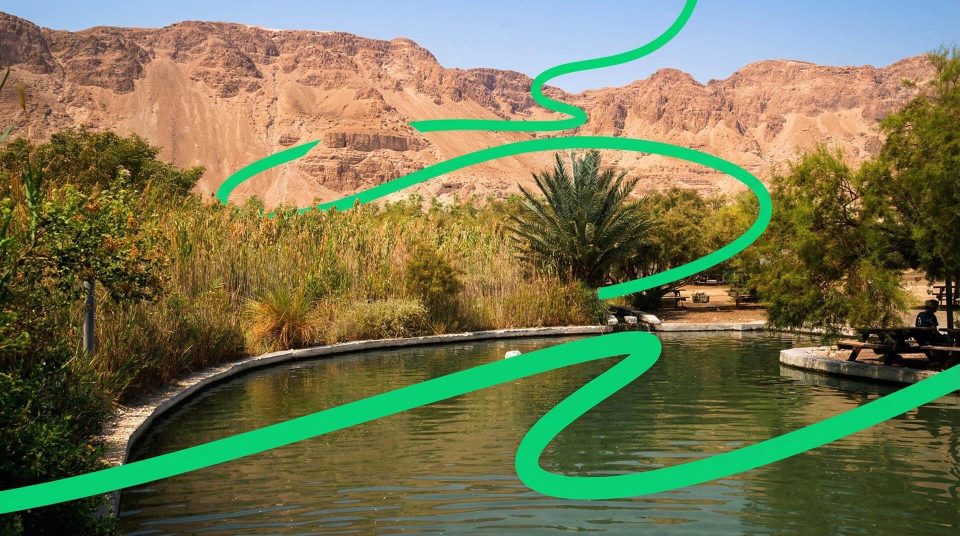
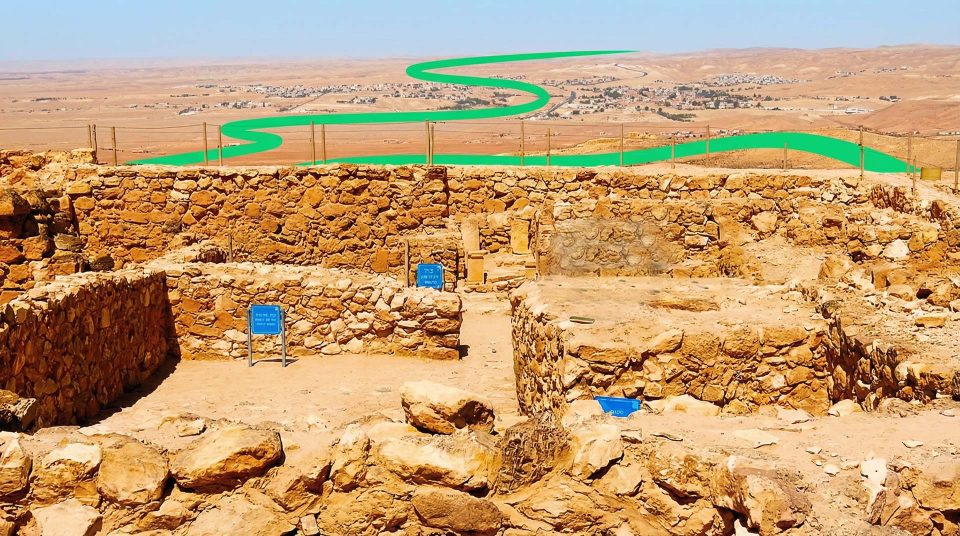
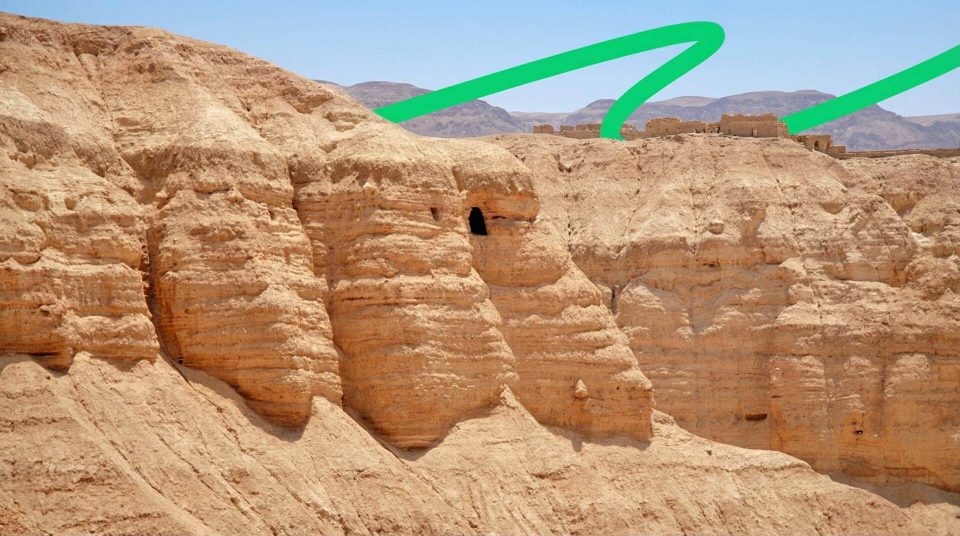
At Ein Gedi, green vegetation grows directly beneath the pale cliffs of the Judean Desert. Water sounds below, rock hyraxes perch among the stones, and the Dead Sea comes into view beyond the gorge. Yet the oasis contains several distinct places: Nahal David, the Arugot canyon, hillside springs and ancient buildings. The section you choose shapes the whole visit, from a short introduction to the watercourses to a demanding climb above the valley.
Beside a salt sea, sustained by fresh water
Ein Gedi Nature Reserve lies beside the western shore of the Dead Sea, on the eastern edge of the Judean Desert near Route 90. The kibbutz of the same name stands south of the natural oasis and is a separate destination. Dry slopes drop sharply towards the low ground, while springs sustain ribbons of green within the gorges. Water creates the strongest contrast: the intensely saline sea is close by, but the oasis depends on freshwater springs. A visit to the reserve should therefore be planned separately from time at a beach. Its paths follow streambeds and slopes, with different conditions from the shore. Even a name familiar from photographs needs to be matched to a specific entrance and section of trail.
The water that sustains the oasis
4 Springs supplying the oasis
2 Gorges with year-round flow in their lower reaches
How water emerges from dry rock
Ein Gedi’s four springs are David, Arugot, Shulamit and Ein Gedi. They supply different parts of the oasis, with perennial flow particularly characteristic of the lower reaches of Nahal David and Nahal Arugot. Rainwater seeps into the rock and emerges on hillsides and in the channels. Year-round flow describes these spring-fed sections, rather than the full length of each drainage basin. A damp rock face may lie close to a dry upper canyon. This helps explain abrupt changes in vegetation over a short distance. Follow the direction of the water and the landscape begins to make sense: greenery holds on in one place and disappears on the next slope.
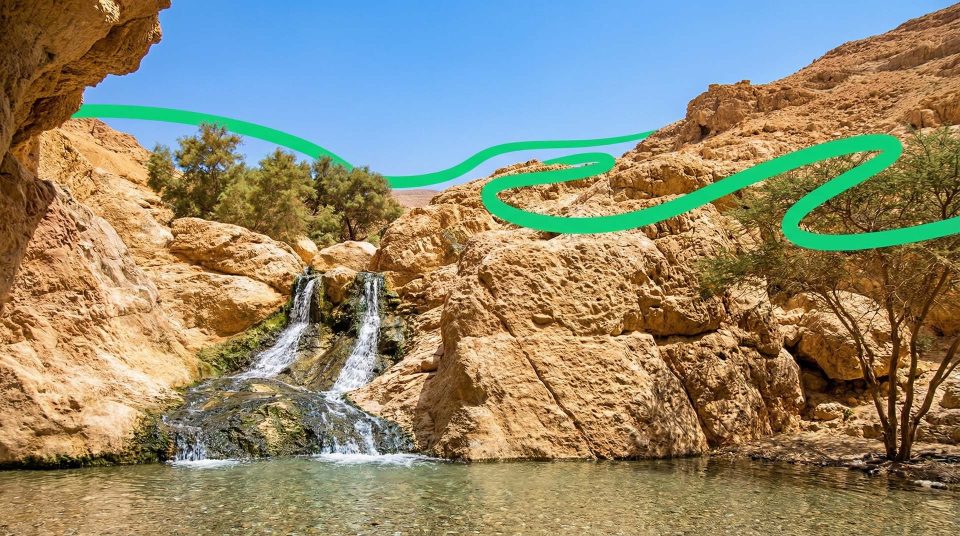
Nahal David and its lower-gorge waterfalls
David’s Waterfall is one of the reserve’s best-known images. In the lower gorge, water runs over rock ledges and through small pools, with vegetation tracing its course. Look at the canyon’s shape as well as the falls: a dry upper wall and the damp area beside the stream are remarkably close together. Higher parts of Nahal David, including the area around Dodim Cave, involve a different level of exertion. They should not be added automatically to a walk below. Place names describe the geography, not guaranteed access on the day you visit. For a first introduction, choose an officially open section and explore it unhurriedly rather than trying to reach every landmark shown in photographs taken over the years.
Nahal Arugot, a longer landscape of water and cliffs
Nahal Arugot offers a different sense of scale. Its lower canyon belongs to a much larger desert drainage system. Reeds, willows and Euphrates poplars grow near the springs, and flowing water links patches of green between high walls. The Hidden Waterfall and Upper Pools are among the better-known landmarks. They occupy different points along the gorge; they are not a single pool beside the entrance. A farther destination changes both the distance and the energy required, so choose your turnaround point using the permitted route plan. Walking beside the channel brings alternating open stretches and vegetation into view. Arugot should not be described as an invariably easy water attraction for every age. Rocks, sun and the return journey remain part of the hike.
Understanding the different parts of Ein Gedi
Lower Nahal David
Rock ledges and flowing water
A possible introduction to the oasis where a route is officially open. It does not automatically include the caves or the dry upper canyon.
Lower Nahal Arugot
A gorge with successive water features
Choosing the Hidden Waterfall or a farther section changes the effort required. One photograph of a pool cannot describe the demands of the whole canyon.
Hillside springs and temple
Springs and ancient worship
These involve climbing above the lower channels. Treat them as a separate part of the plan, rather than an obligatory extension of a short waterside walk.
Dry canyon and high trails
Exposed terrain
Assess fitness, weather and official access separately. A photograph of a view from above says little about the approach to the cliff.
Ancient synagogue
The archaeology of the oasis
This belongs to a separate archaeological complex. Do not assume that the arrangements for visiting it are identical to those for the nature trails.
Wildlife and plants beside the trail
1
Nubian ibex
This cliff-dwelling animal moves confidently across broken terrain. Watch from a distance and leave its route clear. An ibex near a path is still wild, and sightings are never guaranteed on every visit.
2
Rock hyrax
Hyraxes live among rocks and dense vegetation that provide shelter. Stop quietly and you may notice movement between the boulders. Do not try to lure one out with food for a photograph.
3
Tristram’s starling
A dark bird with orange patches on its wings, closely associated with the Dead Sea landscape. Its calls and flashes of colour in flight are distinctive details of the oasis.
4
Jujubes and streamside vegetation
Plants of different geographical origins meet in the oasis. A jujube’s canopy, reeds beside flowing water and drier hillside shrubs show just how strongly proximity to water changes the habitat.
A Copper Age temple above the oasis
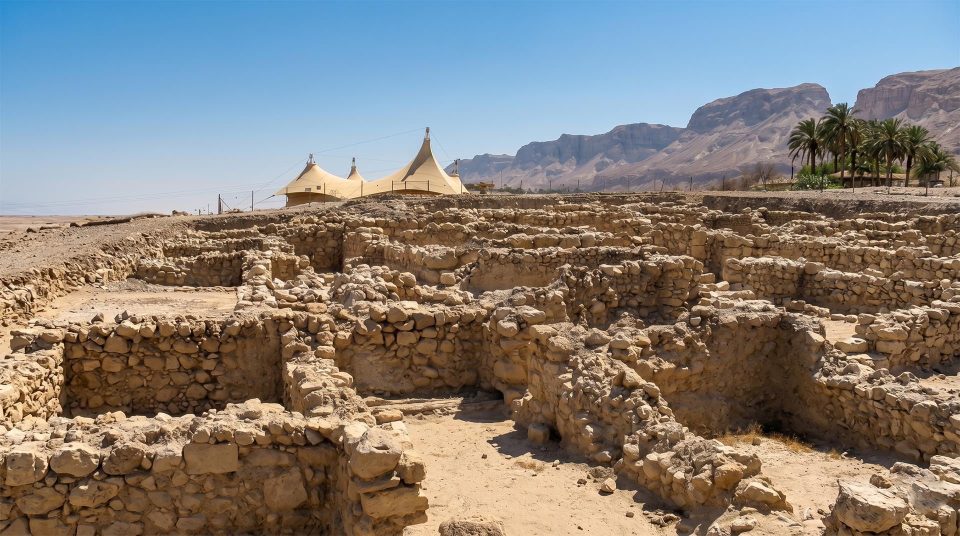
A religious complex from the Chalcolithic, or Copper Age, survives on the slope between the springs. It dates to the fourth millennium BCE. Its position above the water suggests the importance of the springs long before the later settlement developed. The temple should not, however, be presented as the proven centre of a large contemporary town: a permanent settlement associated with it has not been conclusively established. The remains are interesting for the arrangement of the sacred precinct and the choice of site. Plan the climb as a separate route element, subject to the official trail plan. Even without going up, knowing about the temple extends the oasis’s history far beyond its Roman plantations and well-known synagogue.
Tel Goren, dates and valuable balsam
Tel Goren, near the mouth of Nahal Arugot, is associated with the ancient settlement of Ein Gedi. At different periods, the oasis supplied people with water and valuable plant products. Ancient writers described its date palms and balsam, used for perfume and medicine. These accounts explain why a small patch of cultivated greenery had economic importance far beyond the desert. The balsam of ancient texts should not be confused with the modern persimmon fruit, despite an overlap in Hebrew names. Thinking about the oasis as a working landscape changes what you see. Its water sustained cultivation, labour and exchange as well as an attractive stream. The relationship between spring and settlement matters as much as that between water and the rocky habitat.
The synagogue and its community mosaic
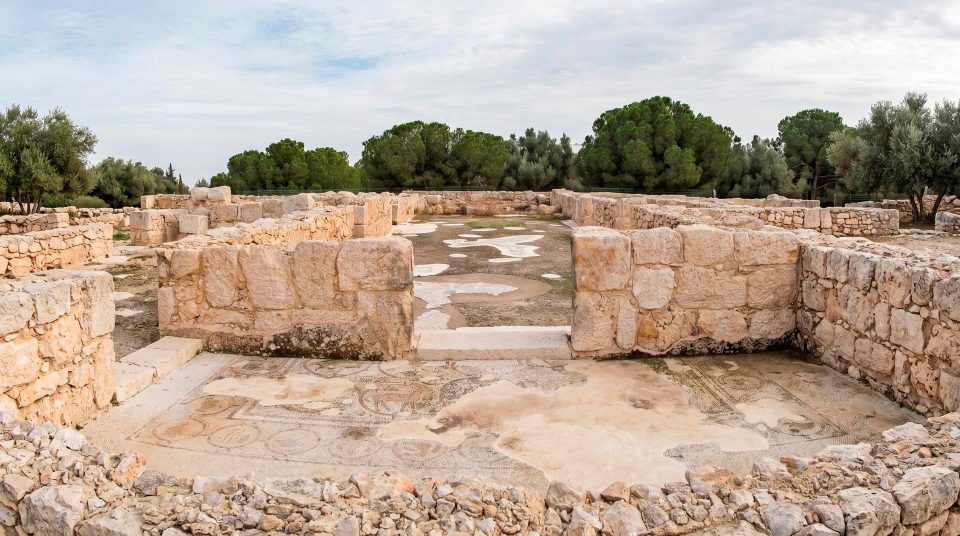
Ein Gedi’s ancient synagogue stands in an archaeological complex beside the nature reserve. Plant patterns and birds decorate its floor, while inscriptions preserve donors’ names and aspects of community life. A warning against revealing the ‘secret of the town’ is particularly famous. It is often linked to the production of valuable balsam, but that explanation remains an interpretation of the wording. Consider the ornament and inscriptions as different parts of the same monument. One gave the hall its visual order; the other recorded communal memory and expectations of behaviour. For a historically focused visit, the synagogue adds the lives of people to the natural story of the oasis. Check its entrance and visiting arrangements separately from those of your chosen gorge trail.
Biblical stories and the names on the map
In the biblical account, David hid from Saul in the area around Ein Gedi. The name Nahal David, or David’s Stream, recalls that tradition and its image of cliffs as a refuge. Religious narrative should be distinguished from archaeologically dated walls and settlement layers. A cave cannot be identified as the one in the story simply because it lies in a convincing gorge. Keeping those categories separate adds to the experience: the landscape helps explain the setting’s force in the narrative, while the antiquities offer their own chronology. Ein Gedi is usually translated as ‘spring of the kid’, meaning a young goat. The combination of water and cliff-dwelling animals neatly describes the oasis’s natural character.
Choose the high trails as a separate outing
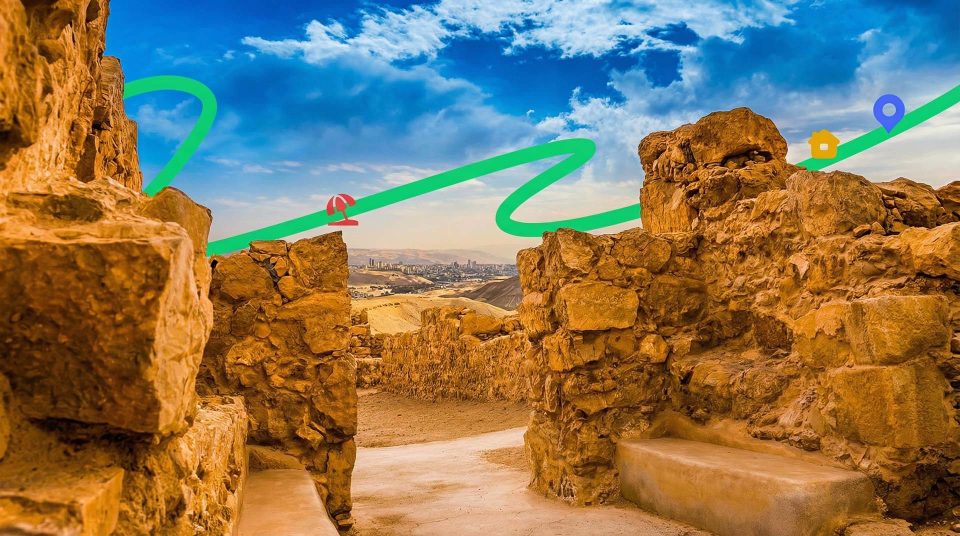
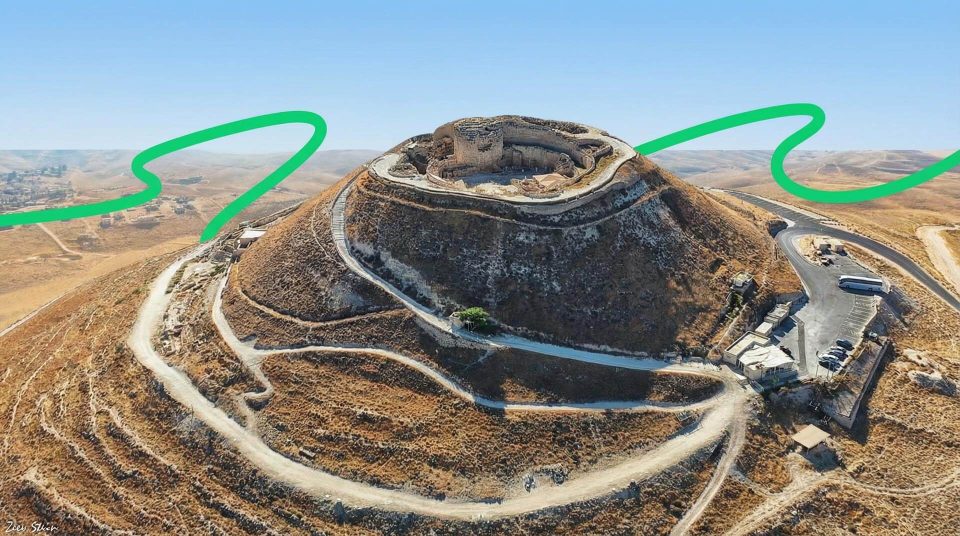
Mount Yishai and the Tzruya area rise above the green channels. In upper Nahal David, a dry canyon ends at the drop known as the Window Dry Fall. These names often accompany photographs of the lower waterfalls, although the walking is very different. Higher routes involve exposed slopes, elevation and distance from the green areas below. Avoid adding them to the end of a family walk simply because you are already nearby. They need preparation, a clear return plan and a separate decision about whether conditions permit the outing. The Window is a natural landform, not a promise of an equipped viewing platform. The steep walls seen from below make the difference between a waterside pause and a walk along the desert heights clear enough.
Preparing for this particular oasis
Heat, flash floods and the choice of a permitted trail are the main considerations. Shade beside a stream does not cool every approach, and rain higher in the catchment can change conditions in the gorge even while the sea remains sunny. Before setting out, check official access, the forecast and trail restrictions together; on arrival, follow the posted route. Bring your own drinking water regardless of the stream. Enter natural water only where it is permitted, and wear footwear with a secure grip on wet stone. Another coastal hazard is sinkholes, linked to the dissolution of underground salt as the Dead Sea level falls. They are not places to approach independently. Never choose an unmarked shortcut towards the shore. Cooler seasons are generally more comfortable for walking, but actual conditions, rather than the calendar alone, determine the appropriate route.
Questions before visiting Ein Gedi
Are Nahal David and Nahal Arugot the same walk? They are different gorges within the oasis. Choose the entrance, turnaround point and level of exertion for the specific section you intend to visit. A ticket or navigation destination for one stream does not automatically describe a walk along the other.
Is access to David’s Waterfall guaranteed? No. Describing a natural landmark does not confirm that access will be permitted on your visiting day. Use official information to select an open section before you travel. Old photographs and personal accounts cannot replace the authorised route plan.
Can I swim in every pool? No. Enter the water only in permitted areas and follow the instructions in force. A pool beside a path does not establish that swimming is allowed. Drink from your own supplies rather than the springs.
Is the synagogue part of the gorge walk? It is a separate archaeological complex beside the nature reserve. Plan it around its own entrance and visiting conditions. The mosaic and inscriptions tell the history of a community, rather than forming another natural feature along a stream.
Will I definitely see ibexes and hyraxes? Both live in the reserve, but sightings are not guaranteed. Watch quietly, do not feed them and leave their path clear. Moving closer for a photograph disturbs wildlife and creates unnecessary risk.
Does David’s story identify a particular cave? The biblical narrative connects David with the Ein Gedi area, but it cannot pinpoint a specific cave. Religious tradition needs to be distinguished from dated archaeological discoveries and the names of present-day trails.
Can I walk straight to the Dead Sea after the trail? Unmarked coastal shortcuts are dangerous because of sinkholes and are not a substitute for an authorised route to the shore. A reserve walk and a beach visit are different plans. Stay on marked, safe routes between destinations.
Choose your criteriaEach card updates to reflect your preferences and requirements
1 unitUp to 6 guests
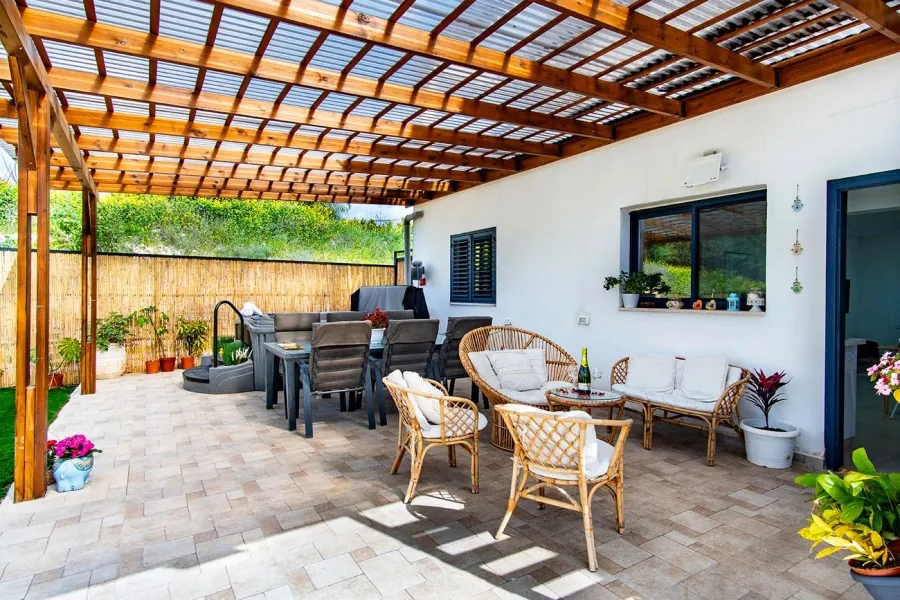
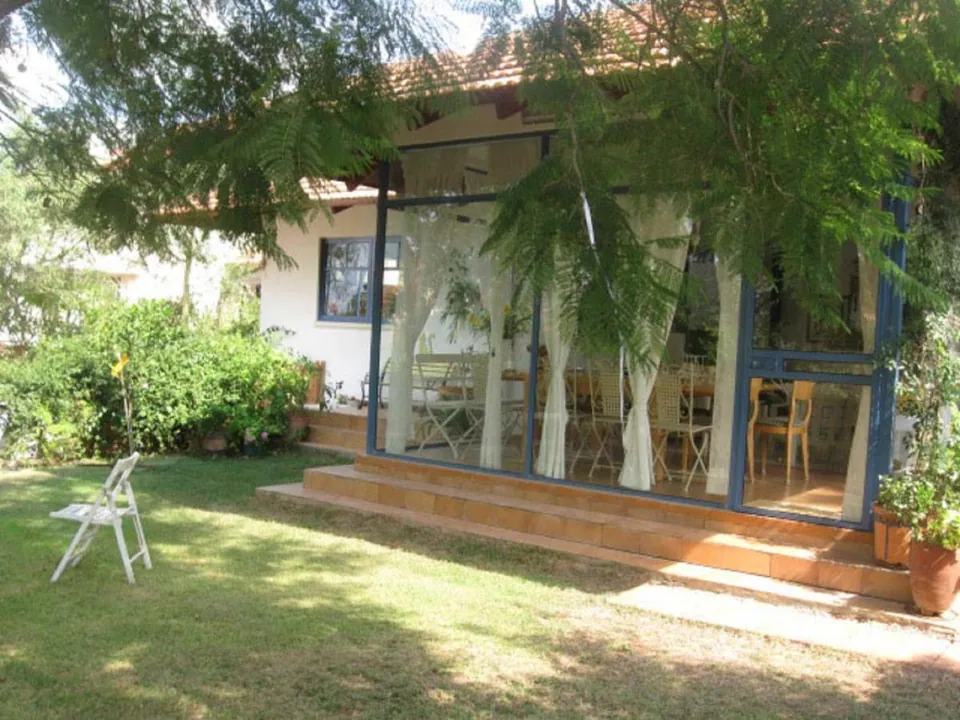
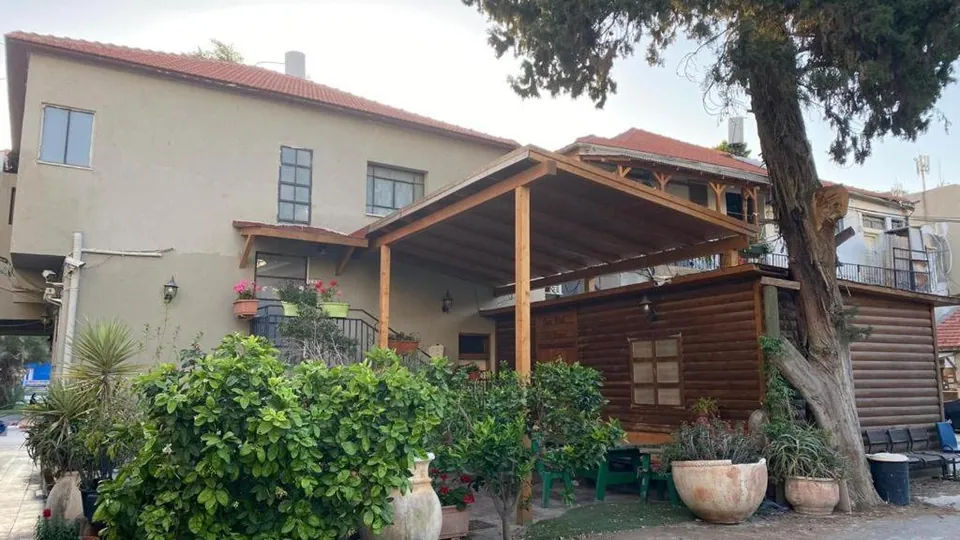
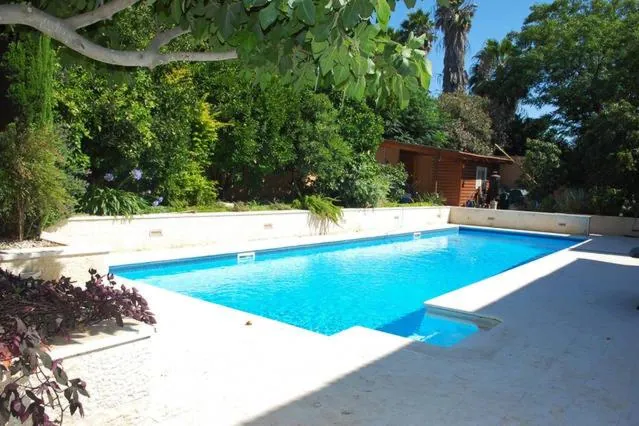
Orlina Rural Hospitality (Tzafon) A pleasant and indulgent vacation awaits you at the "Orlina Rural Hospitality" complex, located in the village of Tzafon. The vacation complex is suitable for hosting couples, families, groups, birthday parties, and bachelorette parties, and offers accommodation in 1 guest apartment. Guests at the complex will enjoy: Double bed with an orthopedic mattress Convertible sofa bed in the living room Air conditioning in every room Dining area Stylish living room Seating area Private balcony with table and chairs Additional bedroom Wardrobe 50-inch TV In the complex's yard: Lawn BBQ Gazebos Trees Decorative flowers Available by prior arrangement and at an additional cost: Pre-booked treatments and massages Dinner by prior arrangement Breakfast arranged with the hosts Event setups for birthdays, marriage proposals, and other special events In Brief What is in the complex: 1 guest apartment