

Nature in Israel: From Green Galilee to the Negev Desert
Share this article with:
Why nature in Israel leaves such a strong impression
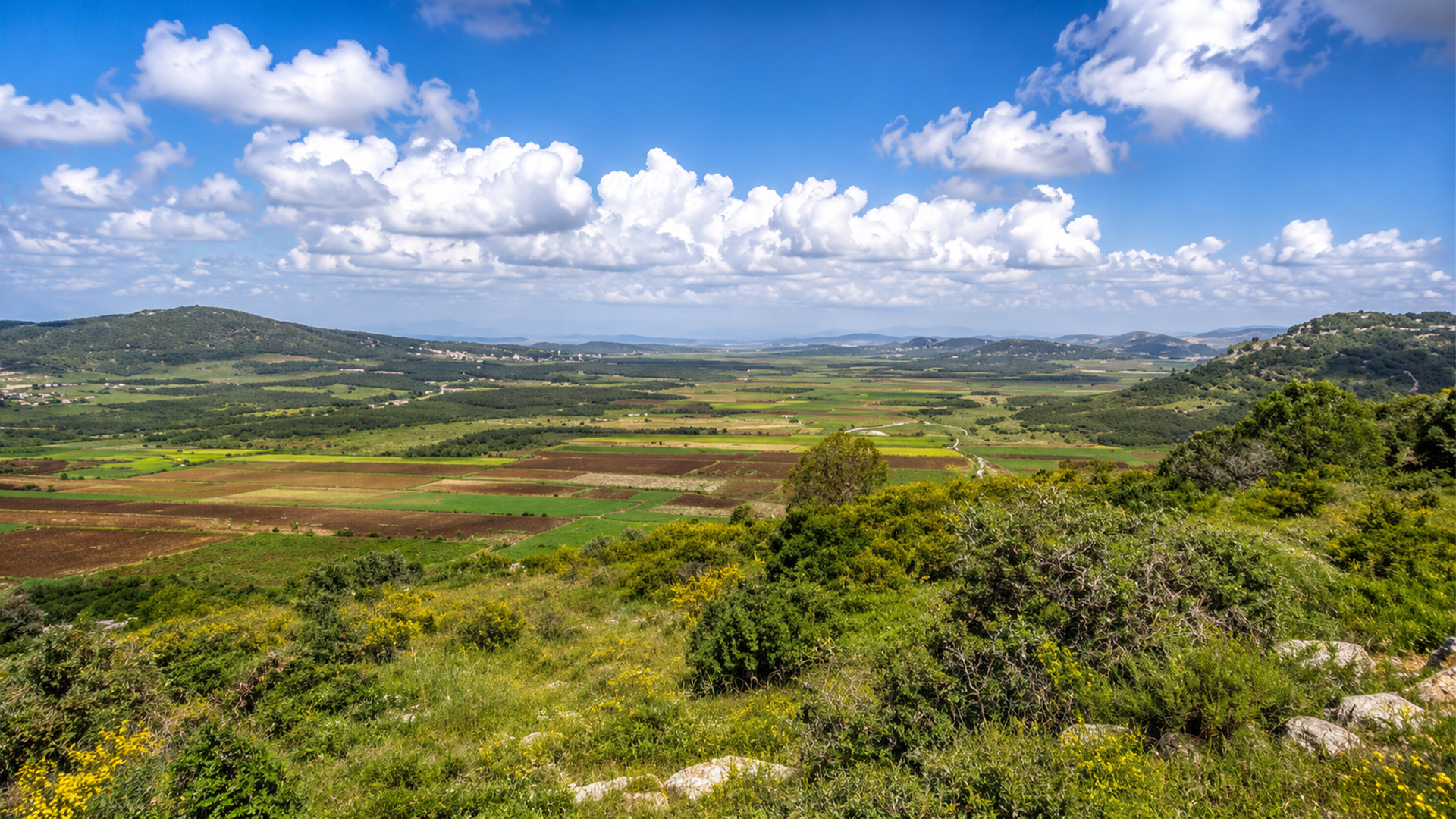
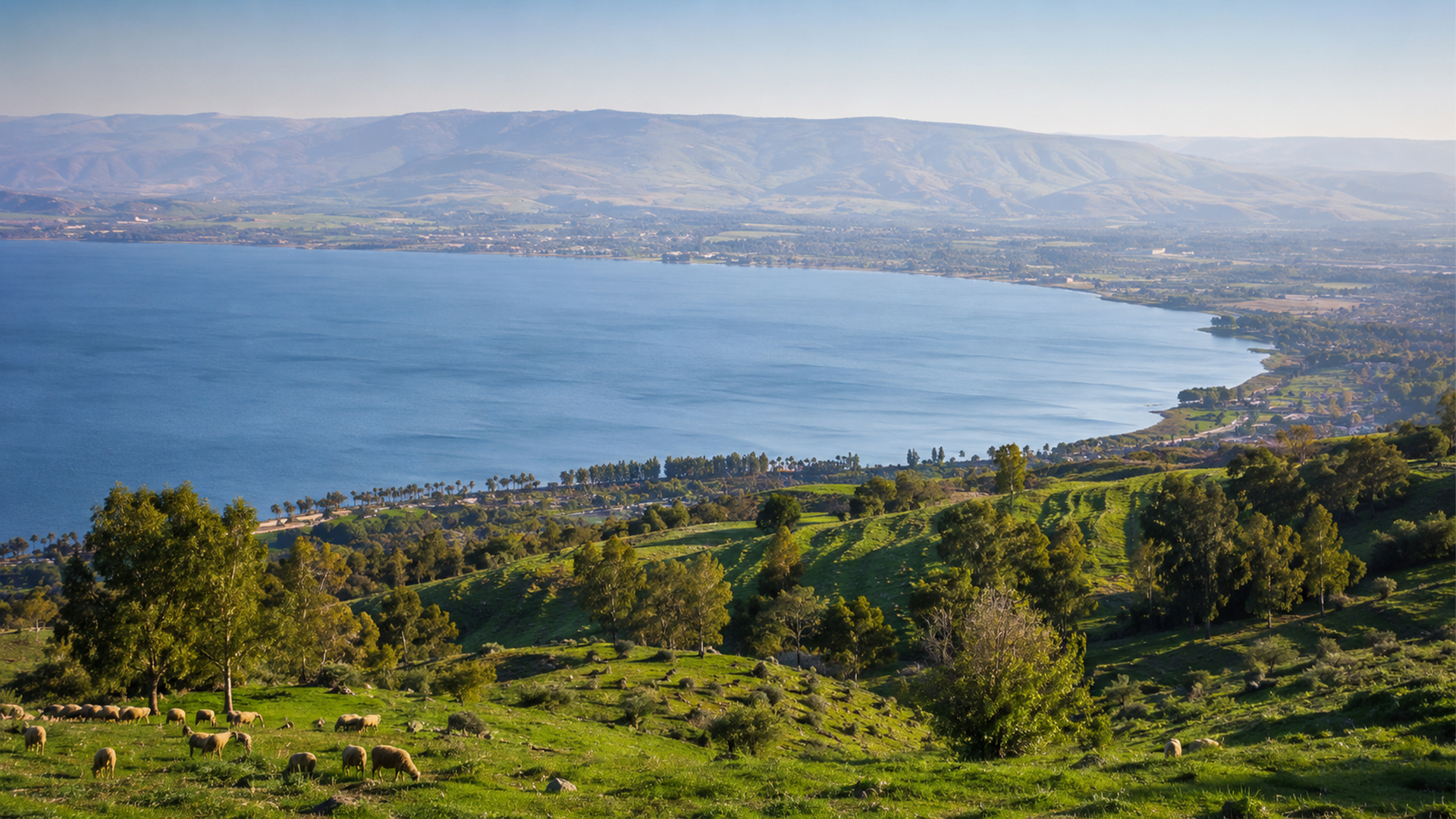
On the map, Israel looks small, but its landscapes change with surprising speed. In one trip, you can see the Mediterranean Sea, the green hills of Galilee, the forests of Carmel, springs and streams, the Negev Desert, cliffs near the Dead Sea and the underwater world of the Red Sea in Eilat. This density of impressions is what makes nature in Israel so striking: you do not have to choose between sea, desert, mountains and green valleys, because all of them exist within one country.
For travelers, this is a rare chance to feel different natural rhythms. In the morning, you can walk among pines and oaks. By afternoon, you can stand on the edge of a desert crater. In the evening, you can watch the sunset over the sea. Many natural places are also connected not only with beautiful views, but with history, archaeology, ancient roads, biblical stories, bird migration and geological processes that shaped the local landscape over millions of years.
Nature in Israel is also interesting because it feels so alive. In spring, hills are covered with flowers. In winter, after the rains, parts of the desert turn green. In autumn, great streams of migrating birds pass over the country. In summer, springs, shaded routes and the coast become especially valuable. This is a country of contrasts, where every season opens a different route.
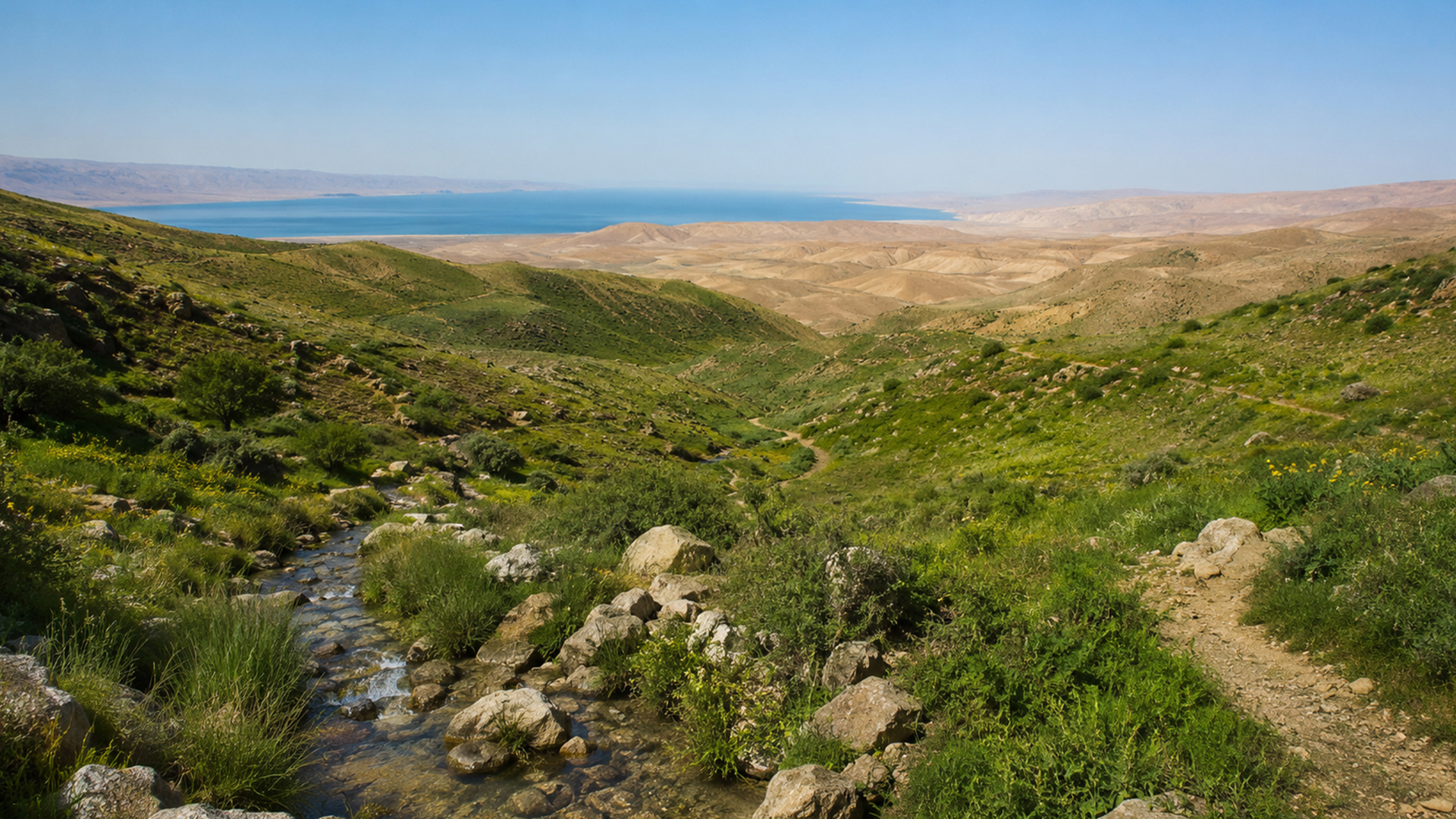
The main natural regions of Israel
To understand the country better, it helps to see it not only as a list of attractions, but as a meeting point of different natural regions. The north is greener, with hills, forests, streams and views of Galilee. The center combines urban parks, coastal landscapes and green corridors. The south opens the desert geometry of the Negev, where stone, light and silence become the main characters of the route.
| Region | What you can see | Who it may suit |
|---|---|---|
| Galilee | Green hills, streams, lookout points, rural landscapes | For calm walks, family routes and stays in guesthouses or cabins |
| Carmel | Forests, mountain roads, views of the sea and Haifa | For those who like a mix of mountains, forest and coast |
| Central Israel | Urban parks, the Yarkon River, coastal routes | For easy walks and short nature stops |
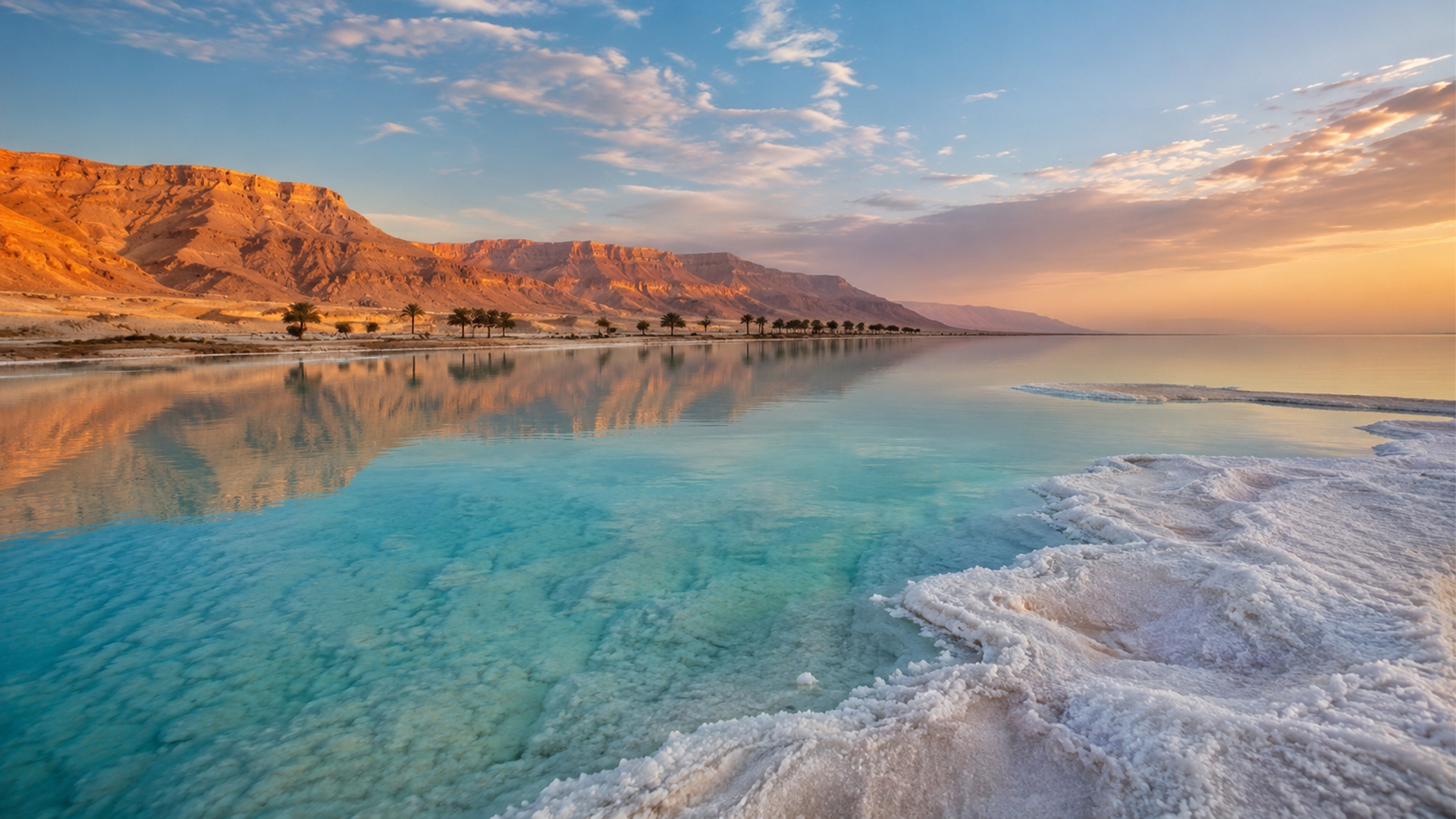
| Judean Desert and the Dead Sea | Cliffs, oases, dry canyons, salty landscapes | For lovers of dramatic views and unusual geography |
| Negev | Desert plateaus, Ramon Crater, starry skies, mountain trails | For routes with a sense of space and silence |
| Eilat and the Red Sea | Mountains, coral reef, marine nature | For a combination of desert, sea and underwater impressions |
Nature in Israel in facts: birds, deserts and ancient landscapes
One of the country’s most beautiful natural phenomena is connected with bird migration. Israel lies on an important route between Africa, Europe and Asia, so in spring and autumn the sky becomes part of a vast migration path. The Hula Valley in the north is considered a site of global importance for waterbirds and one of the important wetland areas of the region. For travelers, this is more than birdwatching. It can feel almost theatrical: flocks rise above the water, change shape in the sky and disappear against the mountains.
Another scientifically interesting example is Ramon Crater in the Negev. It is often called a crater, but it is not a meteor impact site and not a volcanic opening. Makhtesh Ramon was formed by long geological processes and erosion. Today, it is one of the most impressive places in the desert part of the country: a huge natural bowl, rock walls, colorful layers and the feeling of an ancient landscape where the work of time is clearly visible.
Ein Gedi near the Dead Sea is no less expressive. This oasis in the Judean Desert shows how water changes space. Among dry slopes, streams, waterfalls, vegetation and animals appear. It is one of those routes where nature in Israel feels especially full of contrast: only a few steps separate a severe stone landscape from greenery and cool shade.
Nature reserves and national parks in Israel
Many of the country’s natural attractions are located in nature reserves and national parks. This is important to consider when planning: some places have opening hours, paid entry, visiting rules and route restrictions. This format helps protect fragile ecosystems, archaeological sites and rare plant and animal species.
For a first introduction, different directions can work well. In Galilee, you can choose water routes and lookout points. On Carmel, forest walks and views toward the coast. In the Dead Sea area, Ein Gedi and desert trails. In the Negev, Ramon Crater and nature routes around Mitzpe Ramon. In Eilat, Coral Beach, where you can see Israel’s only coral reef.
- For a green getaway, Galilee, Carmel and forest routes are good choices.
- For water and oases, consider Ein Gedi, the Hula Valley and northern streams.
- For desert landscapes, choose the Negev, Ramon Crater and the Dead Sea area.
- For marine nature, Eilat and the coral reef of the Red Sea are a good direction.
- For a family trip, check route difficulty, shade, water and opening hours in advance.
When nature in Israel is at its best
Israel’s climate is largely shaped by two main seasons: a rainy winter and a dry summer. Because of this, the same route can look completely different in January, April or August. In spring, the north and central areas are especially beautiful, with greenery and flowering. In autumn, it is pleasant to walk after the summer heat. In winter, desert regions can be unusually expressive, but it is important to check the forecast, especially before trips into streambeds and canyons.
| Season | What is especially beautiful | What to consider |
|---|---|---|
| Winter | Green hills, fresh air, streams after rain | Check weather and flash flood warnings in the desert |
| Spring | Flowering, mild weather, routes in Galilee and Carmel | Popular places may be busy on weekends and holidays |
| Summer | The sea, morning walks, springs and shaded places | Plan routes early in the morning or closer to evening |
| Autumn | Soft light, bird migration, comfortable walks | Check park opening hours in advance after the holidays |
How nature in Israel helps you feel the country more deeply
Traveling through Israel’s natural places gives more than beautiful photos. It helps you understand the character of the country itself. Here, water is always felt as something precious, shade as a gift, forest as the result of long care, and the desert as a space where every sound and every color becomes more noticeable. That is why nature in Israel is often remembered not for its scale, but for the strength of details: the smell of pines after rain, the silence above Ramon Crater, birds flying over Hula, the shine of salt near the Dead Sea and the clear water beside the corals of Eilat.
It is also interesting that nature routes combine easily with rest. Near forests, streams, wineries, lookout points and national parks, you can find guesthouses, cabins, family places to stay and small morning routes. This format is especially good for those who do not want simply to arrive at a point, take a photo and leave, but to experience the place calmly: wake up near nature, go for a walk, see the sunset and feel the rhythm of the region.
When planning a route, do not try to see everything in one day. Nature in Israel is best experienced through a thoughtful trip: one reserve, one lookout point, one place to rest and enough time without rushing. Choose the region by the mood you want: Galilee for greenery and water, the Negev for silence and desert views, Carmel for forest and sea, and Eilat for mountains and the coral reef. This way, the trip will be not only beautiful, but truly memorable.
101 views