

The Dead Sea: Israel’s Salty Wonder, Desert Views and Nearby Routes
Share this article with:
Where the desert meets salty water
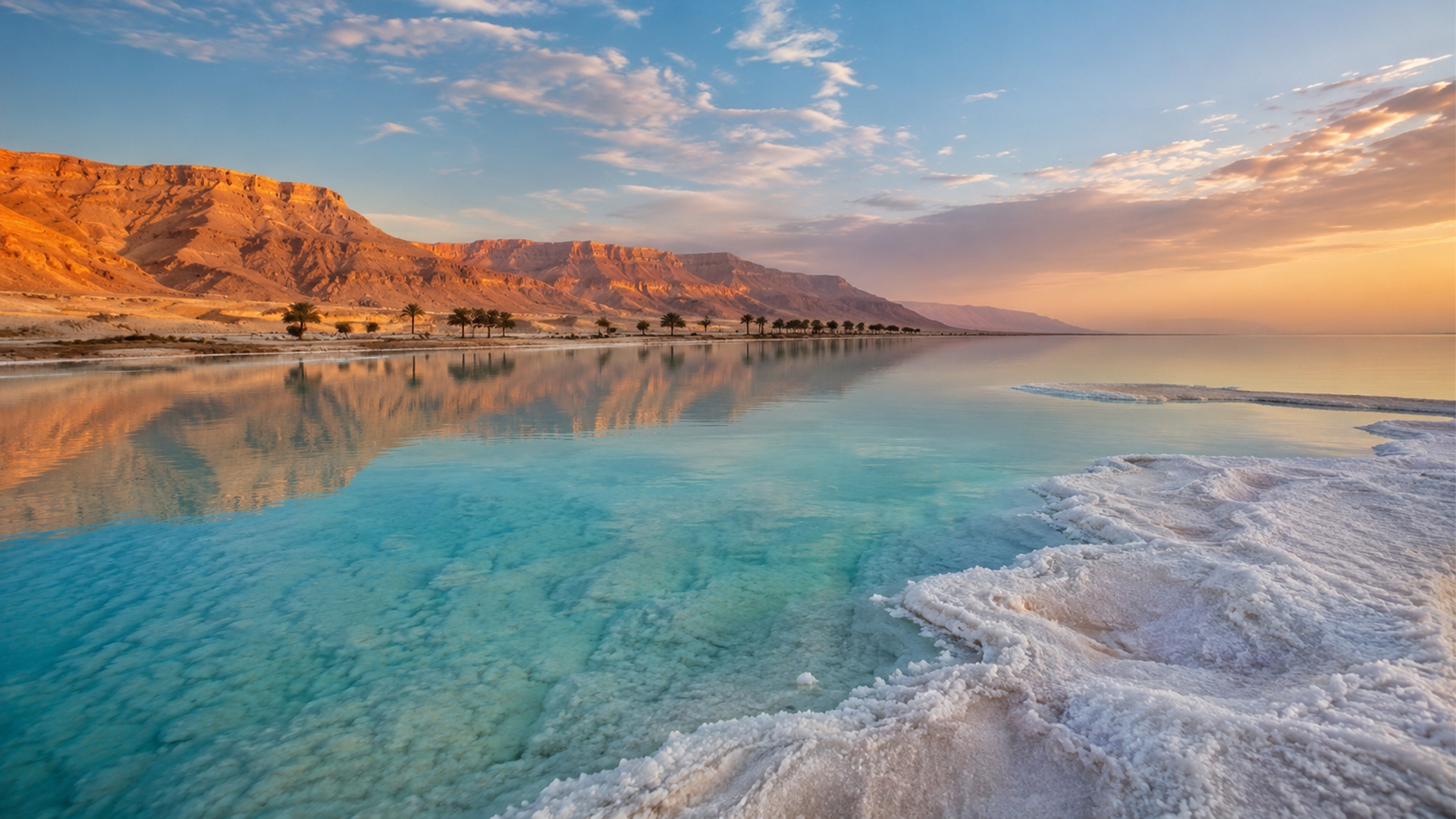
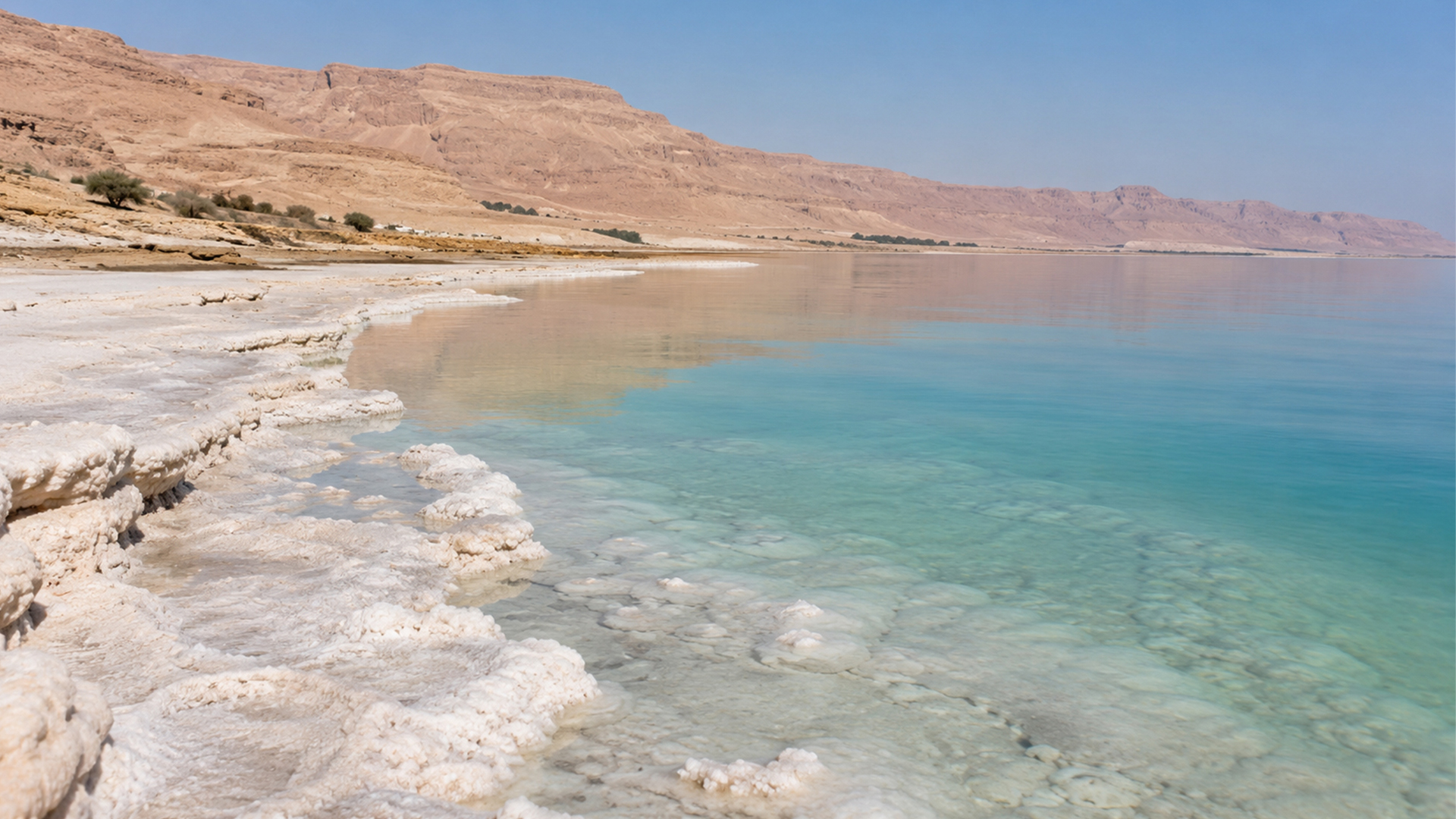
The Dead Sea is one of Israel’s most recognizable natural places. Its landscape is impossible to confuse with anywhere else: pale salt lines along the shore, dense still water, the dry slopes of the Judean Desert and mountains on the eastern horizon. Everything here feels slightly unreal, as if nature gathered silence, light, salt, stone and water into one place.
For travelers, this is not just a point on the map. A trip here brings together rest, geology, history and a strong visual impression. You can bathe in salty water, walk through the oasis of Ein Gedi, go up to Masada, see desert canyons and feel how varied Israel’s nature can be. That is why The Dead Sea works well both for a first introduction to the country and for a calm route of its own.
One of the special features of this place is that it lies more than 430 meters below sea level. The level changes over time, so the exact number is best understood as a reference point. The fact itself remains impressive: this is one of the lowest land areas on Earth, where water, climate and relief have created a truly unique natural environment.
Why The Dead Sea is so salty
Scientifically, it is not a sea in the usual sense, but a salt lake with no outlet. Water flows into it, but does not continue onward to the ocean. In the hot, dry climate, the water evaporates actively, while salts and minerals remain. This creates the high mineral concentration that allows the body to float easily on the surface.
This feeling is exactly what makes bathing here so unusual. You do not need to swim actively: the water lifts the body by itself. Still, this level of salt requires care. It is better not to dive, splash water onto your face, enter with cuts or stay in the water too long. After bathing, it is recommended to rinse the salt off with fresh water and let the skin rest.
The salts and mud of the region have long made it a well-known resort destination. At the same time, it is better to avoid big promises and see the trip first of all as rest, a natural experience and an introduction to a unique landscape. If someone is coming for medical reasons, those questions should be discussed with a specialist.
Bathing and beaches: what to know before the trip
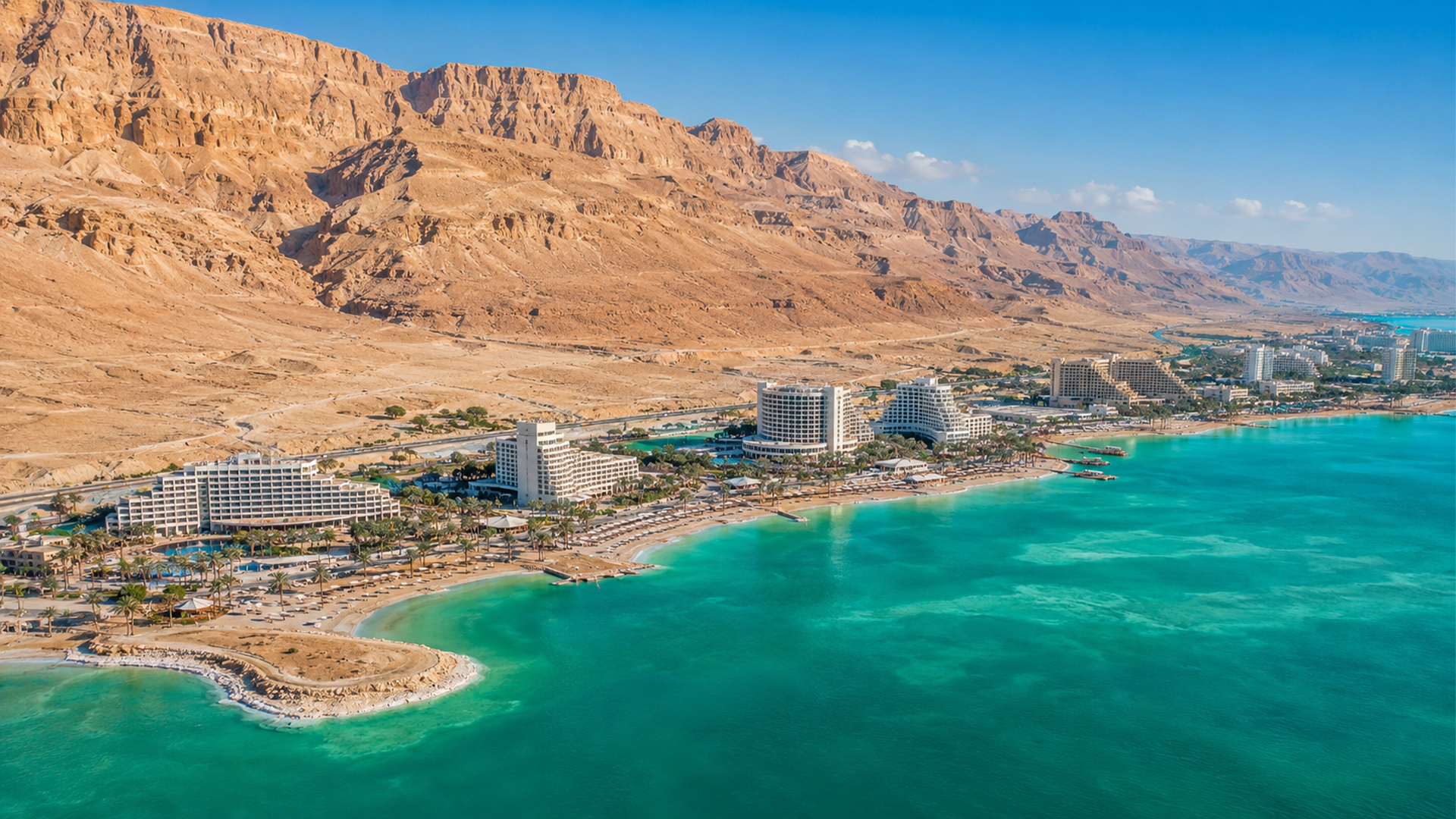
For a comfortable visit, travelers often choose the areas of Ein Bokek and Neve Zohar. There are hotels, organized beach areas, access to the water and clearer infrastructure for guests. Even so, it is worth checking updated information before the trip: conditions along the shore can change, and some parts of the salty lake are not suitable for independent bathing.
When planning time at the Dead Sea, it is better to bring water shoes, a bottle of water, a hat, sunscreen and a towel. In summer it can be very hot here, so active walks are better planned for the morning or closer to evening. In winter and spring, the trip often feels more comfortable, especially if you want to combine bathing with Masada, Ein Gedi or a desert route.
| Place | What makes it interesting | Who it may suit |
|---|---|---|
| Ein Bokek | Resort area, hotels, convenient access to beaches | For those who want calm bathing and comfortable infrastructure |
| Neve Zohar | A quieter southern part of the shore | For rest near the resort area, but in a calmer format |
| Masada | Ancient fortress, desert views, UNESCO site | For lovers of history, archaeology and panoramas |
| Ein Gedi | Oasis, streams, waterfalls and nature routes | For those who want to combine desert, water and greenery |
| Judean Desert | Cliffs, dry streambeds, unusual light and silence | For photo trips and beautiful nature routes |
Masada and The Dead Sea: history above the desert
Masada makes a trip to this region especially powerful. It is an ancient fortress on an isolated plateau in the Judean Desert. UNESCO describes Masada as a natural fortress rising above the Dead Sea, where King Herod built a palace complex in the style of the early Roman Empire. Today it is one of Israel’s best-known historical places.
The impression begins even before entering the site itself. The desert plateau, sharp slopes, wide valley and view of the salty surface create the feeling of a vast historical stage. Here, it is easy to understand why the place became a symbol of endurance, memory and the dramatic history of ancient Judea.
For a route, it is convenient to combine Masada with bathing and a walk in Ein Gedi. Such a day feels full, but logical: first history and views, then an oasis or water. In the hot months, the ascent and walks are best planned very early to avoid the heavy daytime heat.
Ein Gedi: an oasis beside the salty lake
Ein Gedi shows a different face of the desert. Among dry slopes, streams, waterfalls, greenery and animals appear. This is one of the most beautiful contrasts in the region: outside the route there is stone, heat and silence, while inside it there are water, plants and coolness. That is why Ein Gedi is often included in a trip together with bathing and Masada.
This contrast helps you feel that The Dead Sea is not only beach and salt. Around it, a whole natural world has formed: oases, canyons, cliffs, ancient roads and desert landscapes. Here, water feels especially precious, and every green patch seems almost like a wonder.
When The Dead Sea is at its best
In winter, the region is especially pleasant for walks. Temperatures are usually softer, desert views feel calmer and the routes are easier physically. In spring, you can combine bathing, Masada and Ein Gedi, although during holidays popular places may be busier. Autumn is also suitable for a trip, especially after the heavy summer heat.
In summer, The Dead Sea requires careful planning. It can be extremely hot during the day, so it is better to choose short activities, rest by the water, morning hours and places with accessible infrastructure. At any time of year, check the forecast, national park opening hours and weather warnings before the trip, especially if you are planning routes in desert streambeds.
| Season | Advantages | What to consider |
|---|---|---|
| Winter | Mild weather, comfortable walks, expressive desert views | After rain, check flash flood warnings in the desert |
| Spring | Comfortable temperatures, easy to combine bathing and routes | During holidays, popular places may be more crowded |
| Summer | Resort atmosphere, bright sun, warm evenings | Very hot, so plan activities early in the morning or closer to evening |
| Autumn | The weather gradually becomes softer and suits a calm trip | Check beach and park opening hours in advance |
How to build a route to the Dead Sea
The simplest option for a first visit is to choose a resort area for bathing, add Masada or Ein Gedi and leave enough time for the road. If you want more nature, it is better to focus on Ein Gedi and desert views. If history is the main interest, Masada can become the central point of the route.
The Dead Sea works well both as a trip of its own and as part of a larger journey through Israel. It can be combined with Jerusalem, the Judean Desert, southern routes or a stay in guesthouses or cabins. The main thing is not to overload the day: distances on the map may seem short, but heat, climbs, parking and time for bathing can quickly change the plan.
- For a first trip, Ein Bokek or Neve Zohar are convenient choices.
- For history, add Masada.
- For nature and water in the desert, choose Ein Gedi.
- For beautiful views, plan for early morning or sunset hours.
- For a family trip, check infrastructure, shade and access to showers.
Why this place stays in memory
Many natural attractions impress through scale, but this region works differently. What stays in memory here is the atmosphere itself: heavy salty water, white traces of salt, dry air, desert silence, the ancient stones of Masada and the greenery of Ein Gedi. In one route, a scientific fact, a beautiful landscape and the feeling of a place on the edge between water and desert come together.
That is why The Dead Sea is worth seeing not as one stop for a photograph, but as a whole region for an attentive trip. The calmer the route is, the stronger the impression becomes: more light, more air, more time for water, history and the desert landscape.
When planning a trip to the region around the Dead Sea, choose one main focus: bathing, Masada, Ein Gedi or desert views. Do not try to do everything too quickly. It is better to leave room for a calm pace, time by the water, rest after the route and beautiful stops along the way. This way, the trip will feel not only full, but truly memorable.
76 views