1. A day shaped by what is growing
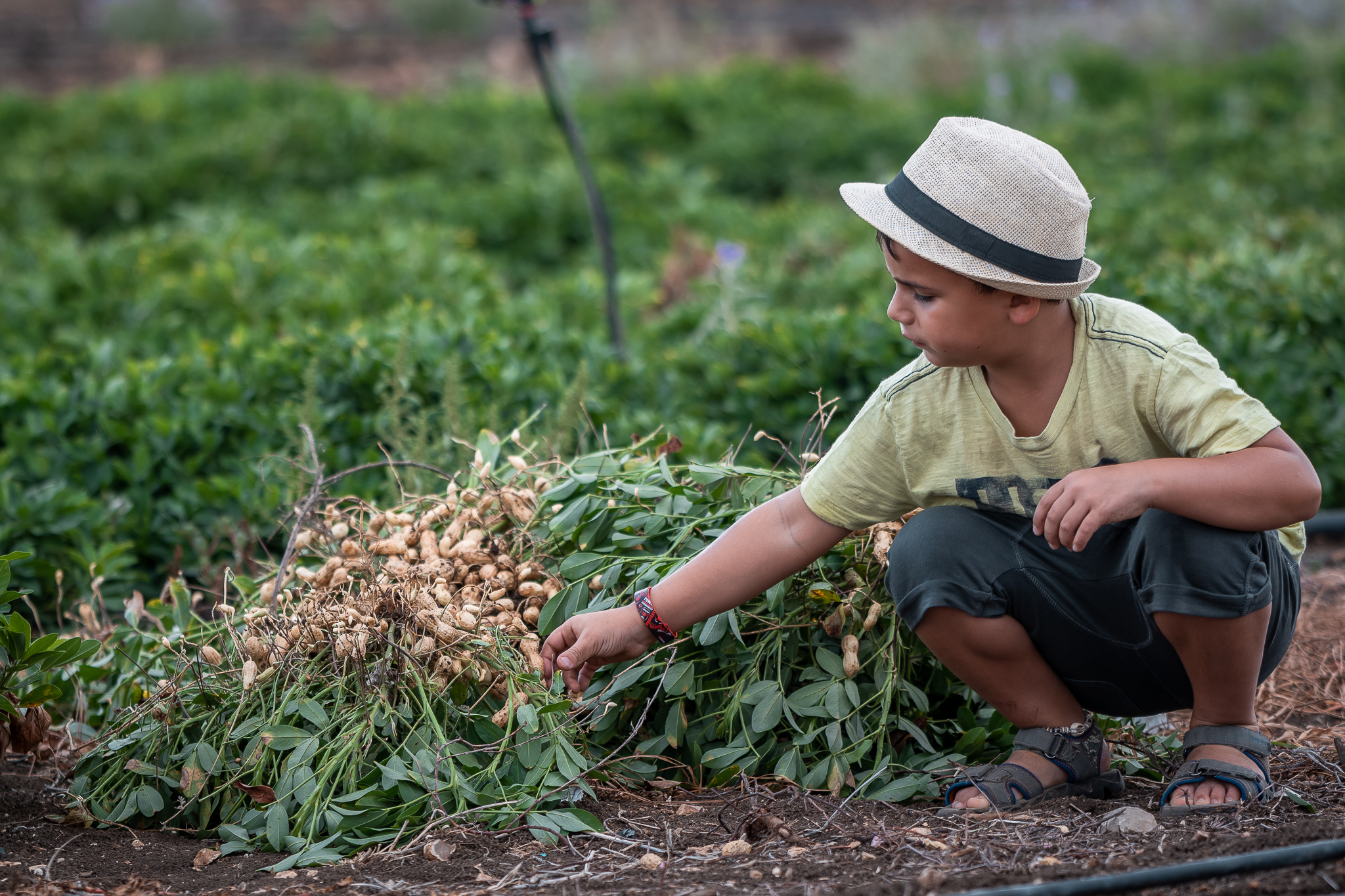
Farms in Israel offer outings built around a basket of strawberries, a row of colourful vegetables or the workings of an Arava greenhouse. You might follow a farmer between crops, collect produce at your own pace, or finish by cooking what the group has harvested. The best starting point is the activity you want: tasting ripe fruit, learning how it grows, giving children a manageable task or spending a full session on agricultural techniques.
Harvest baskets have a long cultural history. Deuteronomy 26:2 describes placing the first fruits of the land in a basket for bikkurim, the first-fruit offering. Modern pick-your-own businesses have their own local stories. Agronen in Gedera dates its first blackberry picking plot to 1997. Bein HaShitin in Hatzeva was established in 2017 as an educational agricultural farm. Those two histories help explain the breadth of agritourism in Israel, from a fruit-focused outing to a programme about food production and sustainability.
See the plant Follow a crop from its leaves and flowers to ripe produce. Mixed vegetable plots make the differences easy to notice.
Choose your involvement Self-guided picking, a farmer-led tour and a kitchen workshop use your time in different ways.
Understand the basket Permission to taste in the field and permission to carry produce home can have separate conditions.
2. Five regional starting points
The farms below offer distinct experiences rather than interchangeable rural backdrops. Around Bethlehem of Galilee, mixed crops make vegetable picking a varied activity. Gan Shmuel offers a berry-focused example, while Gedera and Beit Elazari provide two different approaches within central Israel. Hatzeva puts greenhouse agriculture at the centre of an Arava visit.
Make one farm the anchor of the day. A northern outing might combine time at Ktofoti with a separate walk around Bethlehem of Galilee. In central Israel, the choice between Gedera and Beit Elazari can depend on the crop your family wants. A farm in Hatzeva deserves its own place in an Arava itinerary. Avoid turning a visit into a string of distant stops that leaves little time among the plants.
3. What each farm actually offers
Ktofoti, Bethlehem of Galilee. The farm lists a broad mix of vegetables, herbs and seasonal fruit, including strawberries, blackberries, strawberry guava, citrus and grapes. That variety lets visitors compare a root crop with a fruiting plant or a fragrant herb. Group visits can include explanations by local farmer Rami Horev. The detailed introduction gives roughly two hours for a coordinated guided visit; that is a programme example, not a universal time limit for every family ticket.
Agronen, Gedera. Its published fruit range includes blackberries, raspberries, strawberries, blueberries, pomegranates, mulberries, loquats and pitanga. The farm describes growing eight blackberry varieties to create a succession of ripening crops. This makes variety and ripeness useful subjects to ask about. The list of crops grown is broader than the produce necessarily available on your chosen day. Take-home berries can also be restricted when the amount of ripe fruit is limited.
Ruach Shtut, Gan Shmuel. The picking programme describes an explanatory video, observation of bees in transparent hives, tasting in the field and a children’s activity area. Strawberries, raspberries and blackberries are specifically named as seasonal picking crops. The business also sells a wider range of fruit: seeing blueberries or cherries in its shop does not establish that visitors can pick those crops. Advance tickets are requested, with available visits linked to the condition of the field.
Passiflora Farm, Beit Elazari. The Ezra family, described on the farm website as third-generation growers, combines cherry-tomato and seasonal fruit picking with a maze formed by passion-fruit plantings. Covered areas, seating and children’s activities support a family visit. The maze remains an attraction when passion fruit is not ripe. A visit to explore the plantings and a visit specifically to harvest passion fruit therefore need different expectations.
Bein HaShitin, Hatzeva. This educational farm belongs to the Ruach Arava organisation. Its own description gives seven dunams of greenhouse crops and about thirty kinds of vegetables. Visitors can encounter designated self-picking areas or arrange guided picking across the farm. Composting, biological pest management, agricultural work and cooking are among its programme themes. This is a strong option for groups interested in how crops are produced as well as what they taste like.
4. Seasons: ripening does not equal an open visiting slot
Pick-your-own fruit in Israel follows the conditions of individual plots. Crop varieties and growing environments can extend or shorten the period that visitors encounter. A familiar month is a useful lead, not a guarantee. A greenhouse roof also does not mean that every fruit is available throughout the year.
The distinction matters particularly at Passiflora Farm: its listed summer passion-fruit period sits outside the general September-to-June visiting season. Summer fruit on the plant does not establish a summer ticket programme. Plan strawberry picking, a mixed vegetable outing or a fruit-tasting visit around the farm’s specific information, rather than an old photograph or an online shop listing.
5. Picking, touring and working with the crop
Self-guided picking Follow the farm’s rules and collect permitted produce at your own pace. Establish which areas and containers are included.
Guided picking A member of the team explains crops along the route. At Bein HaShitin this is distinct from its designated self-picking zones.
Agricultural learning A visit may focus on soil, water, pollination or growing methods. Picking can form only one part of the session.
Harvest and cook Use gathered produce in a coordinated kitchen programme. Agree the menu, facilities and participation separately.
Working farms can include a play area, a coffee cart or a maze alongside production. Judge an agricultural experience by its connection with growing crops and the work of the farm. Buying a box at a roadside stall, exploring a leisure park and picking vegetables in a greenhouse are different activities. Choose the one that fits the day you want, rather than assuming that every rural attraction includes harvesting.
6. Published prices and the parts of a visit
These are individual examples from operators’ published price information. They are not a national average or a promise of unchanged rates. Read each amount with its inclusions: a personal picking container is included in one programme, while another farm lists take-home baskets separately.
A simple calculation using Ktofoti’s listed rates: three paying visitors cost ₪180 for admission. If the farm confirms one medium basket for the party, that makes ₪225 together. This is an arithmetic example, not a family package, and it leaves out food purchases and any separately priced activities.
Ask what you may taste, what you may take home and how many containers the party receives. Agronen’s published picking information shows how take-home permissions can differ by crop. Ruach Shtut describes a take-home basket as an additional option. An admission ticket should never be read as unlimited permission to carry out everything you pick.
7. The interesting part behind the harvest
An agricultural tour can explain decisions that a casual visitor would otherwise miss. Ruach Shtut describes biological pest management, water recycling and bees used for pollination. The transparent-hive observation helps connect insects with the development of fruit. It is an educational activity, not a guarantee that every visitor with an allergy can participate without special arrangements.
Bein HaShitin describes compost systems, biodiversity and greenhouse growing. More specialised seminars discuss sensors, mycorrhiza and experiments involving irrigation and plant nutrition. Its hands-on agricultural programme can include planting, tying plants, weeding or other jobs needed on the day. For a school or workplace group, choosing one of these themes gives the outing a clearer purpose than simply adding a basket to a sightseeing schedule.
Terms such as ecological, biological and organic need careful reading. A farm’s use of beneficial organisms or compost does not by itself demonstrate organic certification for all its produce. Ask for the relevant evidence if certification matters to your food choices. An enjoyable farm visit needs no claims that fruit will cure illness or improve health. Its value lies in seeing the plants, understanding the work and tasting the available crop.
8. Children, pushchairs and accessible routes
Give children a task they can understand: identify a ripe berry, compare two herb leaves or collect a few permitted vegetables. A manageable route and somewhere to pause can matter more than a long list of extras. Ktofoti describes shaded space, tables, benches and toilets. Those facilities do not establish that every narrow planting row can accommodate a pushchair or wheelchair.
Ruach Shtut gives a specific example of two accessible greenhouses for wheelchair users and groups with access requirements. Passiflora Farm describes concrete paths in its cherry-tomato and strawberry greenhouses, while the maze has sandy ground. Discuss the actual crop and route you want, together with the surface, distance from parking and suitable toilet facilities.
9. From greenhouse to a shared meal
Bein HaShitin’s farm-to-plate activity is described for small groups of up to forty people. Participants gather vegetables in the greenhouse, take them to the kitchen and prepare a meal together. A menu can be coordinated in advance, and the farm also describes a competitive cooking format. It is a separately arranged programme rather than an assumed inclusion in a standard self-picking ticket.
Ktofoti describes combining a group tour and harvesting with a Galilean meal by arrangement. Its children’s programmes also list pita preparation and planting. For a birthday or workplace visit, establish who cooks, which activities are included and how dietary needs will be handled. A coffee cart, a pita purchase or an ice cream on site should not be mistaken for a full meal included in admission.
10. Three ways to build a worthwhile farm day
A mixed-crop northern outing Make Ktofoti the main visit, compare available crops and leave time to rest afterwards. Bethlehem of Galilee can provide a separate village walk; nearby businesses have their own visiting arrangements.
A berry-led choice in central Israel Compare Agronen in Gedera with the available Ruach Shtut programme at Gan Shmuel. Choose by the fruit and take-home rules instead of treating two farms as one shared-ticket outing.
An Arava learning day Give Bein HaShitin a dedicated place in a Hatzeva visit. A group can choose crop production, agricultural work or cooking as the main theme.
These are suggestions for independent planning, not packaged Nativa tours. Confirm each farm’s programme and crop separately. A single visit with time for explanations, picking and a break will usually suit this purpose better than several rushed stops.
11. Respect the crop and prepare for the ground
A picking area remains a farmer’s workplace. Before harvesting, learn how to recognise a ripe crop and how the team wants it removed. The method for a berry can differ from the method for a herb or root vegetable. Stay within the permitted area and supervise children around irrigation equipment, machinery and uneven ground. Adjacent crops are not automatically part of your ticket.
Use the farm listing and the grower’s own channels to check the visit you want. The important details are the available crop, the route and what admission covers. A general label such as farm experience cannot supply those answers on its own.
12. Official sources
Programme and crop descriptions: Ktofoti — https://www.ktofoti.co.il/אודות ; Agronen — https://agronen.co.il/ ; Ruach Shtut — https://ruachshtut.co.il/fruit-picking/ ; Passiflora Farm — https://passiflorafarm.co.il/ ; Bein HaShitin — https://www.aravaspirit.org.il/חוות-בין-השיטין . The Ktofoti price list is at https://www.ktofoti.co.il/מחירון ; other examples come from the farms’ official visiting pages. Historical reference: Deuteronomy 26:2.

 Farms and pick-your-own


