


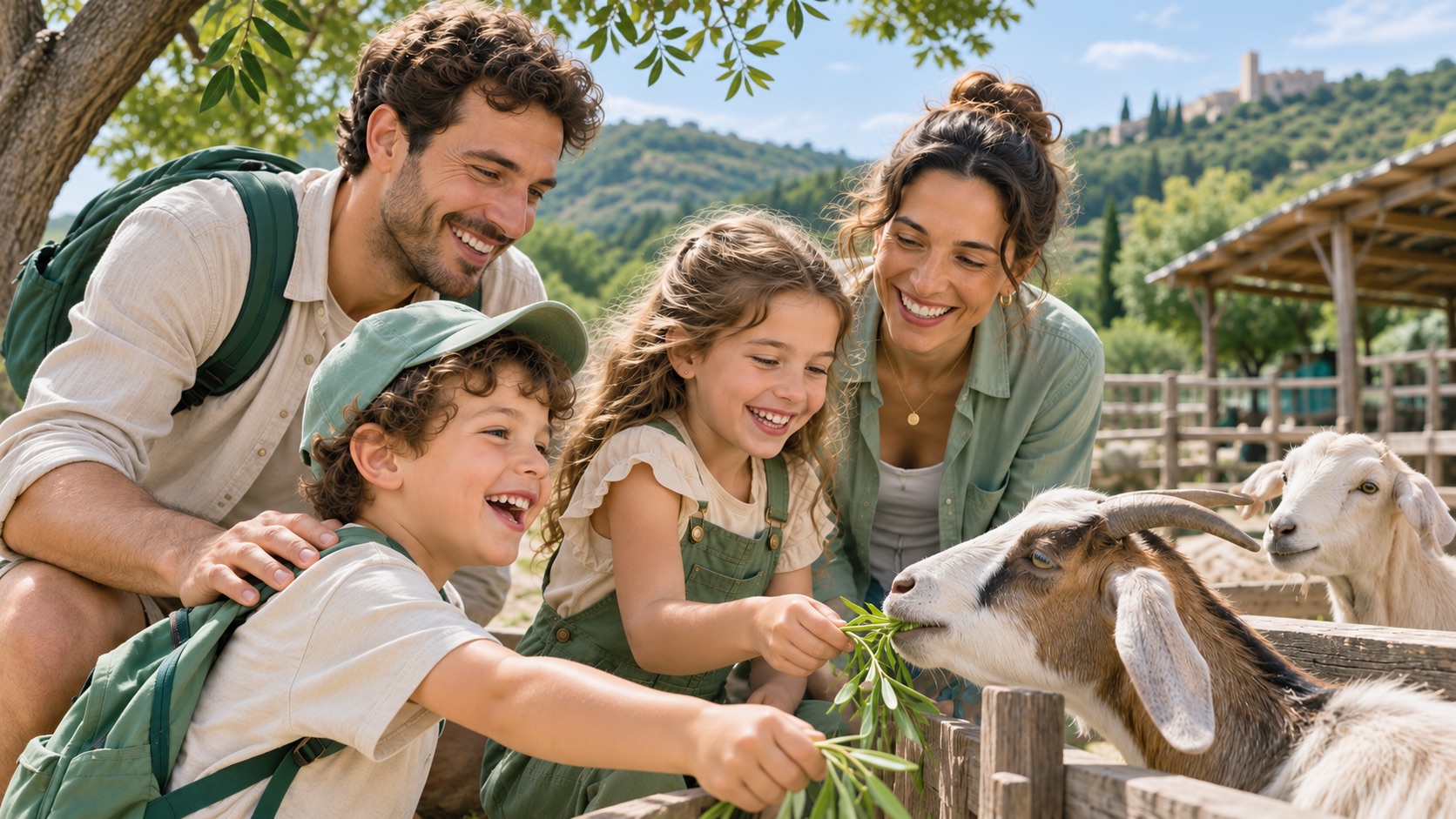
Things to Do with Kids
No matching experiences
Try a wider area or different filters.
Good to know
Which science activities for kids involve building in Jerusalem?
The Bloomfield Science Museum describes sand-brick construction in its courtyard and a separate exhibition where visitors assemble structural models and test stability. Pulleys and an Archimedes screw add experiments involving movement and mechanical advantage.
What is the difference between Technoda’s two medical routes?
One route combines the heart, lungs and Did You Know? exhibitions. The other combines the brain, genetics and bacteria and viruses. You choose one guided route, covering three exhibitions in about an hour and a half, rather than all six in a single ordinary session.
Is the Technoda medical museum intended for preschool children?
The operator recommends its medical programme from age eight, while also publishing a ticket category for ages three to seven. Technosaur is a different parent-and-child programme specifically designed for ages three to seven, with play excavation and dinosaur clues.
What does a child do during Technosaur?
Children investigate a dinosaur mystery through a play dig, fossil discovery, footprint and claw clues, and laboratory tasks. Parents take part too. Some tasks use a smartphone or tablet, and the activity uses indoor and outdoor space.
Can I take a stroller into Technosaur?
Technoda states that strollers cannot enter the Technosaur activity area and should remain in the designated place. Plan how a younger sibling will join the family before choosing this programme; the restriction is specific to that activity area.
How does an ordinary Ramat Gan Safari visit work?
The savannah section is visited in a closed vehicle, and visitors must stay inside it. After the drive, the family parks by the zoo and continues on foot. The operator estimates an ordinary visit at three to four hours; transport arrangements matter if you arrive without a car.
Can children feed animals at Ramat Gan Safari?
Feeding animals is prohibited on an ordinary visit because the animals have individual diets. The organised morning programme describes supervised giraffe feeding as part of its itinerary. Follow the staff instructions for that programme rather than treating it as general permission.
How do the morning and family night Safari differ?
The morning programme combines a train ride and walking over three hours, admits children from two and is recommended from three. The family night programme is intended for ages five and above, lasts about two hours and fifteen minutes and is described as seasonal from late March to late October.
Does free admission to Luna Park mean a child can use every ride?
Luna Park’s admission tariff is separate from individual ride restrictions. The aircraft carousel, for example, lists a height range of 90–120 cm and requires the child to ride without an adult inside while an accompanying person supervises from outside.
Which family attractions in Israel have clear published price examples?
Technosaur lists 65 NIS per child and 35 NIS per adult, with tickets required from age three. Luna Park lists 149 NIS admission from 100 cm and free admission below that height, with Cinema Luna charged separately. These are operator-specific examples; check the selected product when purchasing.
Can a non-swimming child see the reef in Eilat?
Yes. Eilat’s underwater observatory has viewing windows six metres below sea level, reached by stairs, so visitors observe the natural reef while staying dry. The land-based Red Sea Reef aquarium is a separate exhibit with living corals and reef fish. The observatory is not accessible to strollers.
What are the ways to explore Agamon Hula with children?
Agamon Hula lists bicycles, guided hide-wagon tours and electric vehicles, together with a visitor centre. Choose according to how your children prefer to move and observe. Birdwatching takes place in a living habitat, so a specific species or flock should not be promised.
Related categories
1. Pick the thing your child wants to try
A ball rises through a machine in Jerusalem. A small dinosaur investigator brushes through a pretend dig in Hadera. In Eilat, a child watches reef fish through a window six metres below the sea. Things to do with kids in Israel cover very different ways of taking part. Start with the action that catches their attention, then choose the place.
For a child who takes toys apart, a pulley or a bridge-building model offers something to investigate. A family fascinated by animals can choose between an ordinary Safari visit and a guided programme with its own sequence. Children who enjoy fairground rides need a different comparison: the individual rides they can use, their height and how much excitement they want.
The programmes below are in Jerusalem, Hadera, Tel Aviv and Ramat Gan, the Hula Valley and Eilat. Choose one region for the day. A bridge-building experiment or a guided birdwatching outing needs time of its own, especially when a child wants another attempt or a longer look.
At the Bloomfield Science Museum, machines move balls and a building exhibition lets visitors assemble and test structures.
Technoda separates its medical routes from Technosaur, a parent-and-child dinosaur programme designed for ages three to seven.
Choose a closed-vehicle savannah visit in Ramat Gan, bird observation at Agamon Hula or reef viewing from Eilat’s underwater tower.
2. Jerusalem: put pulleys and sand bricks to work
At the Bloomfield Science Museum in Jerusalem, the exhibition Manof LeGilui introduces simple machines through things visitors can operate. Its central Balls and Forces exhibit uses several stations to set balls in motion. A pulley lift and an Archimedes screw provide other ways to explore how a mechanism changes the work done by a person.
A useful starting question is how to lift or move something with less effort. The exhibition connects the principle of a lever with familiar objects, including handles and spoons. A child can watch what a machine does before trying to explain it. Parents can follow the ball through the mechanism and ask which movement at the controls caused the change.
The courtyard activity Building in Sand gives that mechanical theme a construction task. Visitors make sand bricks and work with tools such as a plumb line, spirit level and set square. The museum describes planning and building challenges that involve creative thinking and teamwork. The tools have a purpose: check a line, examine a corner and see whether the construction follows the plan.
These science activities for kids combine manipulation with a visible outcome. Let the child repeat a station if the first attempt raises a question. An older sibling can predict what will happen; a younger one can concentrate on moving the mechanism. Follow their attempt and discuss the part of the machine that changed the ball’s movement.
3. Build a bridge and test why it stays up
The museum’s exhibition Why Buildings Do Not Fall Down centres on models visitors can put together and test for stability. Beams and cantilever bridges make the subject tangible. Instead of beginning with an architectural term, begin with the model: where is it supported, which part projects out and what changes when its pieces move?
The museum also names Leonardo’s arch, the geodesic dome and tensegrity among its subjects. These bring different ways of holding a structure together into the same visit. A child who enjoys construction toys has a concrete reason to stay at this exhibition. Building, noticing a weakness and making another attempt can become the main activity of the outing.
Jerusalem’s hands-on museum has a local history behind that approach. Its own account traces the idea to Professor Peter Hillman’s laboratory at the Hebrew University’s Givat Ram campus in 1980. A group of academics wanted a permanent place that would present science in an appealing, understandable way to the public, including young children.
The first wing in the new museum building opened in July 1992 with support from the Bloomfield family. That history helps explain the emphasis on doing and discovering. For family activities in Jerusalem, this is a specific option for children who would rather assemble a structure or operate a machine than follow a long spoken explanation.
4. Hadera: choose a route through the human body
Technoda in Hadera runs its medical museum as a small-group guided visit. Families choose one of two routes, each covering three exhibitions in about an hour and a half. This is a scheduled group experience. The operator requires advance online purchase and a reserved session, so the route you choose shapes the visit from the start.
The heart-focused route, whose Hebrew name means Touch the Heart, combines the heart, lungs and Did You Know? exhibitions. In the heart exhibition, visitors enter a giant heart model. The lung exhibition describes a display demonstrating the diaphragm and a chance to measure blood oxygen. The route connects a heartbeat and a breath with the body systems responsible for them.
The second route’s Hebrew name means The Flexible Brain. It combines the brain with genetics and bacteria and viruses. The museum describes a giant brain model that shows which regions respond to different stimuli. The genetics exhibition includes a large DNA double helix. Choose this route for a child drawn to how people think or why living things differ.
The medical programme is recommended from age eight. A published ticket category also exists for ages three to seven, which is a separate matter from the recommended audience. Among things to do with kids in Hadera, this suits a family willing to follow a guide through a chosen subject. The chosen route covers three of the museum’s six exhibitions.
5. Technosaur gives younger children their own investigation
Technosaur at Technoda is designed for children aged three to seven with their parents. The activity lasts about an hour and a half and uses a dinosaur investigation as its story. Children take part in a play excavation, search for fossils and examine clues involving claws and footprints. Laboratory tasks add another way to work towards the mystery.
Parents join the younger child’s investigation at Technosaur. You can help compare a clue with a footprint or talk through what the child has uncovered. The excavation is an educational play activity: children practise looking for evidence and using it in the dinosaur story. Its tasks give families a different starting point from the body-science programme recommended for older visitors.
Some tasks use a smartphone or tablet, so Technoda recommends bringing one. The device supports parts of the investigation alongside the physical activities. The programme takes place both indoors and outdoors, and the operator asks participants to bring a hat and water. It therefore belongs in a different weather plan from an entirely indoor museum session.
Strollers must stay outside the Technosaur activity area in the designated place. That detail matters for a family bringing a younger sibling. When comparing activities for young children, include the adult’s role in the plan. Parents help with clues and handle the device where needed, then accompany their child between the indoor and outdoor parts.
6. Ramat Gan Safari: a drive followed by a walking visit
Ramat Gan Safari has two distinct parts. The African savannah is visited in a closed vehicle, with a separate lion area included in that section. Visitors stay inside the vehicle throughout. After the drive, signs lead to the zoo car park, where the family continues on foot among the animal enclosures. Plan around that sequence.
The operator estimates an ordinary visit at three to four hours. That is a planning estimate for the whole outing, rather than a fixed timetable for each animal. The first part asks children to observe from a vehicle; the second involves walking and choosing where to stop. A child who is restless in the car may need a different rhythm once the walking section begins.
Feeding animals is prohibited during an ordinary visit. The Safari explains that each animal has a diet designed for its needs. For a family observation task, follow how one animal moves or watch how a group stays together. A child can describe what they notice while keeping the distance set by the enclosure or vehicle rules.
For wildlife attractions for kids, the mode of participation is especially important. An animal site can mean driving, walking, watching a keeper or following a guide. Families arriving without a private vehicle should establish their actual savannah transport arrangement with the operator. The ordinary visit description requires a closed vehicle in that area and does not make the whole site walk-through.
7. Morning and night Safari programmes change the experience
The Safari’s morning programme combines a guided train ride with walking. Its description follows the keepers’ early work and the distribution of food to animals in the open area. This gives children a subject to follow through the outing: how the animals’ day starts and what the people caring for them do.
The morning programme also describes giraffe feeding under staff supervision. That activity belongs to the organised programme and its instructions. During an ordinary visit, the no-feeding rule still applies. Explain the distinction before arriving, particularly if a child has seen photographs of someone feeding a giraffe and expects the same opportunity with any admission ticket.
The published morning itinerary lasts three hours, admits children from age two and is recommended from age three. Every participant requires a ticket and advance registration. Those are three separate conditions: minimum age, suggested age and the need to hold a ticket. Use the programme description to decide if a younger child can manage the full sequence.
The family night Safari is another product, described as lasting about two hours and fifteen minutes and intended for ages five and above. The operator describes a seasonal run from late March to late October, linked to darkness. Choose it for a family that wants an evening animal-observation experience and can manage the later outing. Its age rule does not replace the morning programme’s different conditions.
8. Tel Aviv Luna Park: compare the actual rides
Luna Park Tel Aviv brings small children’s carousels and bumper cars together with larger rides such as Anaconda and Black Mamba. A mixed-age family can share the park while choosing different rides. Start by identifying a few suitable attractions for each child; the overall label family amusement park leaves out the rules that determine who can board.
The aircraft carousel gives a clear example. Its published height range is 90–120 centimetres. The child rides without an adult inside, while the accompanying person supervises from outside the ride. That arrangement may matter as much as height for a child who wants a parent beside them. Explain where you will stand before joining the queue.
The park uses orange signs for extreme rides, green for medium-intensity rides and blue for low-intensity rides. These colours help families compare the experience, while each attraction retains its own safety restrictions. A low-intensity label and an admission ticket do not establish eligibility for a particular ride.
The operator describes a site of about 50 dunams, with paths and planted areas among the attractions. Give the rides enough time rather than planning a quick stop between museums. Children’s attractions in Tel Aviv cover many interests. Luna Park is the option here for families who want mechanical rides and the anticipation of the next turn.
9. Eilat: see the reef from below sea level
At Eilat’s Underwater Observatory Tower, visitors descend stairs to viewing windows six metres below sea level. The windows look into the natural Red Sea environment. A child can watch reef life while staying dry inside the observatory. Swimming ability is therefore not required for this viewing experience, which is separate from entering the sea.
The land-based Red Sea Reef exhibit provides a second setting. Its circular aquarium recreates habitats from Eilat’s reef with living corals and reef fish. The two displays offer different perspectives: the tower looks into the sea, while the aquarium brings reef habitats into a managed exhibit on land. A family can compare what is easier to notice in each setting.
The park’s description of clownfish explains their relationship with sea anemones. Protection and shelter are part of that story. Rather than trying to name every fish at once, choose a subject such as shelter: which animals stay close to a hiding place, and how does the reef provide one? This gives younger visitors something specific to look for.
The operator states that the underwater observatory is not accessible to children’s strollers. The stairs belong in the decision before the visit, especially if a child needs to remain in a stroller. That restriction concerns the observatory described by the operator; it is not a statement that every part of the marine park has the same access conditions. For things to do with kids in Eilat, distinguish the individual exhibit from the whole complex.
10. Agamon Hula: decide how the family will watch birds
Agamon Hula in the Hula Valley offers several ways to move through a birdwatching outing. The operator lists bicycle visits, guided tours in a hide wagon and electric vehicles, together with a visitor centre. These are meaningful differences for children: pedalling, sitting through guided observation and riding through the site ask for different kinds of attention.
A bicycle format gives movement a place in the day. The hide-wagon tour puts a guide and bird observation at the centre. An electric-vehicle visit offers another transport format, while the visitor centre adds an interpretive stop. Compare those options according to your family’s interests rather than assuming a nature outing means a long walk.
These birdwatching activities for families take place in a living environment. What appears in front of the family will vary; a named species or a particular flock cannot be guaranteed. The site presents its seasons as different experiences, with migration and wintering birds among the themes. Let a child follow what is visible on the day instead of promising a photograph from another season.
Agamon Hula offers a northern nature day centred on birds and their habitat. Compare its guided hide-wagon tour with a bicycle visit according to the balance your children want between watching and moving. The medical museum in Hadera and the construction exhibits in Jerusalem offer different subjects, so let that interest guide the regional plan.
11. Compare programme length and published price examples
The examples below come from specific operators and products. They show how the unit of payment changes: per child, per adult or according to height. They are reference points for comparing family attractions in Israel, not an average price across the country. Confirm the selected product’s payable total when purchasing, since tariffs and inclusions can change.
| Place and product | Participation or duration | Published price and conditions |
|---|---|---|
| Technoda: Technosaur, Hadera | Parent and child; ages 3–7; about 1½ hours | 65 NIS per child and 35 NIS per adult; each participant aged three and above needs a ticket. |
| Technoda: medical museum, Hadera | One guided route of three exhibitions; about 1½ hours; recommended from eight | 70 NIS per visitor aged eight and above; 35 NIS for ages 3–7. Advance online purchase and a reserved session. |
| Luna Park Tel Aviv: admission | Admission category based on height; ride rules remain separate | 149 NIS per visitor from 100 cm; admission below 100 cm is free. Cinema Luna is charged separately. |
| Ramat Gan Safari: morning programme | Guided train and walking; three hours; admitted from two, recommended from three | 119 NIS per participant in the published programme description. A ticket for every participant and advance registration are required. |
Luna Park illustrates why ticket cost and ride access need separate checks. A child below the paid-admission height threshold still has to meet an individual ride’s rule. Technosaur illustrates a different point: parents participate and have their own ticket price. Compare the required tickets for your actual group before comparing headline prices.
A medical-museum route at Technoda covers the three exhibitions on the chosen route. Read the selected ticket description for any additional museum or park access rather than assuming it covers every programme at the site. Compare that defined session with a visit where the family sets its own sequence, such as the walking part of the Safari.
12. Choose a day that fits the whole family
Start with the activity a child is keen to do, then use the practical differences to narrow the choice. Technosaur has a defined younger audience; the medical museum recommends an older one. A stroller affects the decision at Technosaur and Eilat’s underwater observatory. At Luna Park, each ride adds its own height and accompaniment conditions.
Weather also changes the comparison. Jerusalem’s sand-building activity is in a courtyard, Technosaur uses indoor and outdoor space, and Agamon Hula is a nature outing. For a day requiring indoor activities for kids, choose the actual indoor exhibition or route and establish its access conditions. A museum name alone does not make every activity at that venue indoors.
- Match the main task to the child: operate a machine, build a model, follow clues, watch animals or choose rides.
- Separate a recommended age from a minimum age, and check the individual ride’s height rule where relevant.
- Plan the participation format: guided group, closed-vehicle section, walking visit or parent-and-child programme.
- Account for the stated stroller restrictions at Technosaur and the underwater observatory before bringing younger siblings.
- For a guided visit, confirm the language of the selected session. An English description of a programme does not confirm English instruction.
- Compare the family total using the correct product, adult tickets and any separately charged attraction.
Use the Nativa category to compare things to do with kids in Israel by region and activity. Keep the chosen programme’s description beside the family plan: a three-hour morning Safari, a ninety-minute dinosaur investigation and a ride-focused park visit need different amounts of energy. Leave time for the part that interested the child enough to choose the outing.